

4
3
2
1
0
–1
–2
–3
–4
0
1 0
2 0
3 0
Time (s)
Air flow (V)
40
50
60
244
Biomedical Signal and Image Processing
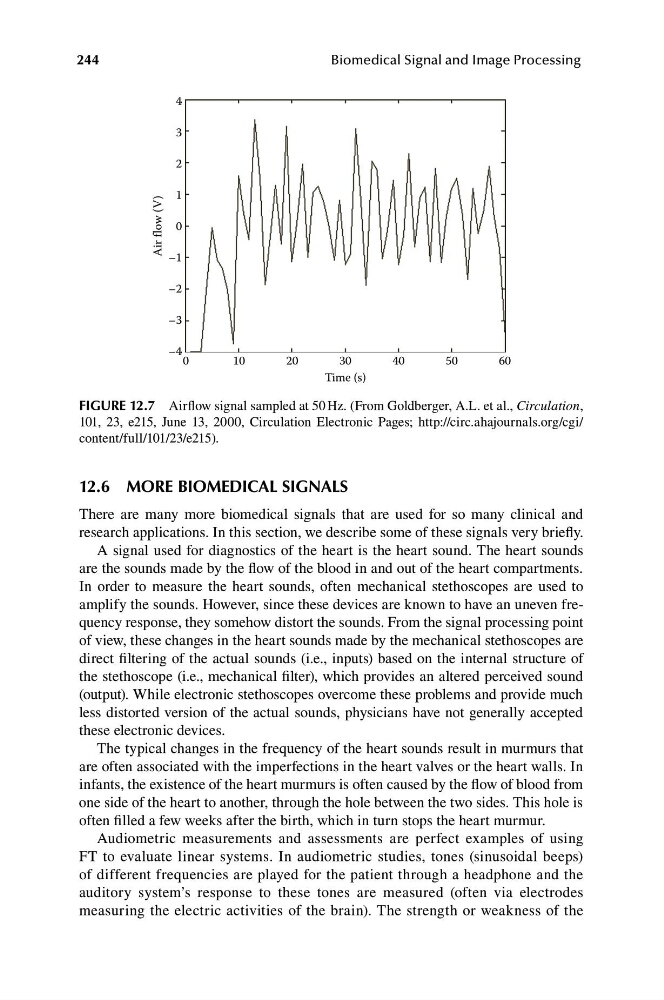
FIGURE 12.7 Airflow signal sampled at 50 Hz. (From Goldberger, A.L. et al., Circulation,
101, 23, e215, June 13, 2000, Circulation Electronic Pages; http://circ.ahajournals.org/cgi/
content/full/101/23/e215).
12.6 MORE BIOMEDICAL SIGNALS
There are many more biomedical signals that are used for so many clinical and
research applications. In this section, we describe some of these signals very briefly.
A signal used for diagnostics of the heart is the heart sound. The heart sounds
are the sounds made by the flow of the blood in and out of the heart compartments.
In order to measure the heart sounds, often mechanical stethoscopes are used to
amplify the sounds. However, since these devices are known to have an uneven frequency response, they somehow distort the sounds. From the signal processing point
of view, these changes in the heart sounds made by the mechanical stethoscopes are
direct filtering of the actual sounds (i.e., inputs) based on the internal structure of
the stethoscope (i.e., mechanical filter), which provides an altered perceived sound
(output). While electronic stethoscopes overcome these problems and provide much
less distorted version of the actual sounds, physicians have not generally accepted
these electronic devices.
The typical changes in the frequency of the heart sounds result in murmurs that
are often associated with the imperfections in the heart valves or the heart walls. In
infants, the existence of the heart murmurs is often caused by the flow of blood from
one side of the heart to another, through the hole between the two sides. This hole is
often filled a few weeks after the birth, which in turn stops the heart murmur.
Audiometric measurements and assessments are perfect examples of using
FT to evaluate linear systems. In audiometric studies, tones (sinusoidal beeps)
of different frequencies are played for the patient through a headphone and the
auditory system’s response to these tones are measured (often via electrodes
measuring the electric activities of the brain). The strength or weakness of the
3
2
1
0
–1
–2
–3
–4
0
1 0
2 0
3 0
Time (s)
Air flow (V)
40
50
60
244
Biomedical Signal and Image Processing
FIGURE 12.7 Airflow signal sampled at 50 Hz. (From Goldberger, A.L. et al., Circulation,
101, 23, e215, June 13, 2000, Circulation Electronic Pages; http://circ.ahajournals.org/cgi/
content/full/101/23/e215).
12.6 MORE BIOMEDICAL SIGNALS
There are many more biomedical signals that are used for so many clinical and
research applications. In this section, we describe some of these signals very briefly.
A signal used for diagnostics of the heart is the heart sound. The heart sounds
are the sounds made by the flow of the blood in and out of the heart compartments.
In order to measure the heart sounds, often mechanical stethoscopes are used to
amplify the sounds. However, since these devices are known to have an uneven frequency response, they somehow distort the sounds. From the signal processing point
of view, these changes in the heart sounds made by the mechanical stethoscopes are
direct filtering of the actual sounds (i.e., inputs) based on the internal structure of
the stethoscope (i.e., mechanical filter), which provides an altered perceived sound
(output). While electronic stethoscopes overcome these problems and provide much
less distorted version of the actual sounds, physicians have not generally accepted
these electronic devices.
The typical changes in the frequency of the heart sounds result in murmurs that
are often associated with the imperfections in the heart valves or the heart walls. In
infants, the existence of the heart murmurs is often caused by the flow of blood from
one side of the heart to another, through the hole between the two sides. This hole is
often filled a few weeks after the birth, which in turn stops the heart murmur.
Audiometric measurements and assessments are perfect examples of using
FT to evaluate linear systems. In audiometric studies, tones (sinusoidal beeps)
of different frequencies are played for the patient through a headphone and the
auditory system’s response to these tones are measured (often via electrodes
measuring the electric activities of the brain). The strength or weakness of the