

156
Extracellular
Protein chains
pore
Lipid chains
7 nm
Intracellular
Biomedical Signal and Image Processing
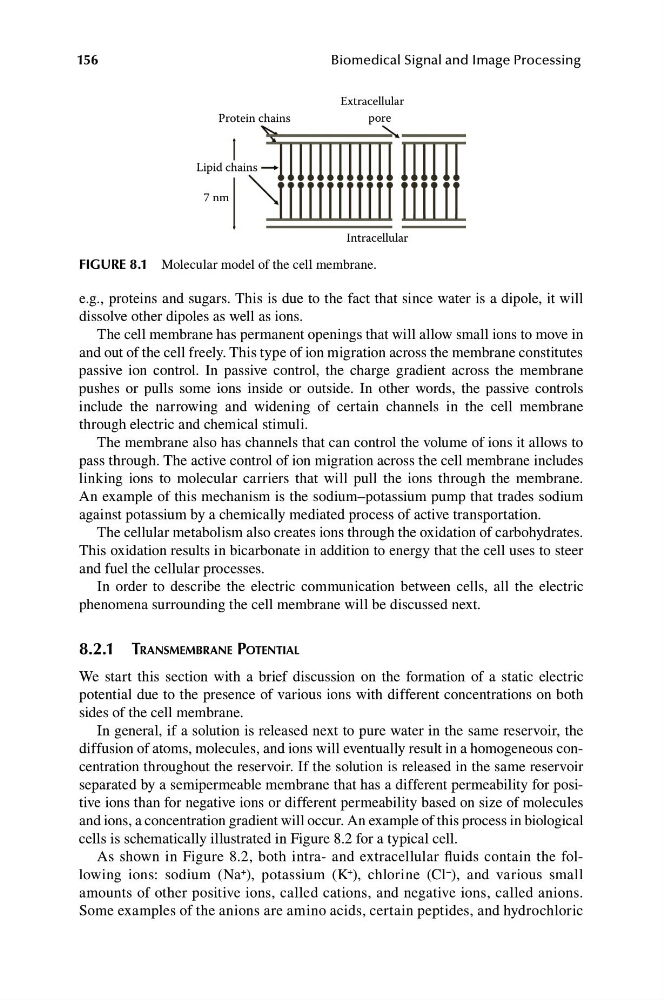
FIGURE 8.1 Molecular model of the cell membrane.
e.g., proteins and sugars. This is due to the fact that since water is a dipole, it will
dissolve other dipoles as well as ions.
The cell membrane has permanent openings that will allow small ions to move in
and out of the cell freely. This type of ion migration across the membrane constitutes
passive ion control. In passive control, the charge gradient across the membrane
pushes or pulls some ions inside or outside. In other words, the passive controls
include the narrowing and widening of certain channels in the cell membrane
through electric and chemical stimuli.
The membrane also has channels that can control the volume of ions it allows to
pass through. The active control of ion migration across the cell membrane includes
linking ions to molecular carriers that will pull the ions through the membrane.
An example of this mechanism is the sodium–potassium pump that trades sodium
against potassium by a chemically mediated process of active transportation.
The cellular metabolism also creates ions through the oxidation of carbohydrates.
This oxidation results in bicarbonate in addition to energy that the cell uses to steer
and fuel the cellular processes.
In order to describe the electric communication between cells, all the electric
phenomena surrounding the cell membrane will be discussed next.
8.2.1 TRANSMEMBRANE POTENTIAL
We start this section with a brief discussion on the formation of a static electric
potential due to the presence of various ions with different concentrations on both
sides of the cell membrane.
In general, if a solution is released next to pure water in the same reservoir, the
diffusion of atoms, molecules, and ions will eventually result in a homogeneous concentration throughout the reservoir. If the solution is released in the same reservoir
separated by a semipermeable membrane that has a different permeability for positive ions than for negative ions or different permeability based on size of molecules
and ions, a concentration gradient will occur. An example of this process in biological
cells is schematically illustrated in Figure 8.2 for a typical cell.
As shown in Figure 8.2, both intra- and extracellular fluids contain the following ions: sodium (Na + ), potassium (K + ), chlorine (Cl − ), and various small
amounts of other positive ions, called cations, and negative ions, called anions.
Some examples of the anions are amino acids, certain peptides, and hydrochloric
Extracellular
Protein chains
pore
Lipid chains
7 nm
Intracellular
Biomedical Signal and Image Processing
FIGURE 8.1 Molecular model of the cell membrane.
e.g., proteins and sugars. This is due to the fact that since water is a dipole, it will
dissolve other dipoles as well as ions.
The cell membrane has permanent openings that will allow small ions to move in
and out of the cell freely. This type of ion migration across the membrane constitutes
passive ion control. In passive control, the charge gradient across the membrane
pushes or pulls some ions inside or outside. In other words, the passive controls
include the narrowing and widening of certain channels in the cell membrane
through electric and chemical stimuli.
The membrane also has channels that can control the volume of ions it allows to
pass through. The active control of ion migration across the cell membrane includes
linking ions to molecular carriers that will pull the ions through the membrane.
An example of this mechanism is the sodium–potassium pump that trades sodium
against potassium by a chemically mediated process of active transportation.
The cellular metabolism also creates ions through the oxidation of carbohydrates.
This oxidation results in bicarbonate in addition to energy that the cell uses to steer
and fuel the cellular processes.
In order to describe the electric communication between cells, all the electric
phenomena surrounding the cell membrane will be discussed next.
8.2.1 TRANSMEMBRANE POTENTIAL
We start this section with a brief discussion on the formation of a static electric
potential due to the presence of various ions with different concentrations on both
sides of the cell membrane.
In general, if a solution is released next to pure water in the same reservoir, the
diffusion of atoms, molecules, and ions will eventually result in a homogeneous concentration throughout the reservoir. If the solution is released in the same reservoir
separated by a semipermeable membrane that has a different permeability for positive ions than for negative ions or different permeability based on size of molecules
and ions, a concentration gradient will occur. An example of this process in biological
cells is schematically illustrated in Figure 8.2 for a typical cell.
As shown in Figure 8.2, both intra- and extracellular fluids contain the following ions: sodium (Na + ), potassium (K + ), chlorine (Cl − ), and various small
amounts of other positive ions, called cations, and negative ions, called anions.
Some examples of the anions are amino acids, certain peptides, and hydrochloric