

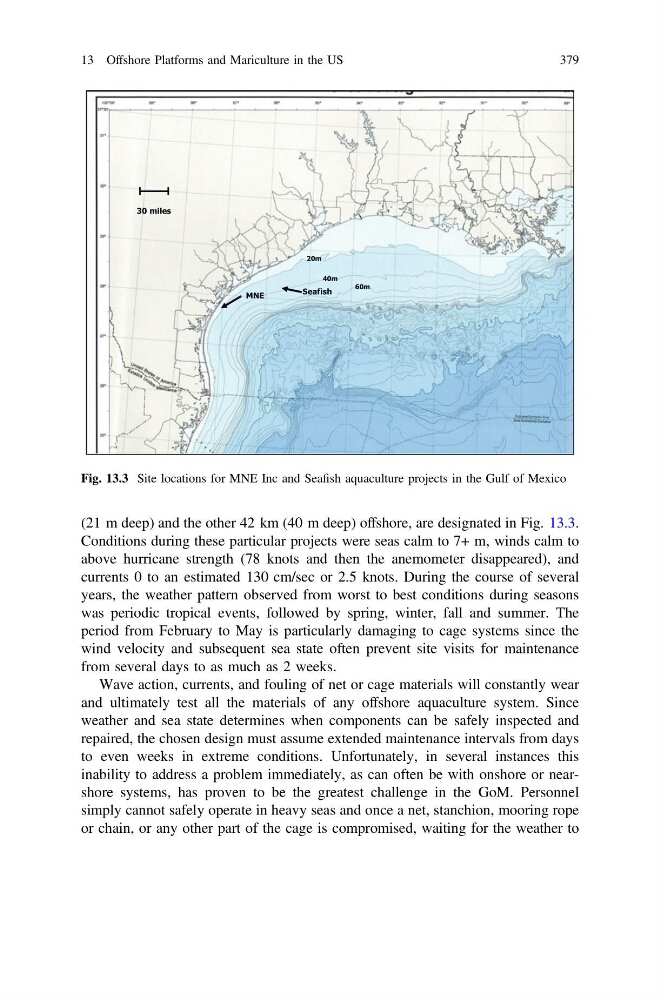
(21 m deep) and the other 42 km (40 m deep) offshore, are designated in Fig. 13.3.
Conditions during these particular projects were seas calm to 7+ m, winds calm to
above hurricane strength (78 knots and then the anemometer disappeared), and
currents 0 to an estimated 130 cm/sec or 2.5 knots. During the course of several
years, the weather pattern observed from worst to best conditions during seasons
was periodic tropical events, followed by spring, winter, fall and summer. The
period from February to May is particularly damaging to cage systems since the
wind velocity and subsequent sea state often prevent site visits for maintenance
from several days to as much as 2 weeks.
Wave action, currents, and fouling of net or cage materials will constantly wear
and ultimately test all the materials of any offshore aquaculture system. Since
weather and sea state determines when components can be safely inspected and
repaired, the chosen design must assume extended maintenance intervals from days
to even weeks in extreme conditions. Unfortunately, in several instances this
inability to address a problem immediately, as can often be with onshore or nearshore systems, has proven to be the greatest challenge in the GoM. Personnel
simply cannot safely operate in heavy seas and once a net, stanchion, mooring rope
or chain, or any other part of the cage is compromised, waiting for the weather to
20m
40m
60m
30 miles
MNE
Seafish
Fig. 13.3 Site locations for MNE Inc and Seafish aquaculture projects in the Gulf of Mexico
13 Offshore Platforms and Mariculture in the US
379
Conditions during these particular projects were seas calm to 7+ m, winds calm to
above hurricane strength (78 knots and then the anemometer disappeared), and
currents 0 to an estimated 130 cm/sec or 2.5 knots. During the course of several
years, the weather pattern observed from worst to best conditions during seasons
was periodic tropical events, followed by spring, winter, fall and summer. The
period from February to May is particularly damaging to cage systems since the
wind velocity and subsequent sea state often prevent site visits for maintenance
from several days to as much as 2 weeks.
Wave action, currents, and fouling of net or cage materials will constantly wear
and ultimately test all the materials of any offshore aquaculture system. Since
weather and sea state determines when components can be safely inspected and
repaired, the chosen design must assume extended maintenance intervals from days
to even weeks in extreme conditions. Unfortunately, in several instances this
inability to address a problem immediately, as can often be with onshore or nearshore systems, has proven to be the greatest challenge in the GoM. Personnel
simply cannot safely operate in heavy seas and once a net, stanchion, mooring rope
or chain, or any other part of the cage is compromised, waiting for the weather to
20m
40m
60m
30 miles
MNE
Seafish
Fig. 13.3 Site locations for MNE Inc and Seafish aquaculture projects in the Gulf of Mexico
13 Offshore Platforms and Mariculture in the US
379