

1.4 Initiation to the Topic
For this rather risky and expensive development to happen in practical terms, an
understanding of basic needs, such as design requirements, data acquisition, site
specifications, operation and maintenance issues, etc. is required. Offshore structures will need to be modified or adapted to accommodate other uses without
compromising functionality and safety. Indeed, this move further from shore and
into higher energy open ocean environments has created demand for new vessels
for installation, operation, maintenance and decommissioning. While it is clear that
multi-uses will require multiple types of service vessels, there will be areas of
overlap where economies of scale can be achieved, for example in the transport of
technicians. Technologies for aquaculture in exposed environments are still in the
early stages of development, and combined use at energy production sites will
require some rethinking of engineering design.
Other combinations of offshore uses are possible, thus supporting the trend to
combine expensive infrastructure and collocate it in offshore areas (Buck 2009b). In
this respect a great deal of discussion has begun on moving various kinds of uses to
regions where more space is available, focusing specifically on resources, which
could become scarce in the near future (e.g. production of food). However, one has
to keep in mind that plausibility and profitability are incontrovertible constraints to
any enterprise offshore, especially when combining them into a multi-use concept.
Some concepts to move industrial interests off the coast did not fulfil these
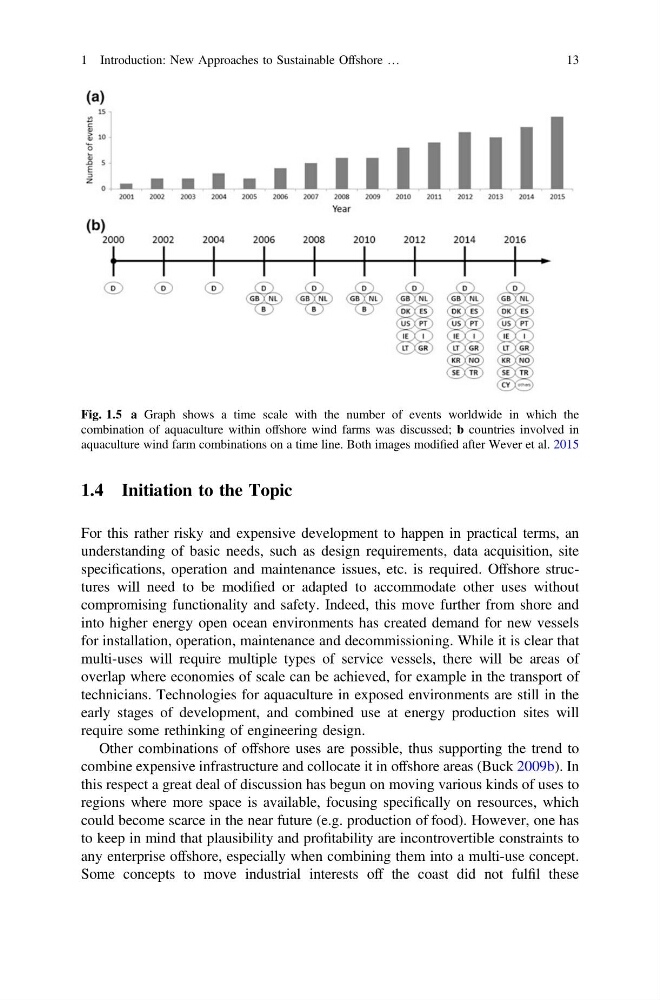
Fig. 1.5 a Graph shows a time scale with the number of events worldwide in which the
combination of aquaculture within offshore wind farms was discussed; b countries involved in
aquaculture wind farm combinations on a time line. Both images modified after Wever et al. 2015
1 Introduction: New Approaches to Sustainable Offshore …
13
For this rather risky and expensive development to happen in practical terms, an
understanding of basic needs, such as design requirements, data acquisition, site
specifications, operation and maintenance issues, etc. is required. Offshore structures will need to be modified or adapted to accommodate other uses without
compromising functionality and safety. Indeed, this move further from shore and
into higher energy open ocean environments has created demand for new vessels
for installation, operation, maintenance and decommissioning. While it is clear that
multi-uses will require multiple types of service vessels, there will be areas of
overlap where economies of scale can be achieved, for example in the transport of
technicians. Technologies for aquaculture in exposed environments are still in the
early stages of development, and combined use at energy production sites will
require some rethinking of engineering design.
Other combinations of offshore uses are possible, thus supporting the trend to
combine expensive infrastructure and collocate it in offshore areas (Buck 2009b). In
this respect a great deal of discussion has begun on moving various kinds of uses to
regions where more space is available, focusing specifically on resources, which
could become scarce in the near future (e.g. production of food). However, one has
to keep in mind that plausibility and profitability are incontrovertible constraints to
any enterprise offshore, especially when combining them into a multi-use concept.
Some concepts to move industrial interests off the coast did not fulfil these
Fig. 1.5 a Graph shows a time scale with the number of events worldwide in which the
combination of aquaculture within offshore wind farms was discussed; b countries involved in
aquaculture wind farm combinations on a time line. Both images modified after Wever et al. 2015
1 Introduction: New Approaches to Sustainable Offshore …
13