

operational and biological feasibility of such an endeavour (Wever et al. 2015;
Vollstedt 2011). Michler-Cieluch et al. (2009a) identified a number of potential
synergies and benefits relating to functional aspects such as joint use of transportation infrastructure, and organizational features such as the prospect to combine
offshore working pattern, both of which hold the potential to reduce costs (e.g. for
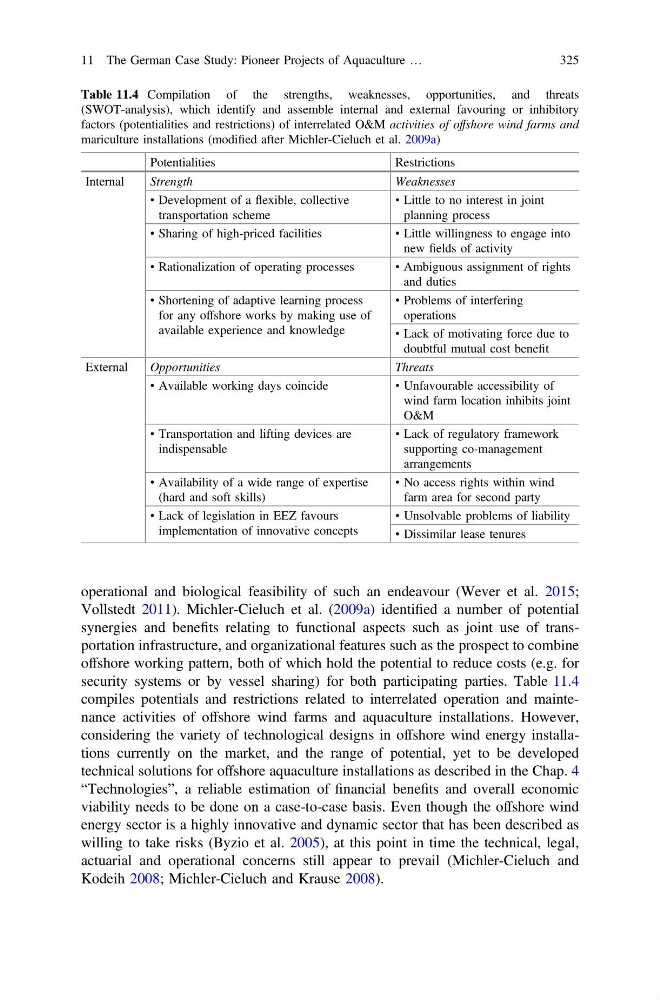
security systems or by vessel sharing) for both participating parties. Table 11.4
compiles potentials and restrictions related to interrelated operation and maintenance activities of offshore wind farms and aquaculture installations. However,
considering the variety of technological designs in offshore wind energy installations currently on the market, and the range of potential, yet to be developed
technical solutions for offshore aquaculture installations as described in the Chap. 4
“Technologies”, a reliable estimation of financial benefits and overall economic
viability needs to be done on a case-to-case basis. Even though the offshore wind
energy sector is a highly innovative and dynamic sector that has been described as
willing to take risks (Byzio et al. 2005), at this point in time the technical, legal,
actuarial and operational concerns still appear to prevail (Michler-Cieluch and
Kodeih 2008; Michler-Cieluch and Krause 2008).
Table 11.4 Compilation of the strengths, weaknesses, opportunities, and threats
(SWOT-analysis), which identify and assemble internal and external favouring or inhibitory
factors (potentialities and restrictions) of interrelated O&M activities of offshore wind farms and
mariculture installations (modified after Michler-Cieluch et al. 2009a)
Potentialities
Restrictions
Internal
Strength
Weaknesses
• Development of a flexible, collective
transportation scheme
• Little to no interest in joint
planning process
• Sharing of high-priced facilities
• Little willingness to engage into
new fields of activity
• Rationalization of operating processes
• Ambiguous assignment of rights
and duties
• Shortening of adaptive learning process
for any offshore works by making use of
available experience and knowledge
• Problems of interfering
operations
• Lack of motivating force due to
doubtful mutual cost benefit
External
Opportunities
Threats
• Available working days coincide
• Unfavourable accessibility of
wind farm location inhibits joint
O&M
• Transportation and lifting devices are
indispensable
• Lack of regulatory framework
supporting co-management
arrangements
• Availability of a wide range of expertise
(hard and soft skills)
• No access rights within wind
farm area for second party
• Lack of legislation in EEZ favours
implementation of innovative concepts
• Unsolvable problems of liability
• Dissimilar lease tenures
11 The German Case Study: Pioneer Projects of Aquaculture …
325
Vollstedt 2011). Michler-Cieluch et al. (2009a) identified a number of potential
synergies and benefits relating to functional aspects such as joint use of transportation infrastructure, and organizational features such as the prospect to combine
offshore working pattern, both of which hold the potential to reduce costs (e.g. for
security systems or by vessel sharing) for both participating parties. Table 11.4
compiles potentials and restrictions related to interrelated operation and maintenance activities of offshore wind farms and aquaculture installations. However,
considering the variety of technological designs in offshore wind energy installations currently on the market, and the range of potential, yet to be developed
technical solutions for offshore aquaculture installations as described in the Chap. 4
“Technologies”, a reliable estimation of financial benefits and overall economic
viability needs to be done on a case-to-case basis. Even though the offshore wind
energy sector is a highly innovative and dynamic sector that has been described as
willing to take risks (Byzio et al. 2005), at this point in time the technical, legal,
actuarial and operational concerns still appear to prevail (Michler-Cieluch and
Kodeih 2008; Michler-Cieluch and Krause 2008).
Table 11.4 Compilation of the strengths, weaknesses, opportunities, and threats
(SWOT-analysis), which identify and assemble internal and external favouring or inhibitory
factors (potentialities and restrictions) of interrelated O&M activities of offshore wind farms and
mariculture installations (modified after Michler-Cieluch et al. 2009a)
Potentialities
Restrictions
Internal
Strength
Weaknesses
• Development of a flexible, collective
transportation scheme
• Little to no interest in joint
planning process
• Sharing of high-priced facilities
• Little willingness to engage into
new fields of activity
• Rationalization of operating processes
• Ambiguous assignment of rights
and duties
• Shortening of adaptive learning process
for any offshore works by making use of
available experience and knowledge
• Problems of interfering
operations
• Lack of motivating force due to
doubtful mutual cost benefit
External
Opportunities
Threats
• Available working days coincide
• Unfavourable accessibility of
wind farm location inhibits joint
O&M
• Transportation and lifting devices are
indispensable
• Lack of regulatory framework
supporting co-management
arrangements
• Availability of a wide range of expertise
(hard and soft skills)
• No access rights within wind
farm area for second party
• Lack of legislation in EEZ favours
implementation of innovative concepts
• Unsolvable problems of liability
• Dissimilar lease tenures
11 The German Case Study: Pioneer Projects of Aquaculture …
325