

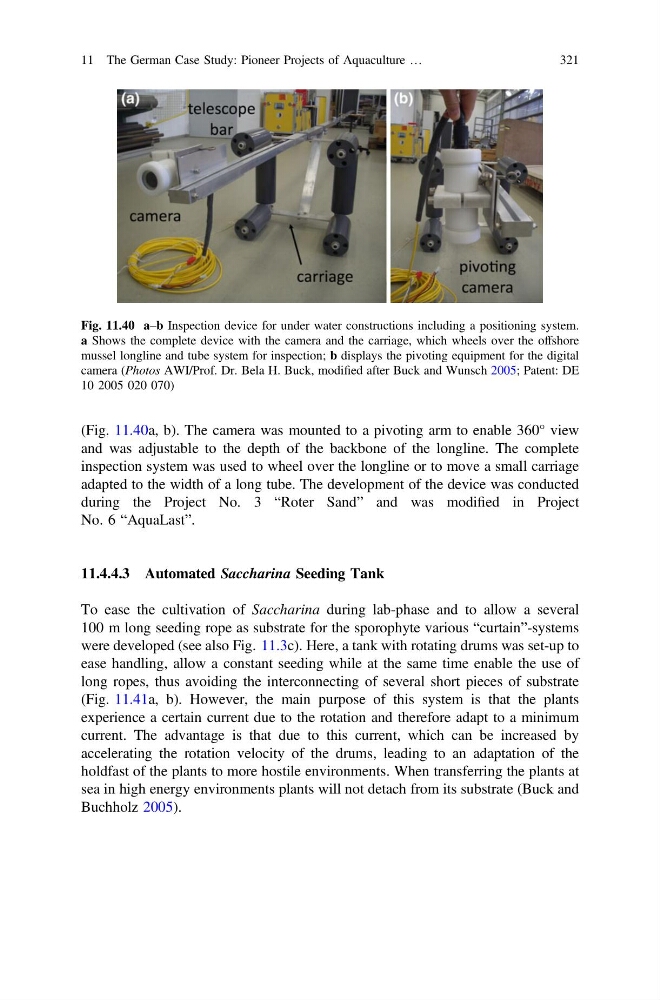
(Fig. 11.40a, b). The camera was mounted to a pivoting arm to enable 360° view
and was adjustable to the depth of the backbone of the longline. The complete
inspection system was used to wheel over the longline or to move a small carriage
adapted to the width of a long tube. The development of the device was conducted
during the Project No. 3 “Roter Sand” and was modified in Project
No. 6 “AquaLast”.
11.4.4.3 Automated Saccharina Seeding Tank
To ease the cultivation of Saccharina during lab-phase and to allow a several
100 m long seeding rope as substrate for the sporophyte various “curtain”-systems
were developed (see also Fig. 11.3c). Here, a tank with rotating drums was set-up to
ease handling, allow a constant seeding while at the same time enable the use of
long ropes, thus avoiding the interconnecting of several short pieces of substrate
(Fig. 11.41a, b). However, the main purpose of this system is that the plants
experience a certain current due to the rotation and therefore adapt to a minimum
current. The advantage is that due to this current, which can be increased by
accelerating the rotation velocity of the drums, leading to an adaptation of the
holdfast of the plants to more hostile environments. When transferring the plants at
sea in high energy environments plants will not detach from its substrate (Buck and
Buchholz 2005).
Fig. 11.40 a–b Inspection device for under water constructions including a positioning system.
a Shows the complete device with the camera and the carriage, which wheels over the offshore
mussel longline and tube system for inspection; b displays the pivoting equipment for the digital
camera (Photos AWI/Prof. Dr. Bela H. Buck, modified after Buck and Wunsch 2005; Patent: DE
10 2005 020 070)
11 The German Case Study: Pioneer Projects of Aquaculture …
321
and was adjustable to the depth of the backbone of the longline. The complete
inspection system was used to wheel over the longline or to move a small carriage
adapted to the width of a long tube. The development of the device was conducted
during the Project No. 3 “Roter Sand” and was modified in Project
No. 6 “AquaLast”.
11.4.4.3 Automated Saccharina Seeding Tank
To ease the cultivation of Saccharina during lab-phase and to allow a several
100 m long seeding rope as substrate for the sporophyte various “curtain”-systems
were developed (see also Fig. 11.3c). Here, a tank with rotating drums was set-up to
ease handling, allow a constant seeding while at the same time enable the use of
long ropes, thus avoiding the interconnecting of several short pieces of substrate
(Fig. 11.41a, b). However, the main purpose of this system is that the plants
experience a certain current due to the rotation and therefore adapt to a minimum
current. The advantage is that due to this current, which can be increased by
accelerating the rotation velocity of the drums, leading to an adaptation of the
holdfast of the plants to more hostile environments. When transferring the plants at
sea in high energy environments plants will not detach from its substrate (Buck and
Buchholz 2005).
Fig. 11.40 a–b Inspection device for under water constructions including a positioning system.
a Shows the complete device with the camera and the carriage, which wheels over the offshore
mussel longline and tube system for inspection; b displays the pivoting equipment for the digital
camera (Photos AWI/Prof. Dr. Bela H. Buck, modified after Buck and Wunsch 2005; Patent: DE
10 2005 020 070)
11 The German Case Study: Pioneer Projects of Aquaculture …
321