

m ¼ m c þ m l þ m a
ð11:7Þ
where m c is the collector mass, m l the line mass and m a the additional mass. The
buoyancy was calculated applying
F b ¼ V Á q Á g
ð11:8Þ
where V is the volume of the buoy, q is the density of seawater and g the gravity
constant.
Given the resulting forces from the single collector and the buoy it was possible
estimate the total load from the collectors and finally the longline system itself.
11.4.1.7 Conclusion and Outlook
The results of the first parametric study showed good correlation to theoretical
results. However, for very small values of h/l the difference between analytical and
numerical values increases. This was mainly caused by length variation due to
increasing strain for a tightened LL. The strain was not taken into account in the
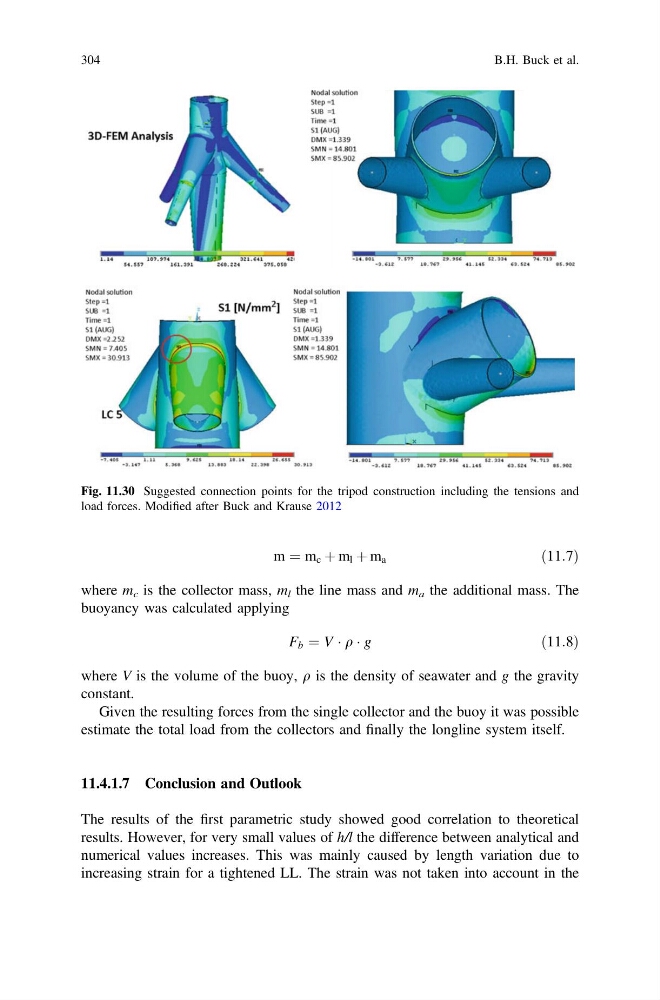
Fig. 11.30 Suggested connection points for the tripod construction including the tensions and
load forces. Modified after Buck and Krause 2012
304
B.H. Buck et al.
ð11:7Þ
where m c is the collector mass, m l the line mass and m a the additional mass. The
buoyancy was calculated applying
F b ¼ V Á q Á g
ð11:8Þ
where V is the volume of the buoy, q is the density of seawater and g the gravity
constant.
Given the resulting forces from the single collector and the buoy it was possible
estimate the total load from the collectors and finally the longline system itself.
11.4.1.7 Conclusion and Outlook
The results of the first parametric study showed good correlation to theoretical
results. However, for very small values of h/l the difference between analytical and
numerical values increases. This was mainly caused by length variation due to
increasing strain for a tightened LL. The strain was not taken into account in the
Fig. 11.30 Suggested connection points for the tripod construction including the tensions and
load forces. Modified after Buck and Krause 2012
304
B.H. Buck et al.