

eutrophication (McHugh 2003; Lüning and Pang 2003; Fei 2004) (see Chapter
Offshore Aquaculture with Extractive Species: Seaweed and Bivalves). This feature
of Laminaria and other seaweeds qualifies them for use in sustainable maricultures.
Modern integrated aquaculture systems have been developed and are constantly
improved. The combination of seaweed culture with land-based fish culture or open
marine cage culture has found great acceptance (Subandar et al. 1993; Petrell and
Alie 1996; Ahn et al. 1998; Troell et al. 1999; Chopin et al. 2001; Neori et al.
2004). Macroalgae, including Laminaria, may act as biofilters for finfish aquaculture at offshore sites in the German Bight, removing dissolved excretions and
surplus nutrients and providing extra oxygen and biomass.
11.3.1.2 Candidate: Palmaria palmata
Dulse is an edible intertidal or shallow subtidal red alga (Rhodophyta) of the
Atlantic and North Pacific and its culture methods are well known (Browne 2001;
Le Gall et al. 2004; Pang and Lüning 2004, 2006) (Fig. 11.5a).
P. palmata has been proven to be a good candidate for integrated multi-trophic
aquaculture (IMTA) in the projects SEAPURA (Lüning 2001) and “Offshore Site
Selection” (Project No. 15; Matos et al. 2006; Grote 2016; Grote and Buck 2017)
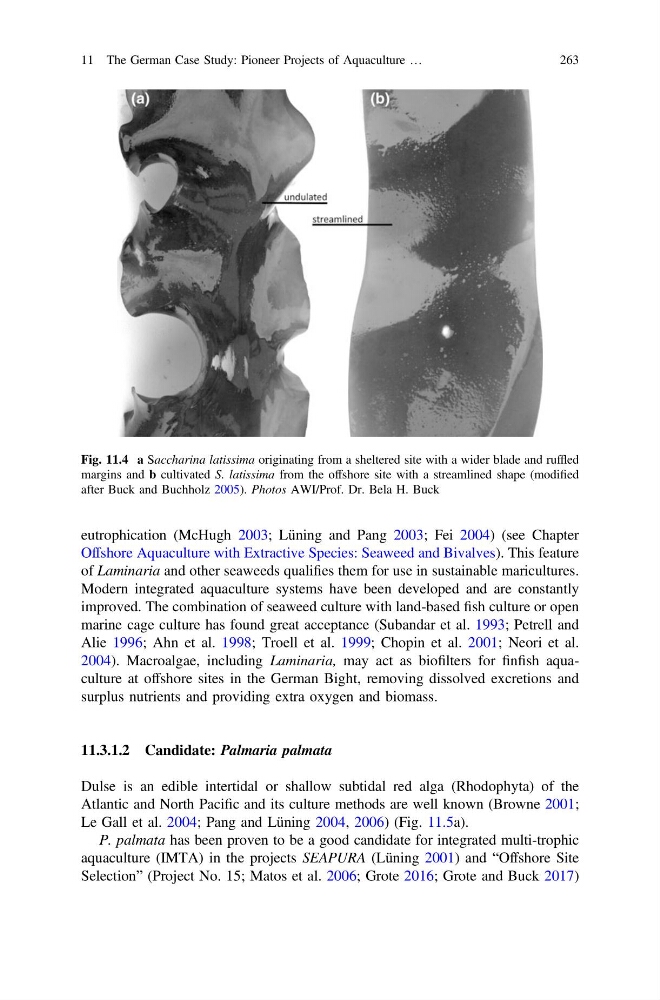
Fig. 11.4 a Saccharina latissima originating from a sheltered site with a wider blade and ruffled
margins and b cultivated S. latissima from the offshore site with a streamlined shape (modified
after Buck and Buchholz 2005). Photos AWI/Prof. Dr. Bela H. Buck
11 The German Case Study: Pioneer Projects of Aquaculture …
263
Offshore Aquaculture with Extractive Species: Seaweed and Bivalves). This feature
of Laminaria and other seaweeds qualifies them for use in sustainable maricultures.
Modern integrated aquaculture systems have been developed and are constantly
improved. The combination of seaweed culture with land-based fish culture or open
marine cage culture has found great acceptance (Subandar et al. 1993; Petrell and
Alie 1996; Ahn et al. 1998; Troell et al. 1999; Chopin et al. 2001; Neori et al.
2004). Macroalgae, including Laminaria, may act as biofilters for finfish aquaculture at offshore sites in the German Bight, removing dissolved excretions and
surplus nutrients and providing extra oxygen and biomass.
11.3.1.2 Candidate: Palmaria palmata
Dulse is an edible intertidal or shallow subtidal red alga (Rhodophyta) of the
Atlantic and North Pacific and its culture methods are well known (Browne 2001;
Le Gall et al. 2004; Pang and Lüning 2004, 2006) (Fig. 11.5a).
P. palmata has been proven to be a good candidate for integrated multi-trophic
aquaculture (IMTA) in the projects SEAPURA (Lüning 2001) and “Offshore Site
Selection” (Project No. 15; Matos et al. 2006; Grote 2016; Grote and Buck 2017)
Fig. 11.4 a Saccharina latissima originating from a sheltered site with a wider blade and ruffled
margins and b cultivated S. latissima from the offshore site with a streamlined shape (modified
after Buck and Buchholz 2005). Photos AWI/Prof. Dr. Bela H. Buck
11 The German Case Study: Pioneer Projects of Aquaculture …
263