

Appendix B: Registers
145
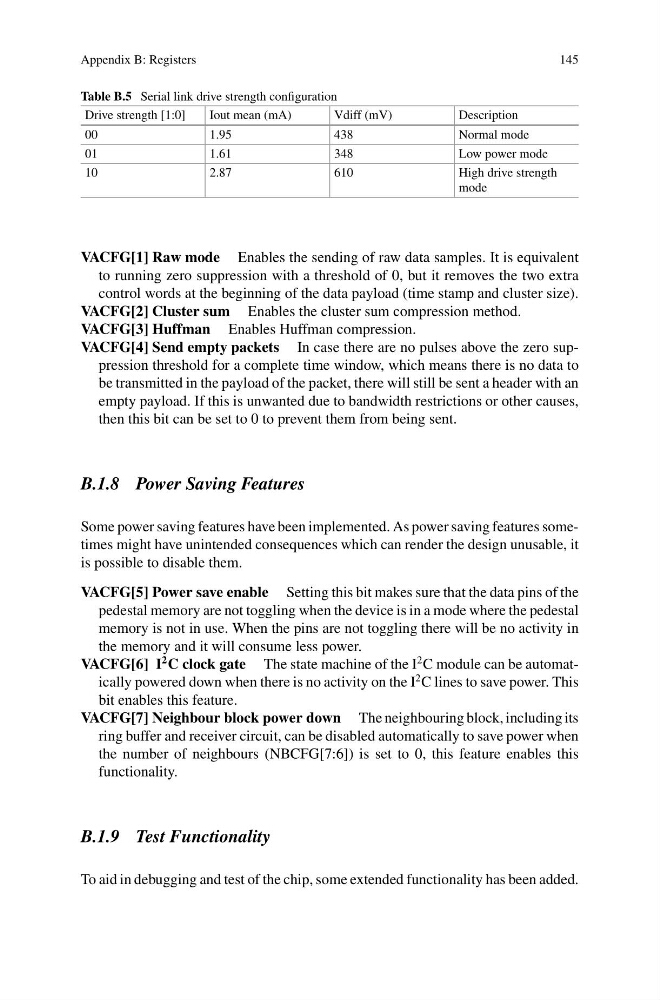
Table B.5 Serial link drive strength configuration
Drive strength [1:0]
Iout mean (mA)
Vdiff (mV)
Description
00
1.95
438
Normal mode
01
1.61
348
Low power mode
10
2.87
610
High drive strength
mode
VACFG[1] Raw mode Enables the sending of raw data samples. It is equivalent
to running zero suppression with a threshold of 0, but it removes the two extra
control words at the beginning of the data payload (time stamp and cluster size).
VACFG[2] Cluster sum Enables the cluster sum compression method.
VACFG[3] Huffman Enables Huffman compression.
VACFG[4] Send empty packets In case there are no pulses above the zero suppression threshold for a complete time window, which means there is no data to
be transmitted in the payload of the packet, there will still be sent a header with an
empty payload. If this is unwanted due to bandwidth restrictions or other causes,
then this bit can be set to 0 to prevent them from being sent.
B.1.8 Power Saving Features
Some power saving features have been implemented. As power saving features sometimes might have unintended consequences which can render the design unusable, it
is possible to disable them.
VACFG[5] Power save enable Setting this bit makes sure that the data pins of the
pedestal memory are not toggling when the device is in a mode where the pedestal
memory is not in use. When the pins are not toggling there will be no activity in
the memory and it will consume less power.
VACFG[6] I
2 C clock gate The state machine of the I
2 C module can be automatically powered down when there is no activity on the I
2 C lines to save power. This
bit enables this feature.
VACFG[7] Neighbour block power down The neighbouring block, including its
ring buffer and receiver circuit, can be disabled automatically to save power when
the number of neighbours (NBCFG[7:6]) is set to 0, this feature enables this
functionality.
B.1.9 Test Functionality
To aid in debugging and test of the chip, some extended functionality has been added.
145
Table B.5 Serial link drive strength configuration
Drive strength [1:0]
Iout mean (mA)
Vdiff (mV)
Description
00
1.95
438
Normal mode
01
1.61
348
Low power mode
10
2.87
610
High drive strength
mode
VACFG[1] Raw mode Enables the sending of raw data samples. It is equivalent
to running zero suppression with a threshold of 0, but it removes the two extra
control words at the beginning of the data payload (time stamp and cluster size).
VACFG[2] Cluster sum Enables the cluster sum compression method.
VACFG[3] Huffman Enables Huffman compression.
VACFG[4] Send empty packets In case there are no pulses above the zero suppression threshold for a complete time window, which means there is no data to
be transmitted in the payload of the packet, there will still be sent a header with an
empty payload. If this is unwanted due to bandwidth restrictions or other causes,
then this bit can be set to 0 to prevent them from being sent.
B.1.8 Power Saving Features
Some power saving features have been implemented. As power saving features sometimes might have unintended consequences which can render the design unusable, it
is possible to disable them.
VACFG[5] Power save enable Setting this bit makes sure that the data pins of the
pedestal memory are not toggling when the device is in a mode where the pedestal
memory is not in use. When the pins are not toggling there will be no activity in
the memory and it will consume less power.
VACFG[6] I
2 C clock gate The state machine of the I
2 C module can be automatically powered down when there is no activity on the I
2 C lines to save power. This
bit enables this feature.
VACFG[7] Neighbour block power down The neighbouring block, including its
ring buffer and receiver circuit, can be disabled automatically to save power when
the number of neighbours (NBCFG[7:6]) is set to 0, this feature enables this
functionality.
B.1.9 Test Functionality
To aid in debugging and test of the chip, some extended functionality has been added.