

8
1 Electromagnetics for Zero-Index Metamaterials
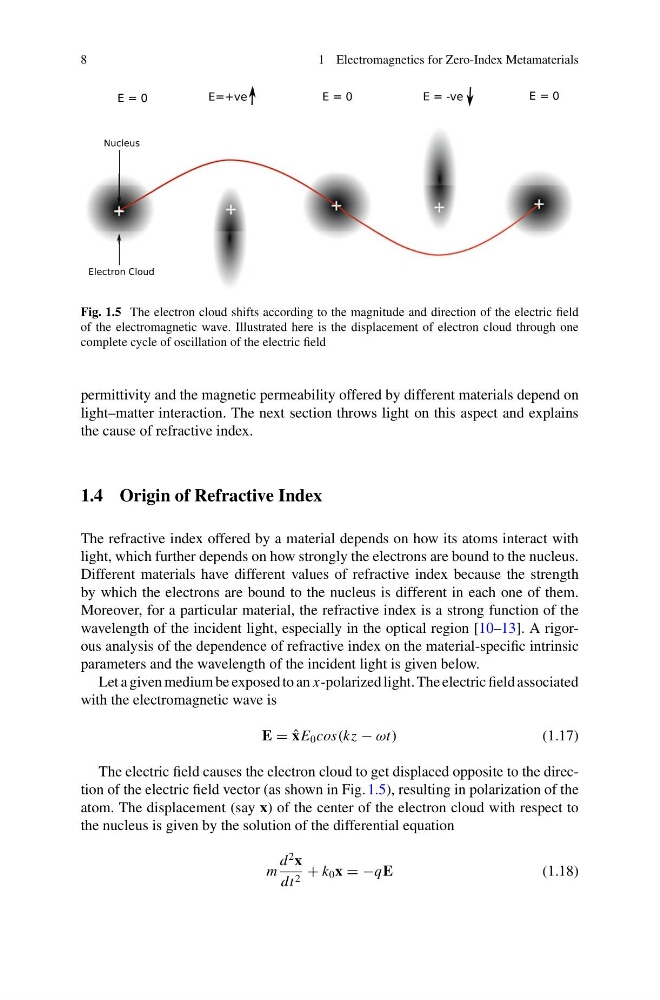
Fig. 1.5 The electron cloud shifts according to the magnitude and direction of the electric field
of the electromagnetic wave. Illustrated here is the displacement of electron cloud through one
complete cycle of oscillation of the electric field
permittivity and the magnetic permeability offered by different materials depend on
light–matter interaction. The next section throws light on this aspect and explains
the cause of refractive index.
1.4 Origin of Refractive Index
The refractive index offered by a material depends on how its atoms interact with
light, which further depends on how strongly the electrons are bound to the nucleus.
Different materials have different values of refractive index because the strength
by which the electrons are bound to the nucleus is different in each one of them.
Moreover, for a particular material, the refractive index is a strong function of the
wavelength of the incident light, especially in the optical region [10–13]. A rigorous analysis of the dependence of refractive index on the material-specific intrinsic
parameters and the wavelength of the incident light is given below.
Let a given medium be exposed to an x-polarized light. The electric field associated
with the electromagnetic wave is
E = ˆ
xE 0 cos(kz − ωt)
(1.17)
The electric field causes the electron cloud to get displaced opposite to the direction of the electric field vector (as shown in Fig. 1.5), resulting in polarization of the
atom. The displacement (say x) of the center of the electron cloud with respect to
the nucleus is given by the solution of the differential equation
m
d
2 x
dt 2 + k 0 x = −qE
(1.18)
1 Electromagnetics for Zero-Index Metamaterials
Fig. 1.5 The electron cloud shifts according to the magnitude and direction of the electric field
of the electromagnetic wave. Illustrated here is the displacement of electron cloud through one
complete cycle of oscillation of the electric field
permittivity and the magnetic permeability offered by different materials depend on
light–matter interaction. The next section throws light on this aspect and explains
the cause of refractive index.
1.4 Origin of Refractive Index
The refractive index offered by a material depends on how its atoms interact with
light, which further depends on how strongly the electrons are bound to the nucleus.
Different materials have different values of refractive index because the strength
by which the electrons are bound to the nucleus is different in each one of them.
Moreover, for a particular material, the refractive index is a strong function of the
wavelength of the incident light, especially in the optical region [10–13]. A rigorous analysis of the dependence of refractive index on the material-specific intrinsic
parameters and the wavelength of the incident light is given below.
Let a given medium be exposed to an x-polarized light. The electric field associated
with the electromagnetic wave is
E = ˆ
xE 0 cos(kz − ωt)
(1.17)
The electric field causes the electron cloud to get displaced opposite to the direction of the electric field vector (as shown in Fig. 1.5), resulting in polarization of the
atom. The displacement (say x) of the center of the electron cloud with respect to
the nucleus is given by the solution of the differential equation
m
d
2 x
dt 2 + k 0 x = −qE
(1.18)