

126
5 Recent Advances in Zero-Index Photonics
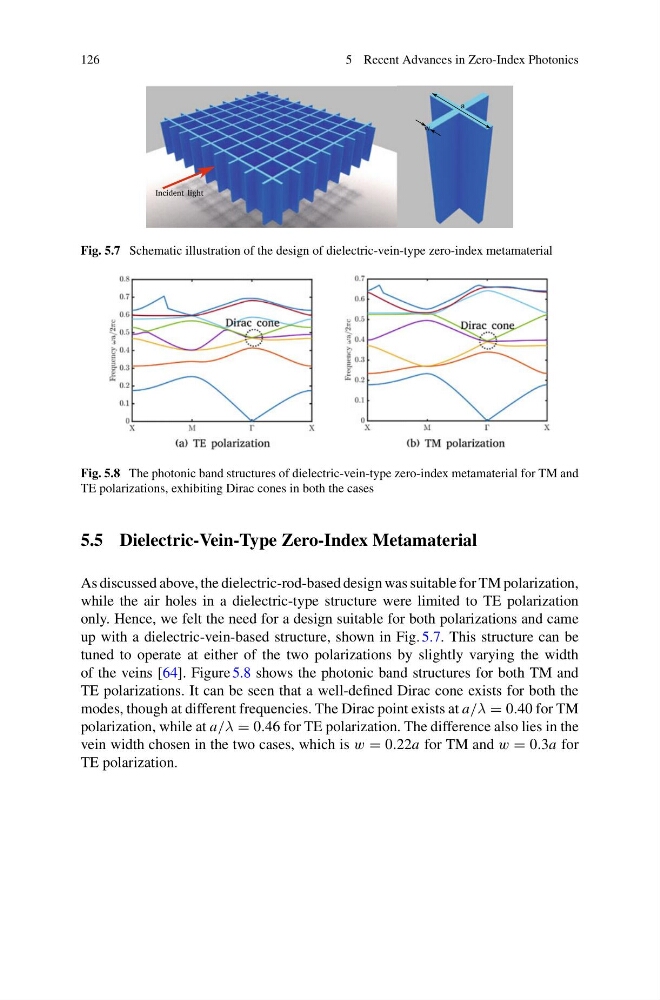
Fig. 5.7 Schematic illustration of the design of dielectric-vein-type zero-index metamaterial
Fig. 5.8 The photonic band structures of dielectric-vein-type zero-index metamaterial for TM and
TE polarizations, exhibiting Dirac cones in both the cases
5.5 Dielectric-Vein-Type Zero-Index Metamaterial
As discussed above, the dielectric-rod-based design was suitable for TM polarization,
while the air holes in a dielectric-type structure were limited to TE polarization
only. Hence, we felt the need for a design suitable for both polarizations and came
up with a dielectric-vein-based structure, shown in Fig. 5.7. This structure can be
tuned to operate at either of the two polarizations by slightly varying the width
of the veins [64]. Figure 5.8 shows the photonic band structures for both TM and
TE polarizations. It can be seen that a well-defined Dirac cone exists for both the
modes, though at different frequencies. The Dirac point exists at a/λ = 0.40 for TM
polarization, while at a/λ = 0.46 for TE polarization. The difference also lies in the
vein width chosen in the two cases, which is w = 0.22a for TM and w = 0.3a for
TE polarization.
5 Recent Advances in Zero-Index Photonics
Fig. 5.7 Schematic illustration of the design of dielectric-vein-type zero-index metamaterial
Fig. 5.8 The photonic band structures of dielectric-vein-type zero-index metamaterial for TM and
TE polarizations, exhibiting Dirac cones in both the cases
5.5 Dielectric-Vein-Type Zero-Index Metamaterial
As discussed above, the dielectric-rod-based design was suitable for TM polarization,
while the air holes in a dielectric-type structure were limited to TE polarization
only. Hence, we felt the need for a design suitable for both polarizations and came
up with a dielectric-vein-based structure, shown in Fig. 5.7. This structure can be
tuned to operate at either of the two polarizations by slightly varying the width
of the veins [64]. Figure 5.8 shows the photonic band structures for both TM and
TE polarizations. It can be seen that a well-defined Dirac cone exists for both the
modes, though at different frequencies. The Dirac point exists at a/λ = 0.40 for TM
polarization, while at a/λ = 0.46 for TE polarization. The difference also lies in the
vein width chosen in the two cases, which is w = 0.22a for TM and w = 0.3a for
TE polarization.