

4.6 Second-Harmonic Generation
109
(a)
(b)
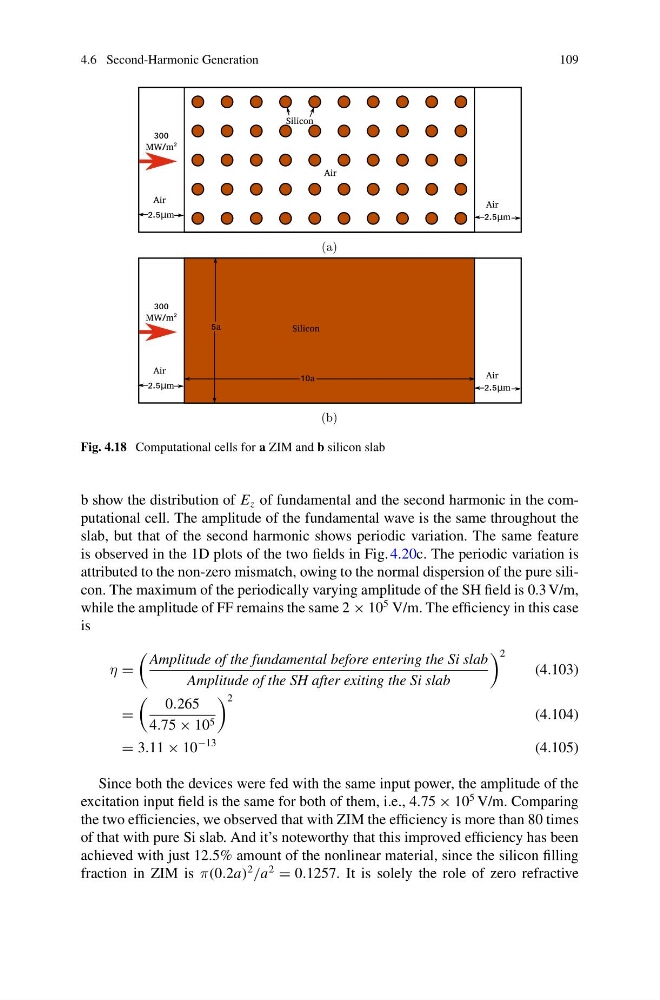
Fig. 4.18 Computational cells for a ZIM and b silicon slab
b show the distribution of E z of fundamental and the second harmonic in the computational cell. The amplitude of the fundamental wave is the same throughout the
slab, but that of the second harmonic shows periodic variation. The same feature
is observed in the 1D plots of the two fields in Fig. 4.20c. The periodic variation is
attributed to the non-zero mismatch, owing to the normal dispersion of the pure silicon. The maximum of the periodically varying amplitude of the SH field is 0.3 V/m,
while the amplitude of FF remains the same 2 × 10
5 V/m. The efficiency in this case
is
η =
Amplitude of the fundamental before entering the Si slab
Amplitude of the SH after exiting the Si slab
2
(4.103)
=
0.265
4.75 × 10 5
2
(4.104)
= 3.11 × 10
−13
(4.105)
Since both the devices were fed with the same input power, the amplitude of the
excitation input field is the same for both of them, i.e., 4.75 × 10
5 V/m. Comparing
the two efficiencies, we observed that with ZIM the efficiency is more than 80 times
of that with pure Si slab. And it’s noteworthy that this improved efficiency has been
achieved with just 12.5% amount of the nonlinear material, since the silicon filling
fraction in ZIM is π(0.2a)
2
/a
2
= 0.1257. It is solely the role of zero refractive
109
(a)
(b)
Fig. 4.18 Computational cells for a ZIM and b silicon slab
b show the distribution of E z of fundamental and the second harmonic in the computational cell. The amplitude of the fundamental wave is the same throughout the
slab, but that of the second harmonic shows periodic variation. The same feature
is observed in the 1D plots of the two fields in Fig. 4.20c. The periodic variation is
attributed to the non-zero mismatch, owing to the normal dispersion of the pure silicon. The maximum of the periodically varying amplitude of the SH field is 0.3 V/m,
while the amplitude of FF remains the same 2 × 10
5 V/m. The efficiency in this case
is
η =
Amplitude of the fundamental before entering the Si slab
Amplitude of the SH after exiting the Si slab
2
(4.103)
=
0.265
4.75 × 10 5
2
(4.104)
= 3.11 × 10
−13
(4.105)
Since both the devices were fed with the same input power, the amplitude of the
excitation input field is the same for both of them, i.e., 4.75 × 10
5 V/m. Comparing
the two efficiencies, we observed that with ZIM the efficiency is more than 80 times
of that with pure Si slab. And it’s noteworthy that this improved efficiency has been
achieved with just 12.5% amount of the nonlinear material, since the silicon filling
fraction in ZIM is π(0.2a)
2
/a
2
= 0.1257. It is solely the role of zero refractive