

3.2 Developing Measures and Standards
31
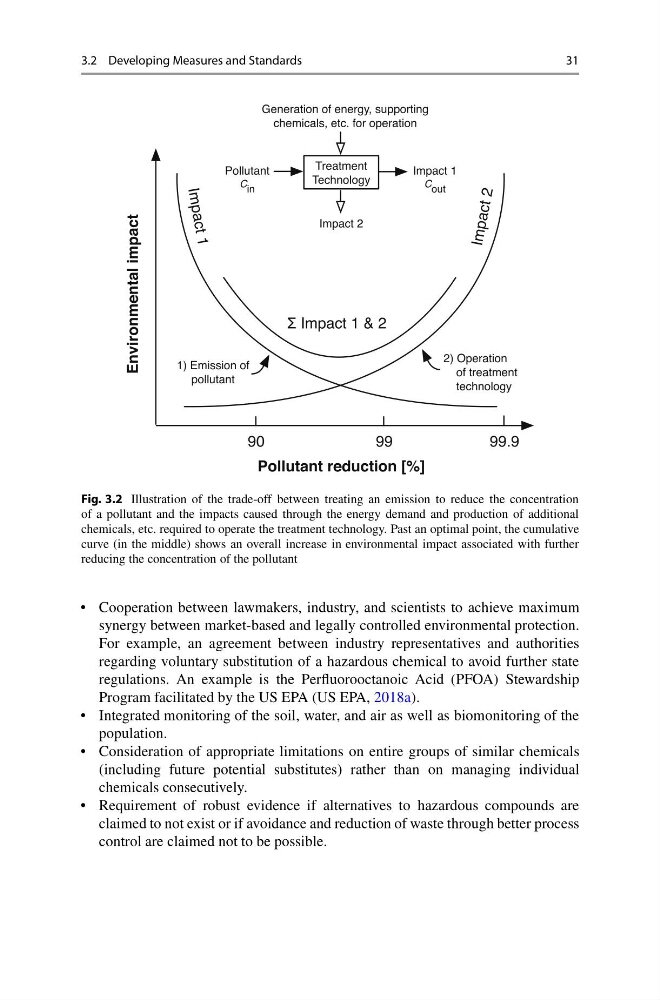
Fig. 3.2 Illustration of the trade-off between treating an emission to reduce the concentration
of a pollutant and the impacts caused through the energy demand and production of additional
chemicals, etc. required to operate the treatment technology. Past an optimal point, the cumulative
curve (in the middle) shows an overall increase in environmental impact associated with further
reducing the concentration of the pollutant
• Cooperation between lawmakers, industry, and scientists to achieve maximum
synergy between market-based and legally controlled environmental protection.
For example, an agreement between industry representatives and authorities
regarding voluntary substitution of a hazardous chemical to avoid further state
regulations. An example is the Perfluorooctanoic Acid (PFOA) Stewardship
Program facilitated by the US EPA (US EPA, 2018a).
• Integrated monitoring of the soil, water, and air as well as biomonitoring of the
population.
• Consideration of appropriate limitations on entire groups of similar chemicals
(including future potential substitutes) rather than on managing individual
chemicals consecutively.
• Requirement of robust evidence if alternatives to hazardous compounds are
claimed to not exist or if avoidance and reduction of waste through better process
control are claimed not to be possible.
31
Fig. 3.2 Illustration of the trade-off between treating an emission to reduce the concentration
of a pollutant and the impacts caused through the energy demand and production of additional
chemicals, etc. required to operate the treatment technology. Past an optimal point, the cumulative
curve (in the middle) shows an overall increase in environmental impact associated with further
reducing the concentration of the pollutant
• Cooperation between lawmakers, industry, and scientists to achieve maximum
synergy between market-based and legally controlled environmental protection.
For example, an agreement between industry representatives and authorities
regarding voluntary substitution of a hazardous chemical to avoid further state
regulations. An example is the Perfluorooctanoic Acid (PFOA) Stewardship
Program facilitated by the US EPA (US EPA, 2018a).
• Integrated monitoring of the soil, water, and air as well as biomonitoring of the
population.
• Consideration of appropriate limitations on entire groups of similar chemicals
(including future potential substitutes) rather than on managing individual
chemicals consecutively.
• Requirement of robust evidence if alternatives to hazardous compounds are
claimed to not exist or if avoidance and reduction of waste through better process
control are claimed not to be possible.