

30
3 The Role of Legislation
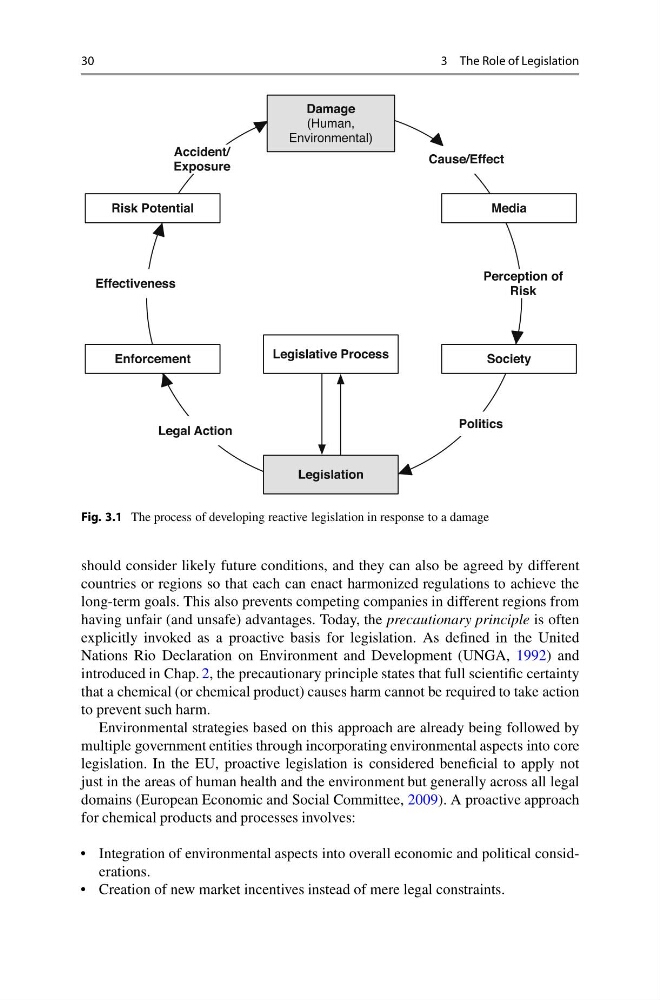
Fig. 3.1 The process of developing reactive legislation in response to a damage
should consider likely future conditions, and they can also be agreed by different
countries or regions so that each can enact harmonized regulations to achieve the
long-term goals. This also prevents competing companies in different regions from
having unfair (and unsafe) advantages. Today, the precautionary principle is often
explicitly invoked as a proactive basis for legislation. As defined in the United
Nations Rio Declaration on Environment and Development (UNGA, 1992) and
introduced in Chap. 2, the precautionary principle states that full scientific certainty
that a chemical (or chemical product) causes harm cannot be required to take action
to prevent such harm.
Environmental strategies based on this approach are already being followed by
multiple government entities through incorporating environmental aspects into core
legislation. In the EU, proactive legislation is considered beneficial to apply not
just in the areas of human health and the environment but generally across all legal
domains (European Economic and Social Committee, 2009). A proactive approach
for chemical products and processes involves:
• Integration of environmental aspects into overall economic and political considerations.
• Creation of new market incentives instead of mere legal constraints.
3 The Role of Legislation
Fig. 3.1 The process of developing reactive legislation in response to a damage
should consider likely future conditions, and they can also be agreed by different
countries or regions so that each can enact harmonized regulations to achieve the
long-term goals. This also prevents competing companies in different regions from
having unfair (and unsafe) advantages. Today, the precautionary principle is often
explicitly invoked as a proactive basis for legislation. As defined in the United
Nations Rio Declaration on Environment and Development (UNGA, 1992) and
introduced in Chap. 2, the precautionary principle states that full scientific certainty
that a chemical (or chemical product) causes harm cannot be required to take action
to prevent such harm.
Environmental strategies based on this approach are already being followed by
multiple government entities through incorporating environmental aspects into core
legislation. In the EU, proactive legislation is considered beneficial to apply not
just in the areas of human health and the environment but generally across all legal
domains (European Economic and Social Committee, 2009). A proactive approach
for chemical products and processes involves:
• Integration of environmental aspects into overall economic and political considerations.
• Creation of new market incentives instead of mere legal constraints.