

1.3 Learning Goals
5
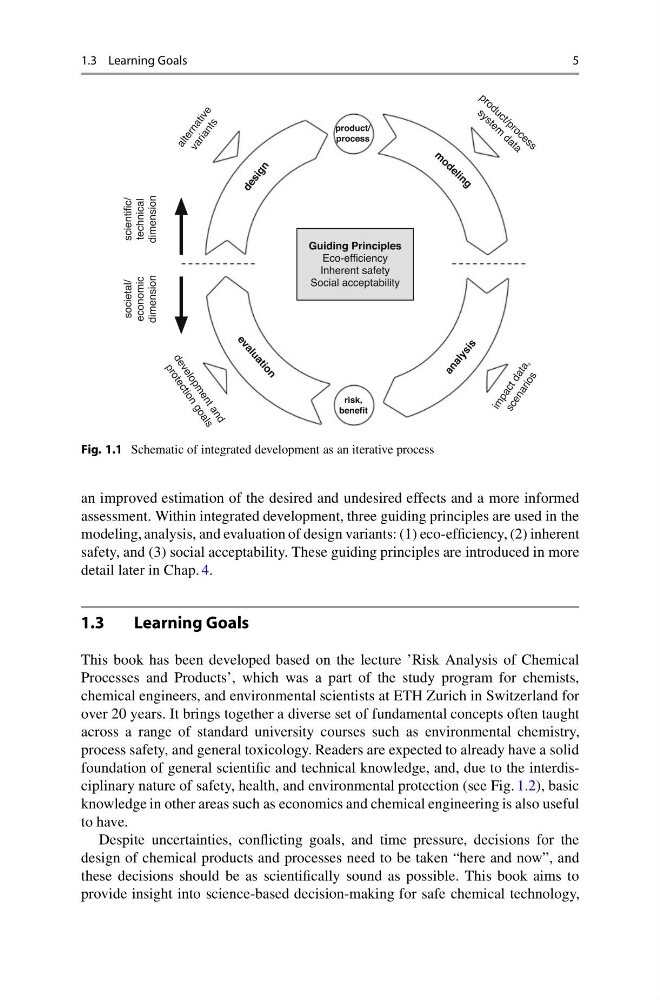
Fig. 1.1 Schematic of integrated development as an iterative process
an improved estimation of the desired and undesired effects and a more informed
assessment. Within integrated development, three guiding principles are used in the
modeling, analysis, and evaluation of design variants: (1) eco-efficiency, (2) inherent
safety, and (3) social acceptability. These guiding principles are introduced in more
detail later in Chap. 4.
1.3
Learning Goals
This book has been developed based on the lecture ’Risk Analysis of Chemical
Processes and Products’, which was a part of the study program for chemists,
chemical engineers, and environmental scientists at ETH Zurich in Switzerland for
over 20 years. It brings together a diverse set of fundamental concepts often taught
across a range of standard university courses such as environmental chemistry,
process safety, and general toxicology. Readers are expected to already have a solid
foundation of general scientific and technical knowledge, and, due to the interdisciplinary nature of safety, health, and environmental protection (see Fig. 1.2), basic
knowledge in other areas such as economics and chemical engineering is also useful
to have.
Despite uncertainties, conflicting goals, and time pressure, decisions for the
design of chemical products and processes need to be taken “here and now”, and
these decisions should be as scientifically sound as possible. This book aims to
provide insight into science-based decision-making for safe chemical technology,
5
Fig. 1.1 Schematic of integrated development as an iterative process
an improved estimation of the desired and undesired effects and a more informed
assessment. Within integrated development, three guiding principles are used in the
modeling, analysis, and evaluation of design variants: (1) eco-efficiency, (2) inherent
safety, and (3) social acceptability. These guiding principles are introduced in more
detail later in Chap. 4.
1.3
Learning Goals
This book has been developed based on the lecture ’Risk Analysis of Chemical
Processes and Products’, which was a part of the study program for chemists,
chemical engineers, and environmental scientists at ETH Zurich in Switzerland for
over 20 years. It brings together a diverse set of fundamental concepts often taught
across a range of standard university courses such as environmental chemistry,
process safety, and general toxicology. Readers are expected to already have a solid
foundation of general scientific and technical knowledge, and, due to the interdisciplinary nature of safety, health, and environmental protection (see Fig. 1.2), basic
knowledge in other areas such as economics and chemical engineering is also useful
to have.
Despite uncertainties, conflicting goals, and time pressure, decisions for the
design of chemical products and processes need to be taken “here and now”, and
these decisions should be as scientifically sound as possible. This book aims to
provide insight into science-based decision-making for safe chemical technology,