

9.4 Structure of Societal Dialogue
225
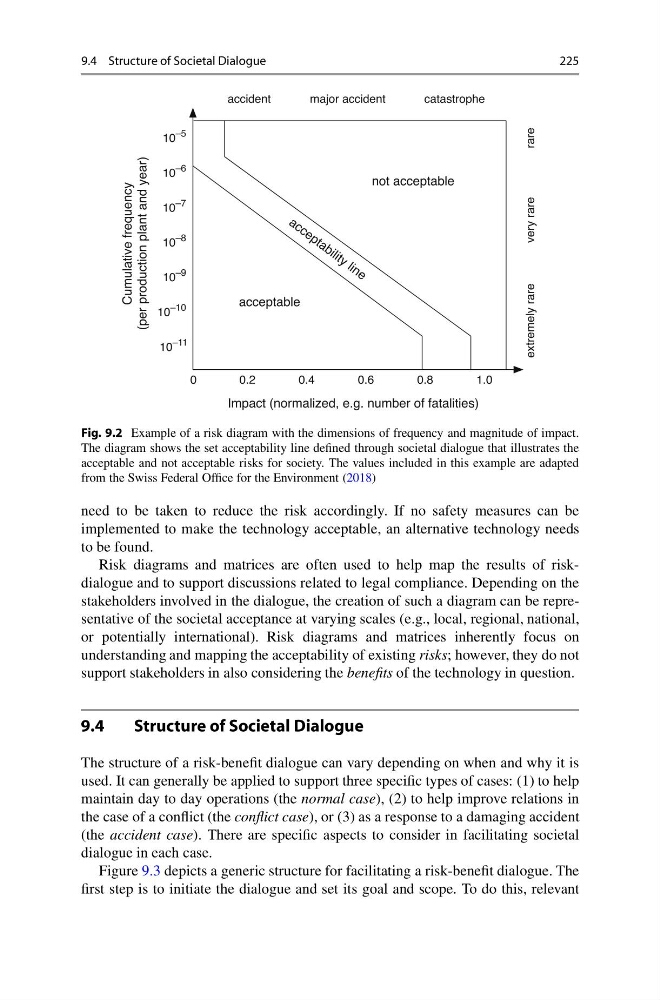
Fig. 9.2 Example of a risk diagram with the dimensions of frequency and magnitude of impact.
The diagram shows the set acceptability line defined through societal dialogue that illustrates the
acceptable and not acceptable risks for society. The values included in this example are adapted
from the Swiss Federal Office for the Environment (2018)
need to be taken to reduce the risk accordingly. If no safety measures can be
implemented to make the technology acceptable, an alternative technology needs
to be found.
Risk diagrams and matrices are often used to help map the results of riskdialogue and to support discussions related to legal compliance. Depending on the
stakeholders involved in the dialogue, the creation of such a diagram can be representative of the societal acceptance at varying scales (e.g., local, regional, national,
or potentially international). Risk diagrams and matrices inherently focus on
understanding and mapping the acceptability of existing risks; however, they do not
support stakeholders in also considering the benefits of the technology in question.
9.4
Structure of Societal Dialogue
The structure of a risk-benefit dialogue can vary depending on when and why it is
used. It can generally be applied to support three specific types of cases: (1) to help
maintain day to day operations (the normal case), (2) to help improve relations in
the case of a conflict (the conflict case), or (3) as a response to a damaging accident
(the accident case). There are specific aspects to consider in facilitating societal
dialogue in each case.
Figure 9.3 depicts a generic structure for facilitating a risk-benefit dialogue. The
first step is to initiate the dialogue and set its goal and scope. To do this, relevant
225
Fig. 9.2 Example of a risk diagram with the dimensions of frequency and magnitude of impact.
The diagram shows the set acceptability line defined through societal dialogue that illustrates the
acceptable and not acceptable risks for society. The values included in this example are adapted
from the Swiss Federal Office for the Environment (2018)
need to be taken to reduce the risk accordingly. If no safety measures can be
implemented to make the technology acceptable, an alternative technology needs
to be found.
Risk diagrams and matrices are often used to help map the results of riskdialogue and to support discussions related to legal compliance. Depending on the
stakeholders involved in the dialogue, the creation of such a diagram can be representative of the societal acceptance at varying scales (e.g., local, regional, national,
or potentially international). Risk diagrams and matrices inherently focus on
understanding and mapping the acceptability of existing risks; however, they do not
support stakeholders in also considering the benefits of the technology in question.
9.4
Structure of Societal Dialogue
The structure of a risk-benefit dialogue can vary depending on when and why it is
used. It can generally be applied to support three specific types of cases: (1) to help
maintain day to day operations (the normal case), (2) to help improve relations in
the case of a conflict (the conflict case), or (3) as a response to a damaging accident
(the accident case). There are specific aspects to consider in facilitating societal
dialogue in each case.
Figure 9.3 depicts a generic structure for facilitating a risk-benefit dialogue. The
first step is to initiate the dialogue and set its goal and scope. To do this, relevant