

214
8 Thermal Process Safety
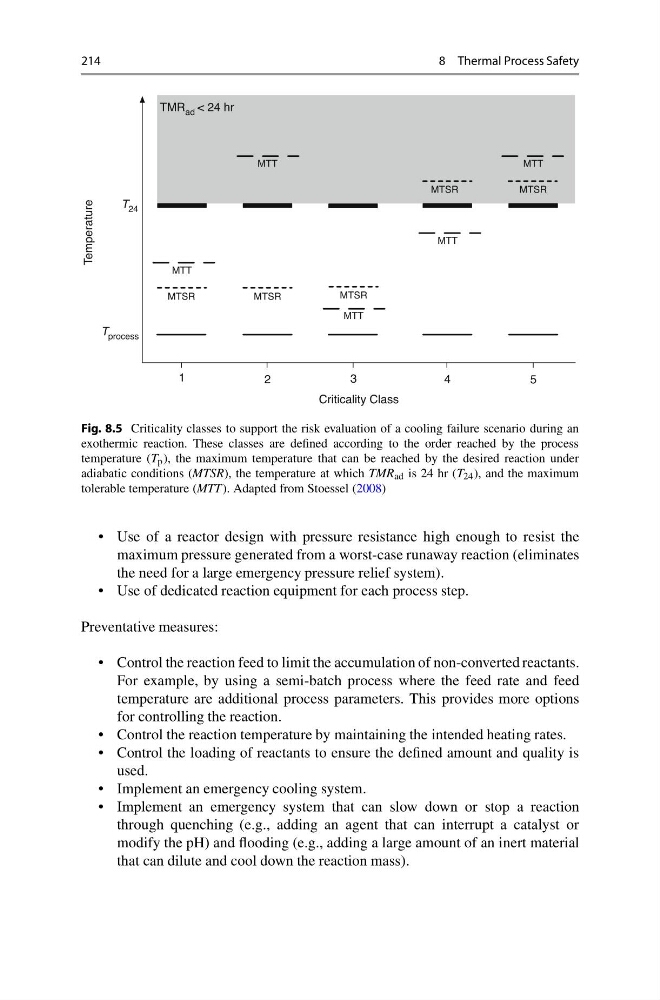
Fig. 8.5 Criticality classes to support the risk evaluation of a cooling failure scenario during an
exothermic reaction. These classes are defined according to the order reached by the process
temperature (T p ), the maximum temperature that can be reached by the desired reaction under
adiabatic conditions (MTSR), the temperature at which TMR ad is 24 hr (T 24 ), and the maximum
tolerable temperature (MTT). Adapted from Stoessel (2008)
• Use of a reactor design with pressure resistance high enough to resist the
maximum pressure generated from a worst-case runaway reaction (eliminates
the need for a large emergency pressure relief system).
• Use of dedicated reaction equipment for each process step.
Preventative measures:
• Control the reaction feed to limit the accumulation of non-converted reactants.
For example, by using a semi-batch process where the feed rate and feed
temperature are additional process parameters. This provides more options
for controlling the reaction.
• Control the reaction temperature by maintaining the intended heating rates.
• Control the loading of reactants to ensure the defined amount and quality is
used.
• Implement an emergency cooling system.
• Implement an emergency system that can slow down or stop a reaction
through quenching (e.g., adding an agent that can interrupt a catalyst or
modify the pH) and flooding (e.g., adding a large amount of an inert material
that can dilute and cool down the reaction mass).
8 Thermal Process Safety
Fig. 8.5 Criticality classes to support the risk evaluation of a cooling failure scenario during an
exothermic reaction. These classes are defined according to the order reached by the process
temperature (T p ), the maximum temperature that can be reached by the desired reaction under
adiabatic conditions (MTSR), the temperature at which TMR ad is 24 hr (T 24 ), and the maximum
tolerable temperature (MTT). Adapted from Stoessel (2008)
• Use of a reactor design with pressure resistance high enough to resist the
maximum pressure generated from a worst-case runaway reaction (eliminates
the need for a large emergency pressure relief system).
• Use of dedicated reaction equipment for each process step.
Preventative measures:
• Control the reaction feed to limit the accumulation of non-converted reactants.
For example, by using a semi-batch process where the feed rate and feed
temperature are additional process parameters. This provides more options
for controlling the reaction.
• Control the reaction temperature by maintaining the intended heating rates.
• Control the loading of reactants to ensure the defined amount and quality is
used.
• Implement an emergency cooling system.
• Implement an emergency system that can slow down or stop a reaction
through quenching (e.g., adding an agent that can interrupt a catalyst or
modify the pH) and flooding (e.g., adding a large amount of an inert material
that can dilute and cool down the reaction mass).