

184
7 Risk Assessment and Management of Chemical Processes
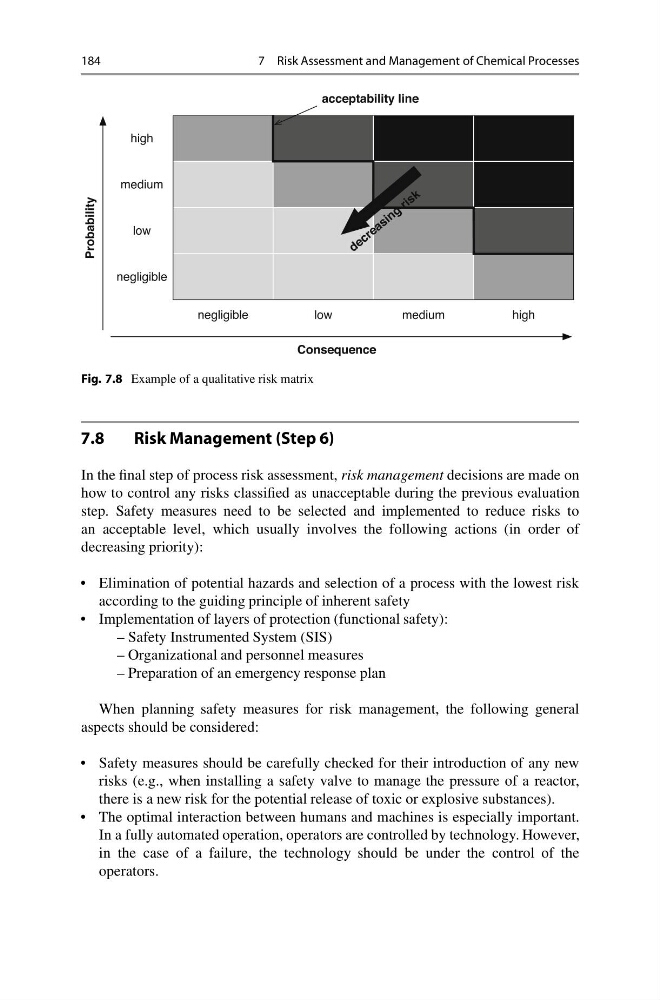
Fig. 7.8 Example of a qualitative risk matrix
7.8
Risk Management (Step 6)
In the final step of process risk assessment, risk management decisions are made on
how to control any risks classified as unacceptable during the previous evaluation
step. Safety measures need to be selected and implemented to reduce risks to
an acceptable level, which usually involves the following actions (in order of
decreasing priority):
• Elimination of potential hazards and selection of a process with the lowest risk
according to the guiding principle of inherent safety
• Implementation of layers of protection (functional safety):
– Safety Instrumented System (SIS)
– Organizational and personnel measures
– Preparation of an emergency response plan
When planning safety measures for risk management, the following general
aspects should be considered:
• Safety measures should be carefully checked for their introduction of any new
risks (e.g., when installing a safety valve to manage the pressure of a reactor,
there is a new risk for the potential release of toxic or explosive substances).
• The optimal interaction between humans and machines is especially important.
In a fully automated operation, operators are controlled by technology. However,
in the case of a failure, the technology should be under the control of the
operators.
7 Risk Assessment and Management of Chemical Processes
Fig. 7.8 Example of a qualitative risk matrix
7.8
Risk Management (Step 6)
In the final step of process risk assessment, risk management decisions are made on
how to control any risks classified as unacceptable during the previous evaluation
step. Safety measures need to be selected and implemented to reduce risks to
an acceptable level, which usually involves the following actions (in order of
decreasing priority):
• Elimination of potential hazards and selection of a process with the lowest risk
according to the guiding principle of inherent safety
• Implementation of layers of protection (functional safety):
– Safety Instrumented System (SIS)
– Organizational and personnel measures
– Preparation of an emergency response plan
When planning safety measures for risk management, the following general
aspects should be considered:
• Safety measures should be carefully checked for their introduction of any new
risks (e.g., when installing a safety valve to manage the pressure of a reactor,
there is a new risk for the potential release of toxic or explosive substances).
• The optimal interaction between humans and machines is especially important.
In a fully automated operation, operators are controlled by technology. However,
in the case of a failure, the technology should be under the control of the
operators.