

6.5 Effect Assessment (Step 3)
133
toxicokinetics studies both the rate at which a substance is absorbed by an organism
and the rates at which it is distributed, metabolized, and excreted. Toxicodynamics
is the field that investigates the actual effect a substance then has on an organism,
i.e., how the chemical interacts with the target site in the organism. Here, an effect
refers to any measurable change in a biological parameter (known as an endpoint)
that results from exposure and is dependent on the site of action, intensity, duration,
and frequency of the exposure. During testing, changes in the test subject (often a
cell or organism) are observed in comparison to a control group that has not been
exposed to the chemical.
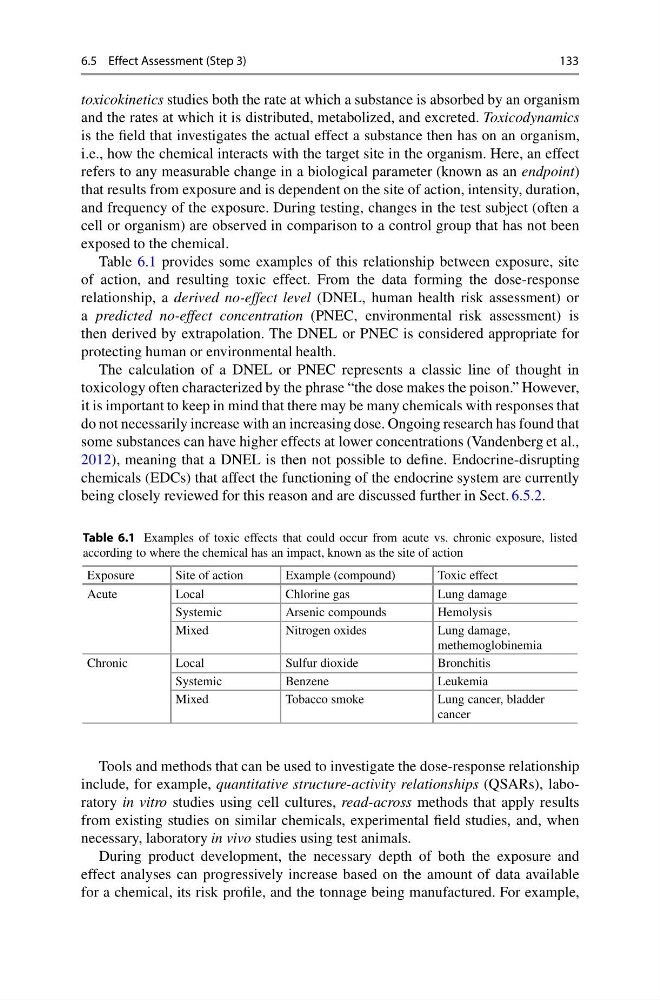
Table 6.1 provides some examples of this relationship between exposure, site
of action, and resulting toxic effect. From the data forming the dose-response
relationship, a derived no-effect level (DNEL, human health risk assessment) or
a predicted no-effect concentration (PNEC, environmental risk assessment) is
then derived by extrapolation. The DNEL or PNEC is considered appropriate for
protecting human or environmental health.
The calculation of a DNEL or PNEC represents a classic line of thought in
toxicology often characterized by the phrase “the dose makes the poison.” However,
it is important to keep in mind that there may be many chemicals with responses that
do not necessarily increase with an increasing dose. Ongoing research has found that
some substances can have higher effects at lower concentrations (Vandenberg et al.,
2012), meaning that a DNEL is then not possible to define. Endocrine-disrupting
chemicals (EDCs) that affect the functioning of the endocrine system are currently
being closely reviewed for this reason and are discussed further in Sect. 6.5.2.
Table 6.1 Examples of toxic effects that could occur from acute vs. chronic exposure, listed
according to where the chemical has an impact, known as the site of action
Exposure
Site of action
Example (compound)
Toxic effect
Acute
Local
Chlorine gas
Lung damage
Systemic
Arsenic compounds
Hemolysis
Mixed
Nitrogen oxides
Lung damage,
methemoglobinemia
Chronic
Local
Sulfur dioxide
Bronchitis
Systemic
Benzene
Leukemia
Mixed
Tobacco smoke
Lung cancer, bladder
cancer
Tools and methods that can be used to investigate the dose-response relationship
include, for example, quantitative structure-activity relationships (QSARs), laboratory in vitro studies using cell cultures, read-across methods that apply results
from existing studies on similar chemicals, experimental field studies, and, when
necessary, laboratory in vivo studies using test animals.
During product development, the necessary depth of both the exposure and
effect analyses can progressively increase based on the amount of data available
for a chemical, its risk profile, and the tonnage being manufactured. For example,
133
toxicokinetics studies both the rate at which a substance is absorbed by an organism
and the rates at which it is distributed, metabolized, and excreted. Toxicodynamics
is the field that investigates the actual effect a substance then has on an organism,
i.e., how the chemical interacts with the target site in the organism. Here, an effect
refers to any measurable change in a biological parameter (known as an endpoint)
that results from exposure and is dependent on the site of action, intensity, duration,
and frequency of the exposure. During testing, changes in the test subject (often a
cell or organism) are observed in comparison to a control group that has not been
exposed to the chemical.
Table 6.1 provides some examples of this relationship between exposure, site
of action, and resulting toxic effect. From the data forming the dose-response
relationship, a derived no-effect level (DNEL, human health risk assessment) or
a predicted no-effect concentration (PNEC, environmental risk assessment) is
then derived by extrapolation. The DNEL or PNEC is considered appropriate for
protecting human or environmental health.
The calculation of a DNEL or PNEC represents a classic line of thought in
toxicology often characterized by the phrase “the dose makes the poison.” However,
it is important to keep in mind that there may be many chemicals with responses that
do not necessarily increase with an increasing dose. Ongoing research has found that
some substances can have higher effects at lower concentrations (Vandenberg et al.,
2012), meaning that a DNEL is then not possible to define. Endocrine-disrupting
chemicals (EDCs) that affect the functioning of the endocrine system are currently
being closely reviewed for this reason and are discussed further in Sect. 6.5.2.
Table 6.1 Examples of toxic effects that could occur from acute vs. chronic exposure, listed
according to where the chemical has an impact, known as the site of action
Exposure
Site of action
Example (compound)
Toxic effect
Acute
Local
Chlorine gas
Lung damage
Systemic
Arsenic compounds
Hemolysis
Mixed
Nitrogen oxides
Lung damage,
methemoglobinemia
Chronic
Local
Sulfur dioxide
Bronchitis
Systemic
Benzene
Leukemia
Mixed
Tobacco smoke
Lung cancer, bladder
cancer
Tools and methods that can be used to investigate the dose-response relationship
include, for example, quantitative structure-activity relationships (QSARs), laboratory in vitro studies using cell cultures, read-across methods that apply results
from existing studies on similar chemicals, experimental field studies, and, when
necessary, laboratory in vivo studies using test animals.
During product development, the necessary depth of both the exposure and
effect analyses can progressively increase based on the amount of data available
for a chemical, its risk profile, and the tonnage being manufactured. For example,