

5.5 Impact Assessment (Phase 3)
85
The following sections provide examples that briefly illustrate how such characterization factors can be developed and applied.
5.5.3.1 Cumulative Energy Demand
In LCA, the cumulative energy demand (CED) of a product or process is the total
amount of both direct and indirect uses of primary energy involved in the extraction,
manufacturing, and disposal of all raw and auxiliary materials. Primary energy
includes energy found in the natural environment before being converted into any
other form (e.g., crude oil, natural gas, solar energy, wind energy). Because the
energy use within chemical manufacturing can be high, CED is an important aspect
to consider. While there have been ongoing discussions to agree upon an appropriate
approach to calculating and applying CED within LCA (Frischknecht et al., 2015;
Huijbregts et al., 2010, 2006), it is considered to fit within LCIA, rather than within
the LCI phase.
Individual characterization factors can be calculated to define the CED of
manufactured products and of process steps. One study modeled and calculated
the CED of a range of chemical solvents commonly used in industrial processes
(Capello et al., 2007). Applying a functional unit of 1 kg of solvent used as reaction
media in a process, the authors calculated the CED for the production of each virgin
solvent, incineration of each solvent as waste, and distillation of each solvent if it
were recycled. Credits were given for the production of energy from the incineration
and also for avoiding the production of virgin solvent through recycling.
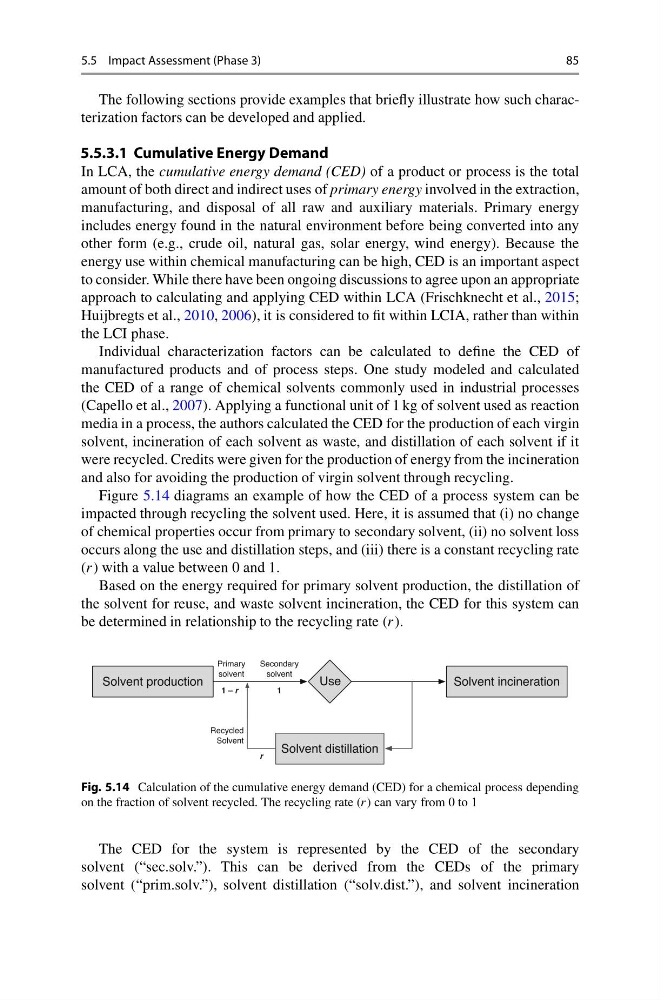
Figure 5.14 diagrams an example of how the CED of a process system can be
impacted through recycling the solvent used. Here, it is assumed that (i) no change
of chemical properties occur from primary to secondary solvent, (ii) no solvent loss
occurs along the use and distillation steps, and (iii) there is a constant recycling rate
(r) with a value between 0 and 1.
Based on the energy required for primary solvent production, the distillation of
the solvent for reuse, and waste solvent incineration, the CED for this system can
be determined in relationship to the recycling rate (r).
Fig. 5.14 Calculation of the cumulative energy demand (CED) for a chemical process depending
on the fraction of solvent recycled. The recycling rate (r) can vary from 0 to 1
The CED for the system is represented by the CED of the secondary
solvent (“sec.solv.”). This can be derived from the CEDs of the primary
solvent (“prim.solv.”), solvent distillation (“solv.dist.”), and solvent incineration
85
The following sections provide examples that briefly illustrate how such characterization factors can be developed and applied.
5.5.3.1 Cumulative Energy Demand
In LCA, the cumulative energy demand (CED) of a product or process is the total
amount of both direct and indirect uses of primary energy involved in the extraction,
manufacturing, and disposal of all raw and auxiliary materials. Primary energy
includes energy found in the natural environment before being converted into any
other form (e.g., crude oil, natural gas, solar energy, wind energy). Because the
energy use within chemical manufacturing can be high, CED is an important aspect
to consider. While there have been ongoing discussions to agree upon an appropriate
approach to calculating and applying CED within LCA (Frischknecht et al., 2015;
Huijbregts et al., 2010, 2006), it is considered to fit within LCIA, rather than within
the LCI phase.
Individual characterization factors can be calculated to define the CED of
manufactured products and of process steps. One study modeled and calculated
the CED of a range of chemical solvents commonly used in industrial processes
(Capello et al., 2007). Applying a functional unit of 1 kg of solvent used as reaction
media in a process, the authors calculated the CED for the production of each virgin
solvent, incineration of each solvent as waste, and distillation of each solvent if it
were recycled. Credits were given for the production of energy from the incineration
and also for avoiding the production of virgin solvent through recycling.
Figure 5.14 diagrams an example of how the CED of a process system can be
impacted through recycling the solvent used. Here, it is assumed that (i) no change
of chemical properties occur from primary to secondary solvent, (ii) no solvent loss
occurs along the use and distillation steps, and (iii) there is a constant recycling rate
(r) with a value between 0 and 1.
Based on the energy required for primary solvent production, the distillation of
the solvent for reuse, and waste solvent incineration, the CED for this system can
be determined in relationship to the recycling rate (r).
Fig. 5.14 Calculation of the cumulative energy demand (CED) for a chemical process depending
on the fraction of solvent recycled. The recycling rate (r) can vary from 0 to 1
The CED for the system is represented by the CED of the secondary
solvent (“sec.solv.”). This can be derived from the CEDs of the primary
solvent (“prim.solv.”), solvent distillation (“solv.dist.”), and solvent incineration