

In laser ablation systems, high-power laser pulses are focused onto the surface of
the precursor target to evaporate the material. The target, either metallic or
nonmetallic (but even mixed targets are possible), is heated locally to high temperatures, leading locally to evaporation of the target. Due to the rapid evaporation in the
high-power laser pulse, even the stoichiometry of a complex mixed target is
preserved in the vapor phase. During the pulse, a supersonic jet of evaporated
material (known as a plume) is ejected perpendicularly to the target surface and
expands into the gas space above the target. Immediately after the laser pulse, the
temperature in the plume reaches values of 3800 K and more [8]. During the
adiabatic expansion of the plume, the temperature decreases and the particles
formed are transported by a continuous stream of carrier gas to the powder collector.
The carrier gas may also contain reactive gas components; for example, to obtain
oxides oxygen is added, for carbides methane (CH 4 ) and for nitrides, ammonia
(NH 3 ).
Within the plume, there is a supersaturated vapor favoring the formation of
particles. As the duration of the supersaturated conditions is limited by the adiabatic
expansion of the plume, the gas pressure in the reaction vessel plays a crucial role in
particle nucleation and growth. At a low gas pressure the plume expands very rapidly
and, therefore, the concentration of reactive species in the plume also decreases very
rapidly, and this limits the particle growth. In contrast, at a higher gas pressure the
supersaturation is higher. However, the higher the supersaturation, the smaller the
size of the nucleus required for condensation, and this leads to a large number of
nuclei and, consequently, again to smaller particle sizes. This simplified description
of the complex processes in the plume is well supported by experimental results. As
an example, Figure 4.16 shows, in graphical form, the dependency of Co 3 O 4 particle
size on gas pressure; here, small particle sizes are apparent at lower and at higher
gas pressures, whereas the particle size is largest over an intermediate pressure
range.
laser beam
optical system
reaction and
carrier gas in
plume
precursor target
vacuum vessel
nanoparticles
to powder
collector
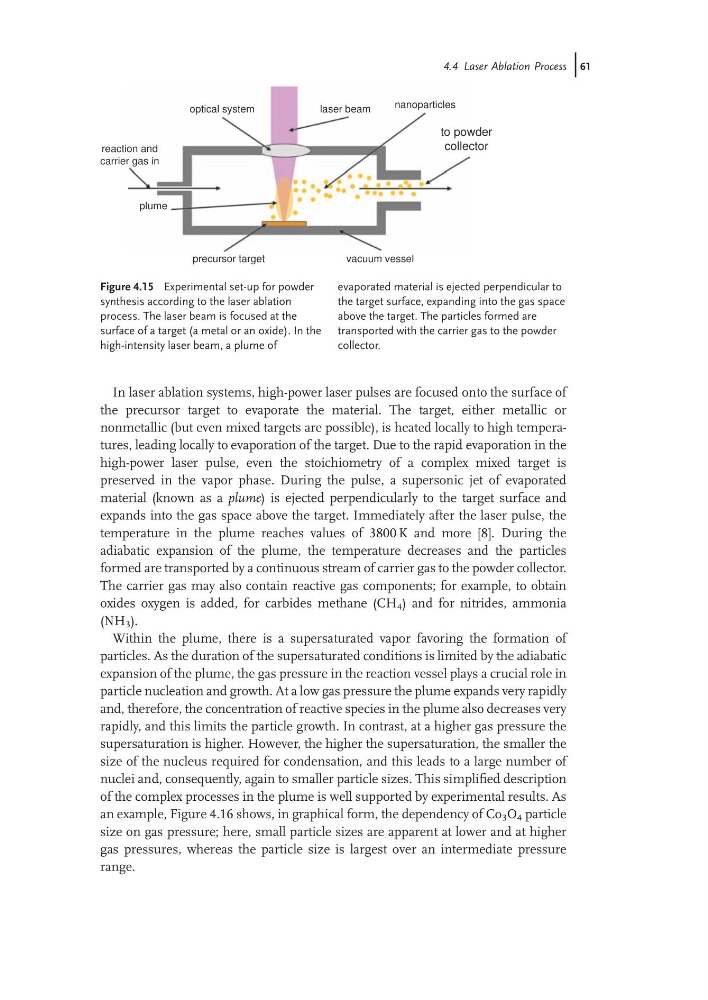
Figure 4.15 Experimental set-up for powder
synthesis according to the laser ablation
process. The laser beam is focused at the
surface of a target (a metal or an oxide). In the
high-intensity laser beam, a plume of
evaporated material is ejected perpendicular to
the target surface, expanding into the gas space
above the target. The particles formed are
transported with the carrier gas to the powder
collector.
4.4 Laser Ablation Process j61
the precursor target to evaporate the material. The target, either metallic or
nonmetallic (but even mixed targets are possible), is heated locally to high temperatures, leading locally to evaporation of the target. Due to the rapid evaporation in the
high-power laser pulse, even the stoichiometry of a complex mixed target is
preserved in the vapor phase. During the pulse, a supersonic jet of evaporated
material (known as a plume) is ejected perpendicularly to the target surface and
expands into the gas space above the target. Immediately after the laser pulse, the
temperature in the plume reaches values of 3800 K and more [8]. During the
adiabatic expansion of the plume, the temperature decreases and the particles
formed are transported by a continuous stream of carrier gas to the powder collector.
The carrier gas may also contain reactive gas components; for example, to obtain
oxides oxygen is added, for carbides methane (CH 4 ) and for nitrides, ammonia
(NH 3 ).
Within the plume, there is a supersaturated vapor favoring the formation of
particles. As the duration of the supersaturated conditions is limited by the adiabatic
expansion of the plume, the gas pressure in the reaction vessel plays a crucial role in
particle nucleation and growth. At a low gas pressure the plume expands very rapidly
and, therefore, the concentration of reactive species in the plume also decreases very
rapidly, and this limits the particle growth. In contrast, at a higher gas pressure the
supersaturation is higher. However, the higher the supersaturation, the smaller the
size of the nucleus required for condensation, and this leads to a large number of
nuclei and, consequently, again to smaller particle sizes. This simplified description
of the complex processes in the plume is well supported by experimental results. As
an example, Figure 4.16 shows, in graphical form, the dependency of Co 3 O 4 particle
size on gas pressure; here, small particle sizes are apparent at lower and at higher
gas pressures, whereas the particle size is largest over an intermediate pressure
range.
laser beam
optical system
reaction and
carrier gas in
plume
precursor target
vacuum vessel
nanoparticles
to powder
collector
Figure 4.15 Experimental set-up for powder
synthesis according to the laser ablation
process. The laser beam is focused at the
surface of a target (a metal or an oxide). In the
high-intensity laser beam, a plume of
evaporated material is ejected perpendicular to
the target surface, expanding into the gas space
above the target. The particles formed are
transported with the carrier gas to the powder
collector.
4.4 Laser Ablation Process j61