

range that can be handled without major problems. This is clearly just the beginning
of a potentially interesting development since, by examining Figure 10.16, it is clear
that electrical currents in excess of 10 mA can flow through a single-wall nanotube,
without destroying it (the saturation current is about 25 mA). Others have also shown
that even complete logic circuits can be realized using just one nanotube.
Further interesting types of nanotube consist of boron nitride (BN), which are
isostructural to the carbon nanotubes (see Chapter 5). Bulk BN is a nearly perfect
insulator, whereas the corresponding nanotubes are wide-gap semiconductors. A
typical I–V diagram, measured at room temperature, of one BN nanotube is depicted
in Figure 10.20. The striking feature of this plot is the fact that there is no
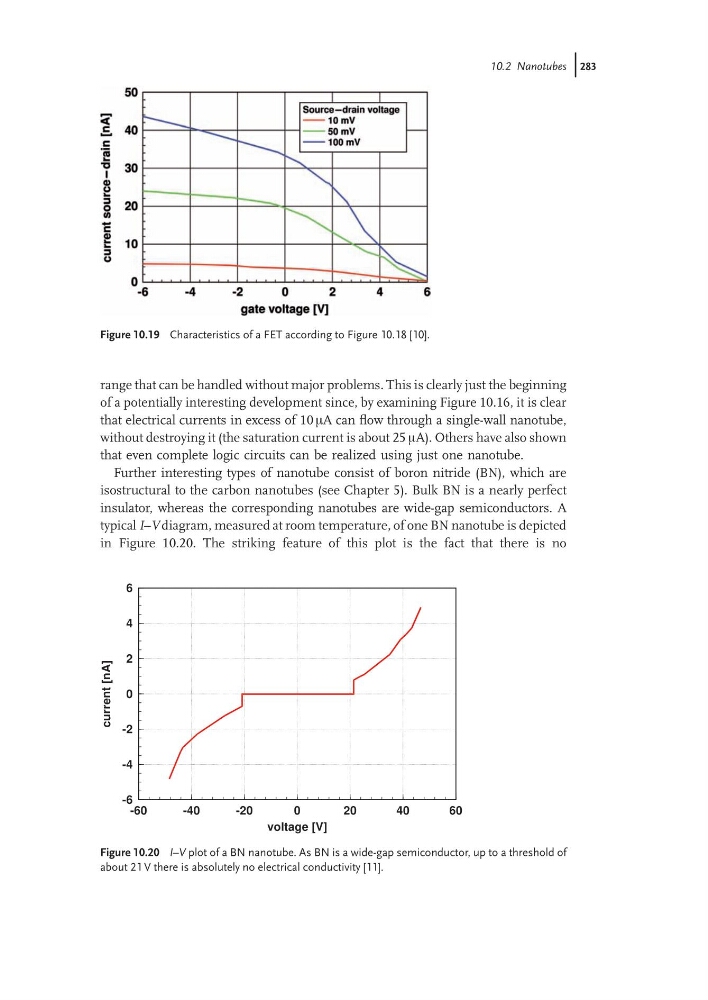
Figure 10.19 Characteristics of a FET according to Figure 10.18 [10].
-60
-40
-20
0
20
40
60
voltage [V]
-6
-4
-2
0
2
4
6
current [nA]
Figure 10.20 I–V plot of a BN nanotube. As BN is a wide-gap semiconductor, up to a threshold of
about 21 V there is absolutely no electrical conductivity [11].
10.2 Nanotubes j283
of a potentially interesting development since, by examining Figure 10.16, it is clear
that electrical currents in excess of 10 mA can flow through a single-wall nanotube,
without destroying it (the saturation current is about 25 mA). Others have also shown
that even complete logic circuits can be realized using just one nanotube.
Further interesting types of nanotube consist of boron nitride (BN), which are
isostructural to the carbon nanotubes (see Chapter 5). Bulk BN is a nearly perfect
insulator, whereas the corresponding nanotubes are wide-gap semiconductors. A
typical I–V diagram, measured at room temperature, of one BN nanotube is depicted
in Figure 10.20. The striking feature of this plot is the fact that there is no
Figure 10.19 Characteristics of a FET according to Figure 10.18 [10].
-60
-40
-20
0
20
40
60
voltage [V]
-6
-4
-2
0
2
4
6
current [nA]
Figure 10.20 I–V plot of a BN nanotube. As BN is a wide-gap semiconductor, up to a threshold of
about 21 V there is absolutely no electrical conductivity [11].
10.2 Nanotubes j283