

9.8.3
Electrochromic Materials
A series of studies has reported the electrochromic properties of many materials
such as MoO 3 , WO 3 , V 2 O 5 , Nb 2 O 5 , and TiO 2 . The most efficient electrochromic
properties of these materials are related to doping with small ions such as Li
þ , H
þ
,
or P
5þ in their structures, and further interesting improvements are obtained with
additions of silver. The general design of an electrochromic device is shown in
Figure 9.61. This system consists of two transparent carrier plates each with one
conductive surface. Between these two plates there is a layer of the electrochromic
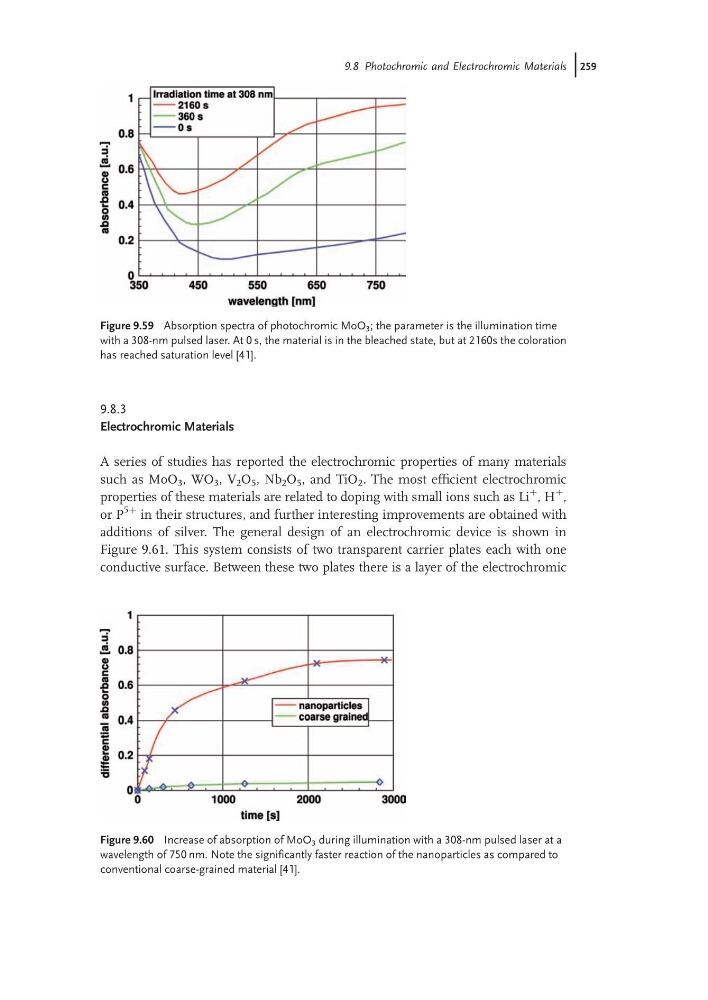
Figure 9.59 Absorption spectra of photochromic MoO 3 ; the parameter is the illumination time
with a 308-nm pulsed laser. At 0 s, the material is in the bleached state, but at 2160s the coloration
has reached saturation level [41].
Figure 9.60 Increase of absorption of MoO 3 during illumination with a 308-nm pulsed laser at a
wavelength of 750 nm. Note the significantly faster reaction of the nanoparticles as compared to
conventional coarse-grained material [41].
9.8 Photochromic and Electrochromic Materials j259
Electrochromic Materials
A series of studies has reported the electrochromic properties of many materials
such as MoO 3 , WO 3 , V 2 O 5 , Nb 2 O 5 , and TiO 2 . The most efficient electrochromic
properties of these materials are related to doping with small ions such as Li
þ , H
þ
,
or P
5þ in their structures, and further interesting improvements are obtained with
additions of silver. The general design of an electrochromic device is shown in
Figure 9.61. This system consists of two transparent carrier plates each with one
conductive surface. Between these two plates there is a layer of the electrochromic
Figure 9.59 Absorption spectra of photochromic MoO 3 ; the parameter is the illumination time
with a 308-nm pulsed laser. At 0 s, the material is in the bleached state, but at 2160s the coloration
has reached saturation level [41].
Figure 9.60 Increase of absorption of MoO 3 during illumination with a 308-nm pulsed laser at a
wavelength of 750 nm. Note the significantly faster reaction of the nanoparticles as compared to
conventional coarse-grained material [41].
9.8 Photochromic and Electrochromic Materials j259