

In the future, electroluminescence devices may gain enormous importance in
computer display screens and television sets, as well as for other types of display. The
crucial new point is that electroluminescent nanoparticles can be dispersed in
liquids, which allows the structures to be printed. Clearly, there is no difference
between printing on a rigid substrate such as glass or on a flexible substrate, perhaps
a foil made from polymers. However, as ITO is quite brittle, a more elastic
electrically conductive layer will be necessary. A solution of this problem may be
found in applying carbon nanotube/polymer composites (see Section 10.4).
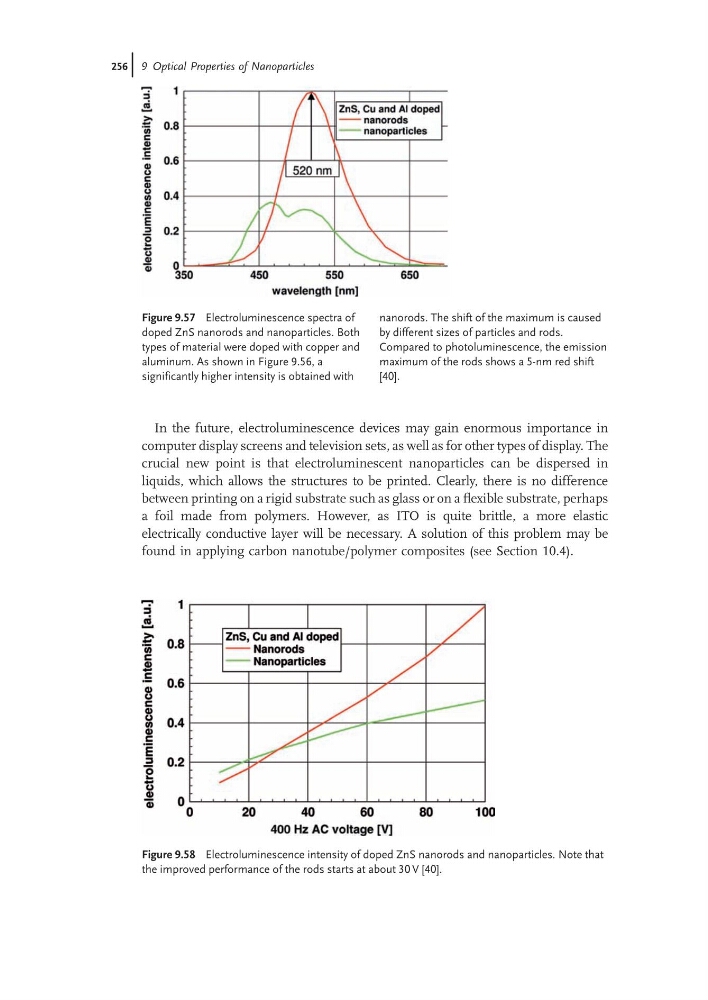
Figure 9.57 Electroluminescence spectra of
doped ZnS nanorods and nanoparticles. Both
types of material were doped with copper and
aluminum. As shown in Figure 9.56, a
significantly higher intensity is obtained with
nanorods. The shift of the maximum is caused
by different sizes of particles and rods.
Compared to photoluminescence, the emission
maximum of the rods shows a 5-nm red shift
[40].
Figure 9.58 Electroluminescence intensity of doped ZnS nanorods and nanoparticles. Note that
the improved performance of the rods starts at about 30 V [40].
256j 9 Optical Properties of Nanoparticles
computer display screens and television sets, as well as for other types of display. The
crucial new point is that electroluminescent nanoparticles can be dispersed in
liquids, which allows the structures to be printed. Clearly, there is no difference
between printing on a rigid substrate such as glass or on a flexible substrate, perhaps
a foil made from polymers. However, as ITO is quite brittle, a more elastic
electrically conductive layer will be necessary. A solution of this problem may be
found in applying carbon nanotube/polymer composites (see Section 10.4).
Figure 9.57 Electroluminescence spectra of
doped ZnS nanorods and nanoparticles. Both
types of material were doped with copper and
aluminum. As shown in Figure 9.56, a
significantly higher intensity is obtained with
nanorods. The shift of the maximum is caused
by different sizes of particles and rods.
Compared to photoluminescence, the emission
maximum of the rods shows a 5-nm red shift
[40].
Figure 9.58 Electroluminescence intensity of doped ZnS nanorods and nanoparticles. Note that
the improved performance of the rods starts at about 30 V [40].
256j 9 Optical Properties of Nanoparticles