

point attention should be turned towards the oxide/polymer interface. It may be
assumed that the polymer is bound chemically to the oxide surface (see Figure 9.23)
and it has been reported that PMMA, which directly touches the oxide surface, is
bound with an ester-like linkage [15,16] to the surface. This means that the CH 3
group adjacent to an oxygen ion is cut off (see insert in Figure 9.23) and consequently the polymer at the surface becomes a modified PMMA (m-PMMA). Based
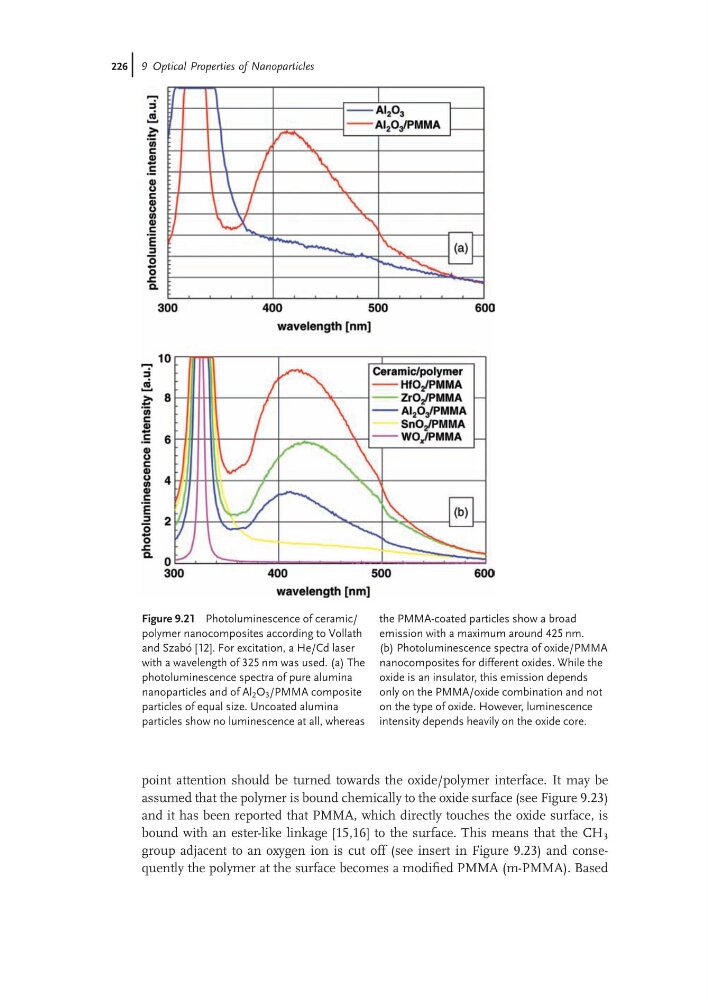
Figure 9.21 Photoluminescence of ceramic/
polymer nanocomposites according to Vollath
and Szab o [12]. For excitation, a He/Cd laser
with a wavelength of 325 nm was used. (a) The
photoluminescence spectra of pure alumina
nanoparticles and of Al 2 O 3 /PMMA composite
particles of equal size. Uncoated alumina
particles show no luminescence at all, whereas
the PMMA-coated particles show a broad
emission with a maximum around 425 nm.
(b) Photoluminescence spectra of oxide/PMMA
nanocomposites for different oxides. While the
oxide is an insulator, this emission depends
only on the PMMA/oxide combination and not
on the type of oxide. However, luminescence
intensity depends heavily on the oxide core.
226j 9 Optical Properties of Nanoparticles
assumed that the polymer is bound chemically to the oxide surface (see Figure 9.23)
and it has been reported that PMMA, which directly touches the oxide surface, is
bound with an ester-like linkage [15,16] to the surface. This means that the CH 3
group adjacent to an oxygen ion is cut off (see insert in Figure 9.23) and consequently the polymer at the surface becomes a modified PMMA (m-PMMA). Based
Figure 9.21 Photoluminescence of ceramic/
polymer nanocomposites according to Vollath
and Szab o [12]. For excitation, a He/Cd laser
with a wavelength of 325 nm was used. (a) The
photoluminescence spectra of pure alumina
nanoparticles and of Al 2 O 3 /PMMA composite
particles of equal size. Uncoated alumina
particles show no luminescence at all, whereas
the PMMA-coated particles show a broad
emission with a maximum around 425 nm.
(b) Photoluminescence spectra of oxide/PMMA
nanocomposites for different oxides. While the
oxide is an insulator, this emission depends
only on the PMMA/oxide combination and not
on the type of oxide. However, luminescence
intensity depends heavily on the oxide core.
226j 9 Optical Properties of Nanoparticles