

impression of a strong influence of this byproduct, although a more critical
analysis may change this opinion.
The lead content, particle size, and position of the maxima of the emission peaks
of samples used for these measurements (as shown in Figure 9.18a and b) are listed
in Table 9.1, in which the PbSO 3 /PbS ratio is also specified. The data show clearly
that the particle size increases with increasing lead content in the composite.
Additionally, the luminescence intensity increases with decreasing particle size.
The authors assumed that SO 3
À ions covered the surface and therefore the content
of PbSO 3 would increase with decreasing particle size, which was in turn related to
an increasing particle surface. However, this assumption proved inadequate as the
content of PbSO 3 was so large that it would cover the PbS particle surface with a
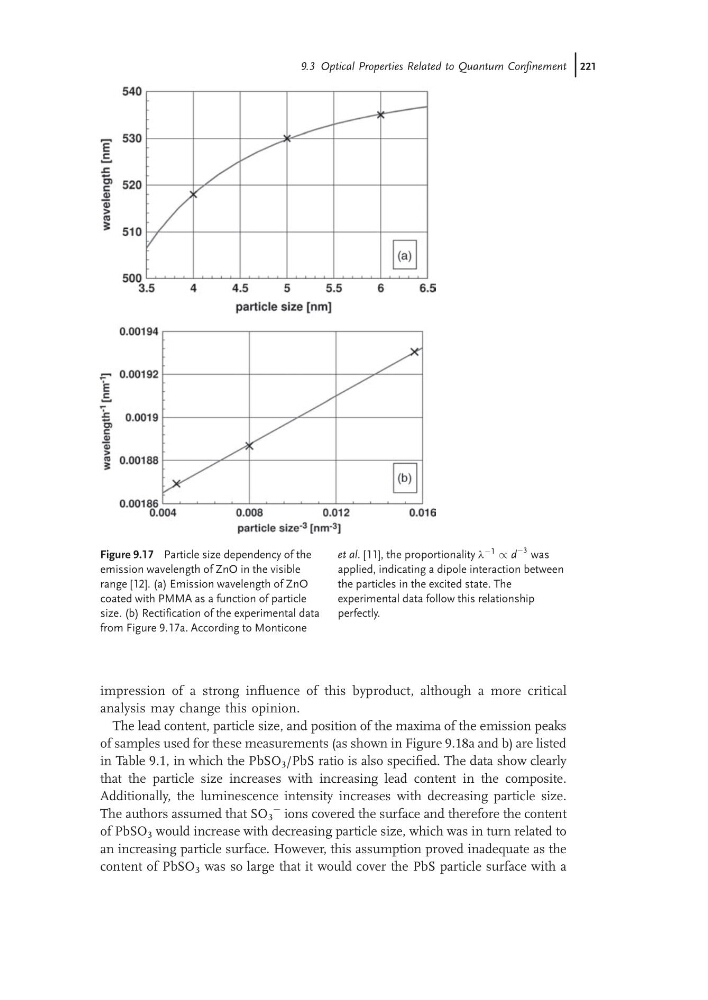
Figure 9.17 Particle size dependency of the
emission wavelength of ZnO in the visible
range [12]. (a) Emission wavelength of ZnO
coated with PMMA as a function of particle
size. (b) Rectification of the experimental data
from Figure 9.17a. According to Monticone
et al. [11], the proportionality l
À1 / d
À3 was
applied, indicating a dipole interaction between
the particles in the excited state. The
experimental data follow this relationship
perfectly.
9.3 Optical Properties Related to Quantum Confinement j221
analysis may change this opinion.
The lead content, particle size, and position of the maxima of the emission peaks
of samples used for these measurements (as shown in Figure 9.18a and b) are listed
in Table 9.1, in which the PbSO 3 /PbS ratio is also specified. The data show clearly
that the particle size increases with increasing lead content in the composite.
Additionally, the luminescence intensity increases with decreasing particle size.
The authors assumed that SO 3
À ions covered the surface and therefore the content
of PbSO 3 would increase with decreasing particle size, which was in turn related to
an increasing particle surface. However, this assumption proved inadequate as the
content of PbSO 3 was so large that it would cover the PbS particle surface with a
Figure 9.17 Particle size dependency of the
emission wavelength of ZnO in the visible
range [12]. (a) Emission wavelength of ZnO
coated with PMMA as a function of particle
size. (b) Rectification of the experimental data
from Figure 9.17a. According to Monticone
et al. [11], the proportionality l
À1 / d
À3 was
applied, indicating a dipole interaction between
the particles in the excited state. The
experimental data follow this relationship
perfectly.
9.3 Optical Properties Related to Quantum Confinement j221