

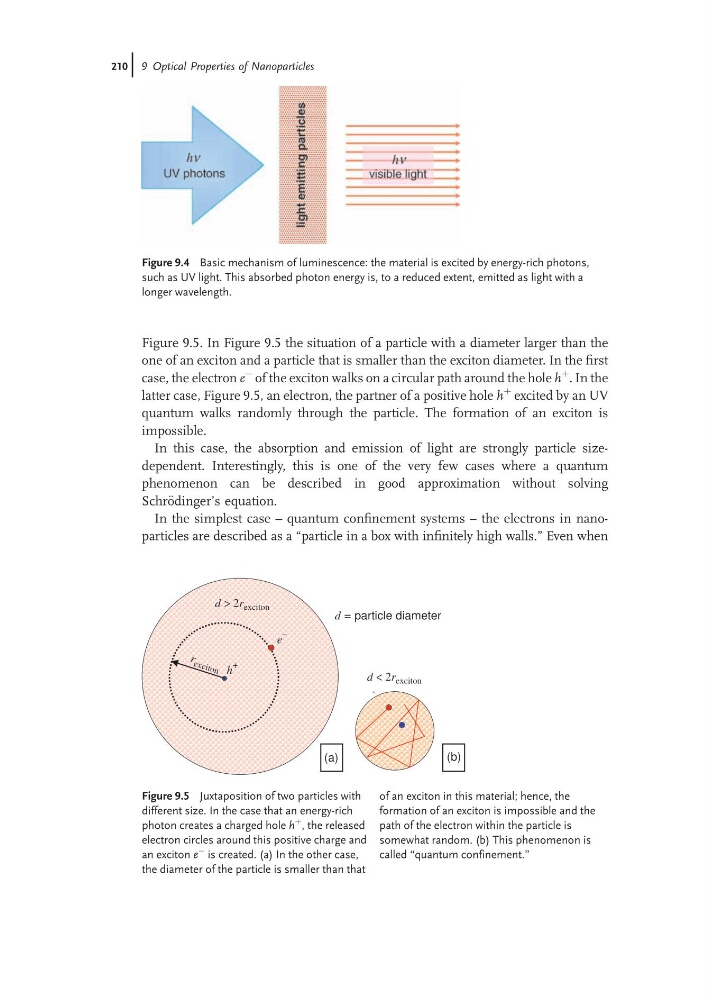
Figure 9.5. In Figure 9.5 the situation of a particle with a diameter larger than the
one of an exciton and a particle that is smaller than the exciton diameter. In the first
case, the electron e
À of the exciton walks on a circular path around the hole h
þ . In the
latter case, Figure 9.5, an electron, the partner of a positive hole h
þ excited by an UV
quantum walks randomly through the particle. The formation of an exciton is
impossible.
In this case, the absorption and emission of light are strongly particle sizedependent. Interestingly, this is one of the very few cases where a quantum
phenomenon can be described in good approximation without solving
Schr€ odinger’s equation.
In the simplest case – quantum confinement systems – the electrons in nanoparticles are described as a “particle in a box with infinitely high walls.” Even when
Figure 9.4 Basic mechanism of luminescence: the material is excited by energy-rich photons,
such as UV light. This absorbed photon energy is, to a reduced extent, emitted as light with a
longer wavelength.
e
−
h
+
r ex ci to n
d = particle diameter
d > 2r exciton
d < 2r exciton
(a)
(b)
Figure 9.5 Juxtaposition of two particles with
different size. In the case that an energy-rich
photon creates a charged hole h
þ
, the released
electron circles around this positive charge and
an exciton e
À is created. (a) In the other case,
the diameter of the particle is smaller than that
of an exciton in this material; hence, the
formation of an exciton is impossible and the
path of the electron within the particle is
somewhat random. (b) This phenomenon is
called “quantum confinement.”
210j 9 Optical Properties of Nanoparticles
one of an exciton and a particle that is smaller than the exciton diameter. In the first
case, the electron e
À of the exciton walks on a circular path around the hole h
þ . In the
latter case, Figure 9.5, an electron, the partner of a positive hole h
þ excited by an UV
quantum walks randomly through the particle. The formation of an exciton is
impossible.
In this case, the absorption and emission of light are strongly particle sizedependent. Interestingly, this is one of the very few cases where a quantum
phenomenon can be described in good approximation without solving
Schr€ odinger’s equation.
In the simplest case – quantum confinement systems – the electrons in nanoparticles are described as a “particle in a box with infinitely high walls.” Even when
Figure 9.4 Basic mechanism of luminescence: the material is excited by energy-rich photons,
such as UV light. This absorbed photon energy is, to a reduced extent, emitted as light with a
longer wavelength.
e
−
h
+
r ex ci to n
d = particle diameter
d > 2r exciton
d < 2r exciton
(a)
(b)
Figure 9.5 Juxtaposition of two particles with
different size. In the case that an energy-rich
photon creates a charged hole h
þ
, the released
electron circles around this positive charge and
an exciton e
À is created. (a) In the other case,
the diameter of the particle is smaller than that
of an exciton in this material; hence, the
formation of an exciton is impossible and the
path of the electron within the particle is
somewhat random. (b) This phenomenon is
called “quantum confinement.”
210j 9 Optical Properties of Nanoparticles