

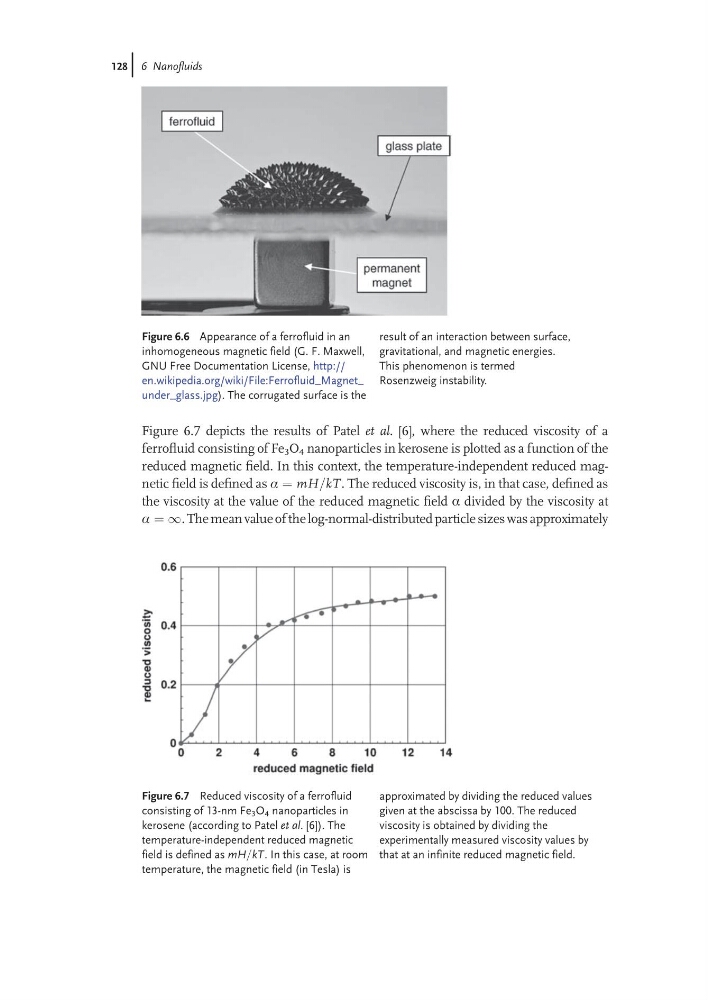
Figure 6.7 depicts the results of Patel et al. [6], where the reduced viscosity of a
ferrofluid consisting of Fe 3 O 4 nanoparticles in kerosene is plotted as a function of the
reduced magnetic field. In this context, the temperature-independent reduced magnetic field is defined as a ¼ mH =kT . The reduced viscosity is, in that case, defined as
the viscosity at the value of the reduced magnetic field a divided by the viscosity at
a ¼ 1. The mean value of the log-normal-distributed particle sizes was approximately
Figure 6.6 Appearance of a ferrofluid in an
inhomogeneous magnetic field (G. F. Maxwell,
GNU Free Documentation License, http://
en.wikipedia.org/wiki/File:Ferrofluid_Magnet_
under_glass.jpg). The corrugated surface is the
result of an interaction between surface,
gravitational, and magnetic energies.
This phenomenon is termed
Rosenzweig instability.
Figure 6.7 Reduced viscosity of a ferrofluid
consisting of 13-nm Fe 3 O 4 nanoparticles in
kerosene (according to Patel et al. [6]). The
temperature-independent reduced magnetic
field is defined as mH=kT. In this case, at room
temperature, the magnetic field (in Tesla) is
approximated by dividing the reduced values
given at the abscissa by 100. The reduced
viscosity is obtained by dividing the
experimentally measured viscosity values by
that at an infinite reduced magnetic field.
128j 6 Nanofluids
ferrofluid consisting of Fe 3 O 4 nanoparticles in kerosene is plotted as a function of the
reduced magnetic field. In this context, the temperature-independent reduced magnetic field is defined as a ¼ mH =kT . The reduced viscosity is, in that case, defined as
the viscosity at the value of the reduced magnetic field a divided by the viscosity at
a ¼ 1. The mean value of the log-normal-distributed particle sizes was approximately
Figure 6.6 Appearance of a ferrofluid in an
inhomogeneous magnetic field (G. F. Maxwell,
GNU Free Documentation License, http://
en.wikipedia.org/wiki/File:Ferrofluid_Magnet_
under_glass.jpg). The corrugated surface is the
result of an interaction between surface,
gravitational, and magnetic energies.
This phenomenon is termed
Rosenzweig instability.
Figure 6.7 Reduced viscosity of a ferrofluid
consisting of 13-nm Fe 3 O 4 nanoparticles in
kerosene (according to Patel et al. [6]). The
temperature-independent reduced magnetic
field is defined as mH=kT. In this case, at room
temperature, the magnetic field (in Tesla) is
approximated by dividing the reduced values
given at the abscissa by 100. The reduced
viscosity is obtained by dividing the
experimentally measured viscosity values by
that at an infinite reduced magnetic field.
128j 6 Nanofluids