

4 Results
The neural network structure with different depths and widths was used to observe the
prediction accuracy on the verification set and the test set. Experiments show that the deep
neural network with 6-6-7-7-8-7-6-5 nodes in each layer has the best performance. It
achieves a maximum accuracy of 88.2% on the verification set and 84.9% on the test set.
In the experiment, we use the trained neural network to predict the USV in the
MOOS-IvP platform, to track a waypoint route including different speeds and steering
angles. The experimental results are as follows.
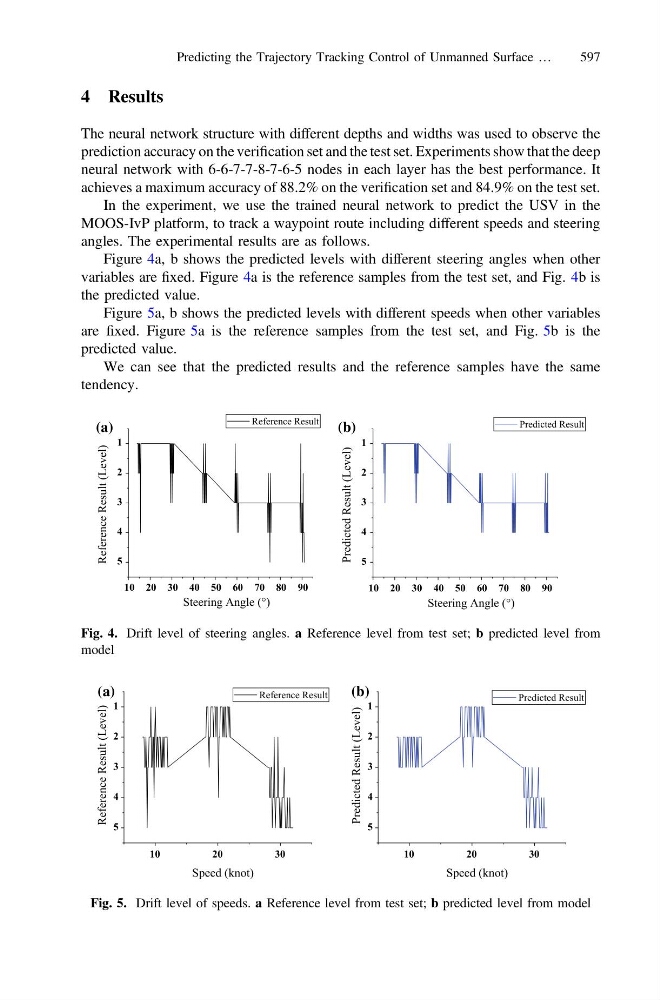
Figure 4a, b shows the predicted levels with different steering angles when other
variables are fixed. Figure 4a is the reference samples from the test set, and Fig. 4b is
the predicted value.
Figure 5a, b shows the predicted levels with different speeds when other variables
are fixed. Figure 5a is the reference samples from the test set, and Fig. 5b is the
predicted value.
We can see that the predicted results and the reference samples have the same
tendency.
(a)
(b)
5
4
3
2
1
Reference Result (Level)
Steering Angle (°)
Reference Result
10 20 30 40 50 60 70 80 90
10 20 30 40 50 60 70 80 90
5
4
3
2
1
Predicted Result (Level)
Steering Angle (°)
Predicted Result
Fig. 4. Drift level of steering angles. a Reference level from test set; b predicted level from
model
(a)
(b)
10
20
30
5
4
3
2
1
Reference Result (Level)
Speed (knot)
Reference Result
10
20
30
5
4
3
2
1
Predicted Result (Level)
Speed (knot)
Predicted Result
Fig. 5. Drift level of speeds. a Reference level from test set; b predicted level from model
Predicting the Trajectory Tracking Control of Unmanned Surface …
597