

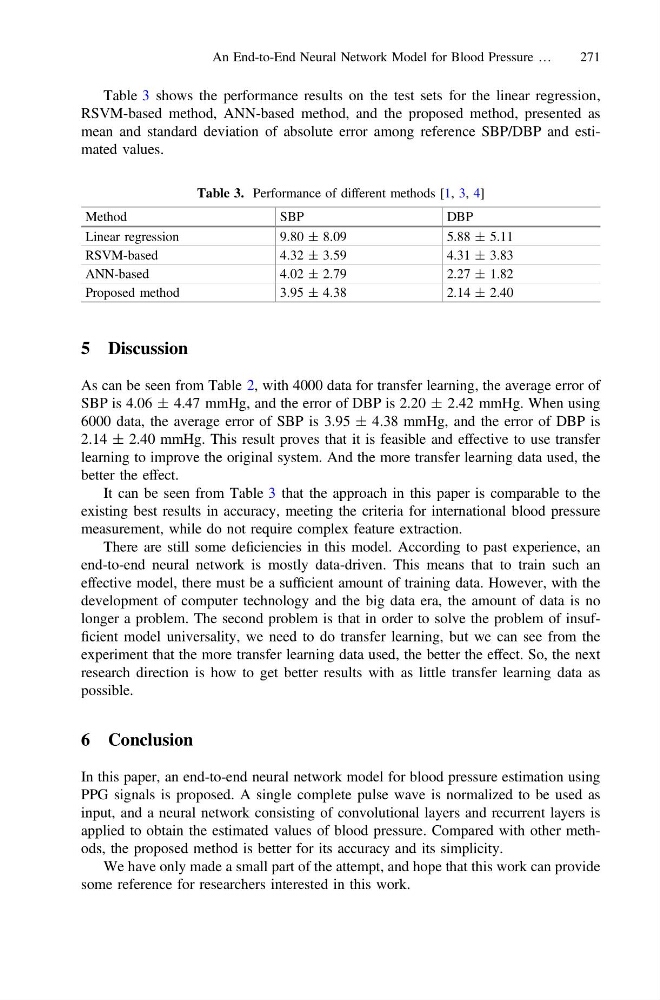
Table 3 shows the performance results on the test sets for the linear regression,
RSVM-based method, ANN-based method, and the proposed method, presented as
mean and standard deviation of absolute error among reference SBP/DBP and estimated values.
5 Discussion
As can be seen from Table 2, with 4000 data for transfer learning, the average error of
SBP is 4.06 ± 4.47 mmHg, and the error of DBP is 2.20 ± 2.42 mmHg. When using
6000 data, the average error of SBP is 3.95 ± 4.38 mmHg, and the error of DBP is
2.14 ± 2.40 mmHg. This result proves that it is feasible and effective to use transfer
learning to improve the original system. And the more transfer learning data used, the
better the effect.
It can be seen from Table 3 that the approach in this paper is comparable to the
existing best results in accuracy, meeting the criteria for international blood pressure
measurement, while do not require complex feature extraction.
There are still some deficiencies in this model. According to past experience, an
end-to-end neural network is mostly data-driven. This means that to train such an
effective model, there must be a sufficient amount of training data. However, with the
development of computer technology and the big data era, the amount of data is no
longer a problem. The second problem is that in order to solve the problem of insufficient model universality, we need to do transfer learning, but we can see from the
experiment that the more transfer learning data used, the better the effect. So, the next
research direction is how to get better results with as little transfer learning data as
possible.
6 Conclusion
In this paper, an end-to-end neural network model for blood pressure estimation using
PPG signals is proposed. A single complete pulse wave is normalized to be used as
input, and a neural network consisting of convolutional layers and recurrent layers is
applied to obtain the estimated values of blood pressure. Compared with other methods, the proposed method is better for its accuracy and its simplicity.
We have only made a small part of the attempt, and hope that this work can provide
some reference for researchers interested in this work.
Table 3. Performance of different methods [1, 3, 4]
Method
SBP
DBP
Linear regression
9.80 ± 8.09
5.88 ± 5.11
RSVM-based
4.32 ± 3.59
4.31 ± 3.83
ANN-based
4.02 ± 2.79
2.27 ± 1.82
Proposed method
3.95 ± 4.38
2.14 ± 2.40
An End-to-End Neural Network Model for Blood Pressure …
271
RSVM-based method, ANN-based method, and the proposed method, presented as
mean and standard deviation of absolute error among reference SBP/DBP and estimated values.
5 Discussion
As can be seen from Table 2, with 4000 data for transfer learning, the average error of
SBP is 4.06 ± 4.47 mmHg, and the error of DBP is 2.20 ± 2.42 mmHg. When using
6000 data, the average error of SBP is 3.95 ± 4.38 mmHg, and the error of DBP is
2.14 ± 2.40 mmHg. This result proves that it is feasible and effective to use transfer
learning to improve the original system. And the more transfer learning data used, the
better the effect.
It can be seen from Table 3 that the approach in this paper is comparable to the
existing best results in accuracy, meeting the criteria for international blood pressure
measurement, while do not require complex feature extraction.
There are still some deficiencies in this model. According to past experience, an
end-to-end neural network is mostly data-driven. This means that to train such an
effective model, there must be a sufficient amount of training data. However, with the
development of computer technology and the big data era, the amount of data is no
longer a problem. The second problem is that in order to solve the problem of insufficient model universality, we need to do transfer learning, but we can see from the
experiment that the more transfer learning data used, the better the effect. So, the next
research direction is how to get better results with as little transfer learning data as
possible.
6 Conclusion
In this paper, an end-to-end neural network model for blood pressure estimation using
PPG signals is proposed. A single complete pulse wave is normalized to be used as
input, and a neural network consisting of convolutional layers and recurrent layers is
applied to obtain the estimated values of blood pressure. Compared with other methods, the proposed method is better for its accuracy and its simplicity.
We have only made a small part of the attempt, and hope that this work can provide
some reference for researchers interested in this work.
Table 3. Performance of different methods [1, 3, 4]
Method
SBP
DBP
Linear regression
9.80 ± 8.09
5.88 ± 5.11
RSVM-based
4.32 ± 3.59
4.31 ± 3.83
ANN-based
4.02 ± 2.79
2.27 ± 1.82
Proposed method
3.95 ± 4.38
2.14 ± 2.40
An End-to-End Neural Network Model for Blood Pressure …
271