

112
6 Scintillation Counter
a)
b)
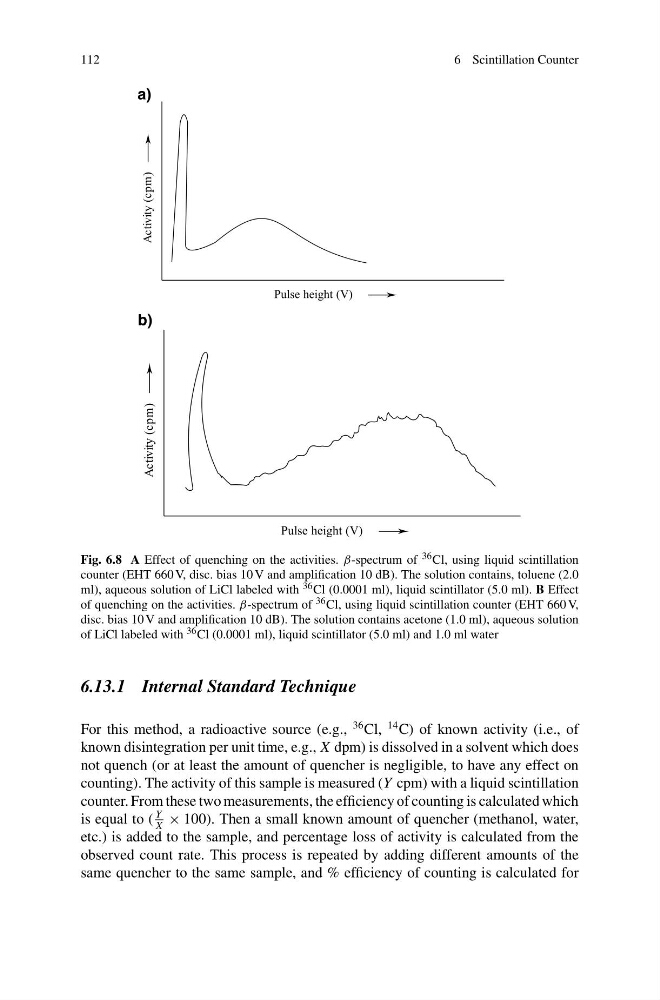
Fig. 6.8 A Effect of quenching on the activities. β-spectrum of 36 Cl, using liquid scintillation
counter (EHT 660 V, disc. bias 10 V and amplification 10 dB). The solution contains, toluene (2.0
ml), aqueous solution of LiCl labeled with 36 Cl (0.0001 ml), liquid scintillator (5.0 ml). B Effect
of quenching on the activities. β-spectrum of 36 Cl, using liquid scintillation counter (EHT 660 V,
disc. bias 10 V and amplification 10 dB). The solution contains acetone (1.0 ml), aqueous solution
of LiCl labeled with 36 Cl (0.0001 ml), liquid scintillator (5.0 ml) and 1.0 ml water
6.13.1 Internal Standard Technique
For this method, a radioactive source (e.g.,
36 Cl,
14 C) of known activity (i.e., of
known disintegration per unit time, e.g., X dpm) is dissolved in a solvent which does
not quench (or at least the amount of quencher is negligible, to have any effect on
counting). The activity of this sample is measured (Y cpm) with a liquid scintillation
counter. From these two measurements, the efficiency of counting is calculated which
is equal to (
Y
X
× 100). Then a small known amount of quencher (methanol, water,
etc.) is added to the sample, and percentage loss of activity is calculated from the
observed count rate. This process is repeated by adding different amounts of the
same quencher to the same sample, and % efficiency of counting is calculated for
6 Scintillation Counter
a)
b)
Fig. 6.8 A Effect of quenching on the activities. β-spectrum of 36 Cl, using liquid scintillation
counter (EHT 660 V, disc. bias 10 V and amplification 10 dB). The solution contains, toluene (2.0
ml), aqueous solution of LiCl labeled with 36 Cl (0.0001 ml), liquid scintillator (5.0 ml). B Effect
of quenching on the activities. β-spectrum of 36 Cl, using liquid scintillation counter (EHT 660 V,
disc. bias 10 V and amplification 10 dB). The solution contains acetone (1.0 ml), aqueous solution
of LiCl labeled with 36 Cl (0.0001 ml), liquid scintillator (5.0 ml) and 1.0 ml water
6.13.1 Internal Standard Technique
For this method, a radioactive source (e.g.,
36 Cl,
14 C) of known activity (i.e., of
known disintegration per unit time, e.g., X dpm) is dissolved in a solvent which does
not quench (or at least the amount of quencher is negligible, to have any effect on
counting). The activity of this sample is measured (Y cpm) with a liquid scintillation
counter. From these two measurements, the efficiency of counting is calculated which
is equal to (
Y
X
× 100). Then a small known amount of quencher (methanol, water,
etc.) is added to the sample, and percentage loss of activity is calculated from the
observed count rate. This process is repeated by adding different amounts of the
same quencher to the same sample, and % efficiency of counting is calculated for