

2.1 Preparation of
CC@CHLNV
1. Hybrid lipid matrix: Glycerin monostearate, Isopropyl palmitate (see Note 1).
2. Phospholipid: Lipoid S 75 (Phosphatidylcholine content:
>70%, Phosphatidylcholine from soybean) (see Note 2).
3. Catanionic surfactants: Glycerin monostearate, cetyltrimethyl
ammonium bromide (CTAB), and sodium dodecyl sulfate
(SDS) (see Note 3).
4. 50 mL round-bottomed flask.
2.2 Pharmacokinetic
Experiment
1. Sprague Dawley rats (230 Æ 20 g).
2. Ether (!99.5%).
3. Nitrendipine (>99.0%) (see Note 4).
4. Glacial acetic acid (!99.5%) (see Note 5).
5. Acetonitrile (HPLC grade).
6. Ethyl acetate (!99.5%).
Absolute
ethanol
Rotary evaporation
ˇ ˇ
Water
Free CC
in water
Free CC
in ethanol
BlankCC@CHLNV
CC@
CHLNV
ˇ
-
Hydration
Ultrasound
CC@CHLNV
D
B
C
A
Soybean phospholipid
CTAB
SDS
CUR
Lipid matrix:
Glycerin monostearate
Isopropyl palmitate
+
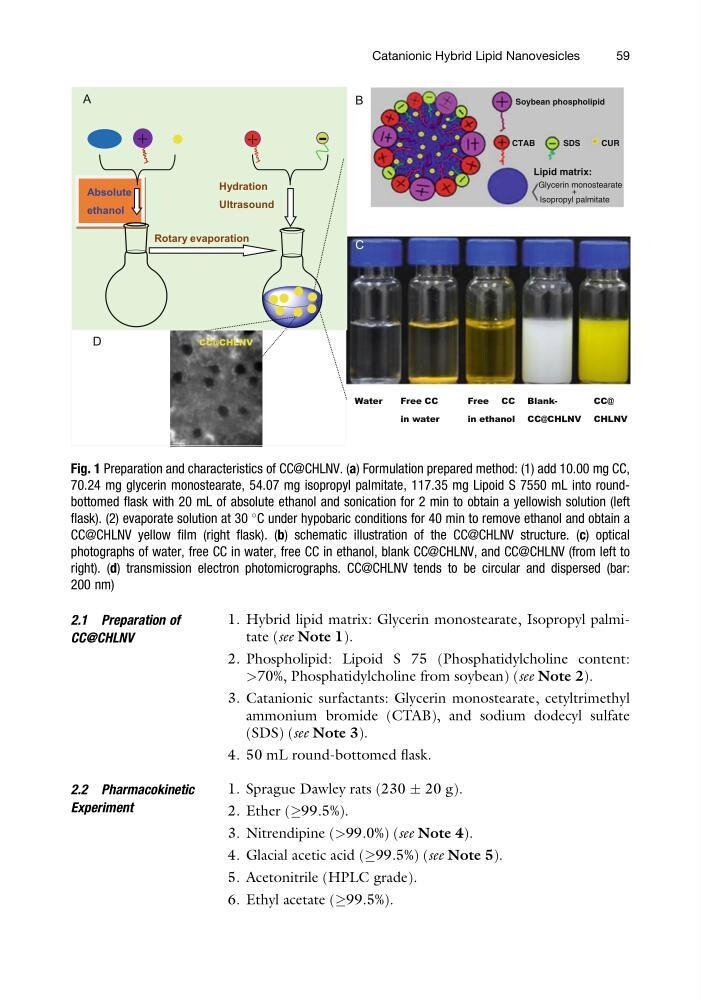
Fig. 1 Preparation and characteristics of CC@CHLNV. (a) Formulation prepared method: (1) add 10.00 mg CC,
70.24 mg glycerin monostearate, 54.07 mg isopropyl palmitate, 117.35 mg Lipoid S 7550 mL into roundbottomed flask with 20 mL of absolute ethanol and sonication for 2 min to obtain a yellowish solution (left
flask). (2) evaporate solution at 30
C under hypobaric conditions for 40 min to remove ethanol and obtain a
CC@CHLNV yellow film (right flask). (b) schematic illustration of the CC@CHLNV structure. (c) optical
photographs of water, free CC in water, free CC in ethanol, blank CC@CHLNV, and CC@CHLNV (from left to
right). (d) transmission electron photomicrographs. CC@CHLNV tends to be circular and dispersed (bar:
200 nm)
Catanionic Hybrid Lipid Nanovesicles
59
CC@CHLNV
1. Hybrid lipid matrix: Glycerin monostearate, Isopropyl palmitate (see Note 1).
2. Phospholipid: Lipoid S 75 (Phosphatidylcholine content:
>70%, Phosphatidylcholine from soybean) (see Note 2).
3. Catanionic surfactants: Glycerin monostearate, cetyltrimethyl
ammonium bromide (CTAB), and sodium dodecyl sulfate
(SDS) (see Note 3).
4. 50 mL round-bottomed flask.
2.2 Pharmacokinetic
Experiment
1. Sprague Dawley rats (230 Æ 20 g).
2. Ether (!99.5%).
3. Nitrendipine (>99.0%) (see Note 4).
4. Glacial acetic acid (!99.5%) (see Note 5).
5. Acetonitrile (HPLC grade).
6. Ethyl acetate (!99.5%).
Absolute
ethanol
Rotary evaporation
ˇ ˇ
Water
Free CC
in water
Free CC
in ethanol
BlankCC@CHLNV
CC@
CHLNV
ˇ
-
Hydration
Ultrasound
CC@CHLNV
D
B
C
A
Soybean phospholipid
CTAB
SDS
CUR
Lipid matrix:
Glycerin monostearate
Isopropyl palmitate
+
Fig. 1 Preparation and characteristics of CC@CHLNV. (a) Formulation prepared method: (1) add 10.00 mg CC,
70.24 mg glycerin monostearate, 54.07 mg isopropyl palmitate, 117.35 mg Lipoid S 7550 mL into roundbottomed flask with 20 mL of absolute ethanol and sonication for 2 min to obtain a yellowish solution (left
flask). (2) evaporate solution at 30
C under hypobaric conditions for 40 min to remove ethanol and obtain a
CC@CHLNV yellow film (right flask). (b) schematic illustration of the CC@CHLNV structure. (c) optical
photographs of water, free CC in water, free CC in ethanol, blank CC@CHLNV, and CC@CHLNV (from left to
right). (d) transmission electron photomicrographs. CC@CHLNV tends to be circular and dispersed (bar:
200 nm)
Catanionic Hybrid Lipid Nanovesicles
59