

13. Clear polystyrene 96-well tissue culture-treated microplate.
14. White tissue culture-treated 96-well plate.
15. AccuSpin Micro 17 Centrifuge (Fisher Scientific).
2.2 Bacterial Strains
and Cell Lines
1. BL21(DE3): strain enabling recombinant protein expression
using the T7 promoter (New England Biolabs).
2. YWT7-hly and YWTet-hly: strains contain the listeriolysin O
gene (hly) integrated into the E. coli chromosome under either
a T7 or Tet promoter, respectively [8]. Strains containing the
hly gene further help improve bactofection gene delivery.
3. Murine macrophage line (RAW264.7) (ATCC).
4. Sheep red blood cells (Hemostat Laboratory).
2.3 Cell Growth
Media and Reagents
1. Lysogeny broth (LB) media: 10 g/L tryptone, 5 g/L yeast
extract, and 10 g/L NaCl. To generate LB agar for plate
growth, LB media was supplemented with 20 g/L agar.
2. Medium components used for culture sterility and/or bacterial
plasmid selection were included separately with the following
concentrations: 50 mg/L kanamycin, 100 mg/L penicillin,
25 mg/L streptomycin, 50 mg/L gentamicin, and 100 mg/
L ampicillin.
3. Phosphate buffered saline (PBS): 137 mM NaCl, 2.7 mM KCl,
10 mM Na 2 HPO 4 , 1.8 mM KH 2 PO 4 at pH of 7.4 and 5.15.
4. Cysteine.
bactofection
Nu cle us
Bacteria & pDNA
pDNA
Improved
bactofection
Lysosome
Bacteria & DNA release
DNA release
Phagolysosome
Phagolysosome
Actin filament
Actin filament
bactofection
Improved bactofection
Lysosome
Safer bactofection
Enhanced bacterial
disruption by LyE
pDNA
pDNA
pLyE
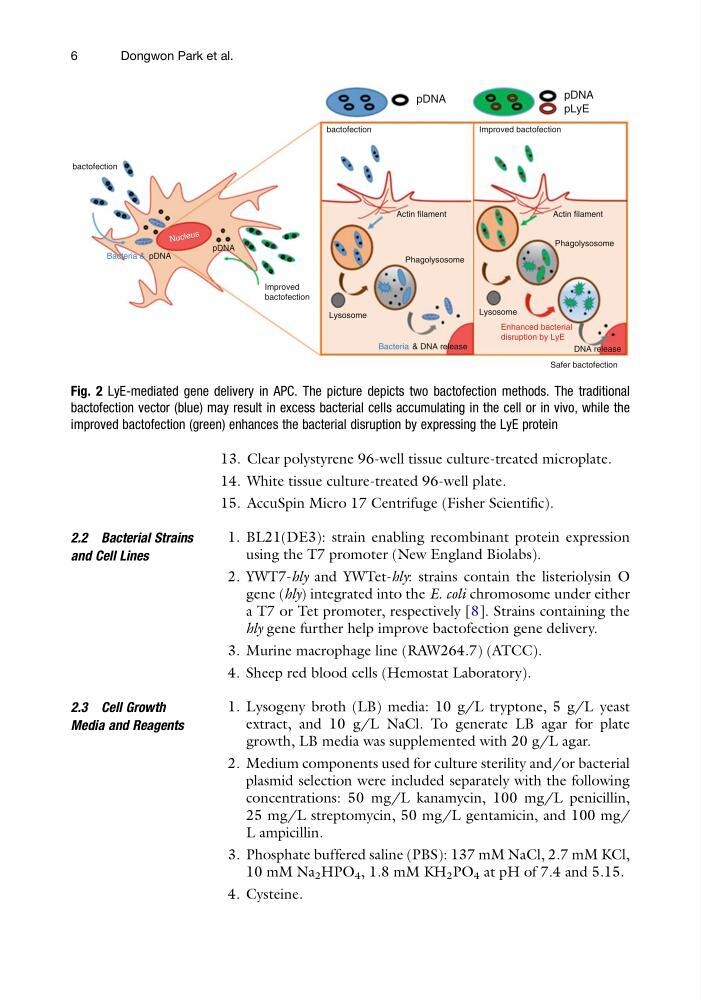
Fig. 2 LyE-mediated gene delivery in APC. The picture depicts two bactofection methods. The traditional
bactofection vector (blue) may result in excess bacterial cells accumulating in the cell or in vivo, while the
improved bactofection (green) enhances the bacterial disruption by expressing the LyE protein
6
Dongwon Park et al.
14. White tissue culture-treated 96-well plate.
15. AccuSpin Micro 17 Centrifuge (Fisher Scientific).
2.2 Bacterial Strains
and Cell Lines
1. BL21(DE3): strain enabling recombinant protein expression
using the T7 promoter (New England Biolabs).
2. YWT7-hly and YWTet-hly: strains contain the listeriolysin O
gene (hly) integrated into the E. coli chromosome under either
a T7 or Tet promoter, respectively [8]. Strains containing the
hly gene further help improve bactofection gene delivery.
3. Murine macrophage line (RAW264.7) (ATCC).
4. Sheep red blood cells (Hemostat Laboratory).
2.3 Cell Growth
Media and Reagents
1. Lysogeny broth (LB) media: 10 g/L tryptone, 5 g/L yeast
extract, and 10 g/L NaCl. To generate LB agar for plate
growth, LB media was supplemented with 20 g/L agar.
2. Medium components used for culture sterility and/or bacterial
plasmid selection were included separately with the following
concentrations: 50 mg/L kanamycin, 100 mg/L penicillin,
25 mg/L streptomycin, 50 mg/L gentamicin, and 100 mg/
L ampicillin.
3. Phosphate buffered saline (PBS): 137 mM NaCl, 2.7 mM KCl,
10 mM Na 2 HPO 4 , 1.8 mM KH 2 PO 4 at pH of 7.4 and 5.15.
4. Cysteine.
bactofection
Nu cle us
Bacteria & pDNA
pDNA
Improved
bactofection
Lysosome
Bacteria & DNA release
DNA release
Phagolysosome
Phagolysosome
Actin filament
Actin filament
bactofection
Improved bactofection
Lysosome
Safer bactofection
Enhanced bacterial
disruption by LyE
pDNA
pDNA
pLyE
Fig. 2 LyE-mediated gene delivery in APC. The picture depicts two bactofection methods. The traditional
bactofection vector (blue) may result in excess bacterial cells accumulating in the cell or in vivo, while the
improved bactofection (green) enhances the bacterial disruption by expressing the LyE protein
6
Dongwon Park et al.