

60
M. Burgay et al.
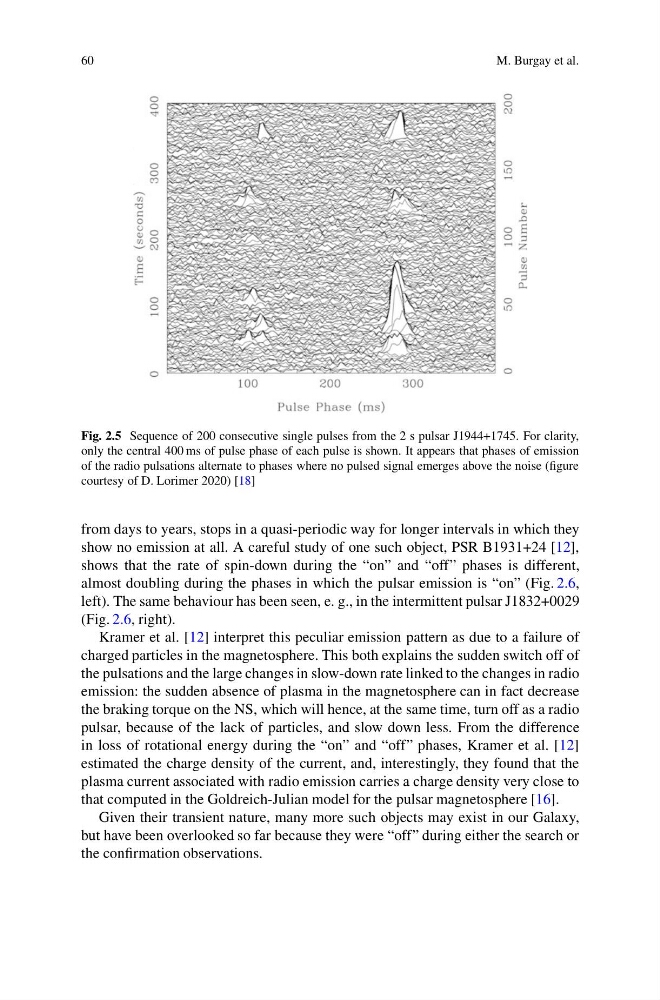
Fig. 2.5 Sequence of 200 consecutive single pulses from the 2 s pulsar J1944+1745. For clarity,
only the central 400 ms of pulse phase of each pulse is shown. It appears that phases of emission
of the radio pulsations alternate to phases where no pulsed signal emerges above the noise (figure
courtesy of D. Lorimer 2020) [18]
from days to years, stops in a quasi-periodic way for longer intervals in which they
show no emission at all. A careful study of one such object, PSR B1931+24 [12],
shows that the rate of spin-down during the “on” and “off” phases is different,
almost doubling during the phases in which the pulsar emission is “on” (Fig. 2.6,
left). The same behaviour has been seen, e. g., in the intermittent pulsar J1832+0029
(Fig. 2.6, right).
Kramer et al. [12] interpret this peculiar emission pattern as due to a failure of
charged particles in the magnetosphere. This both explains the sudden switch off of
the pulsations and the large changes in slow-down rate linked to the changes in radio
emission: the sudden absence of plasma in the magnetosphere can in fact decrease
the braking torque on the NS, which will hence, at the same time, turn off as a radio
pulsar, because of the lack of particles, and slow down less. From the difference
in loss of rotational energy during the “on” and “off” phases, Kramer et al. [12]
estimated the charge density of the current, and, interestingly, they found that the
plasma current associated with radio emission carries a charge density very close to
that computed in the Goldreich-Julian model for the pulsar magnetosphere [16].
Given their transient nature, many more such objects may exist in our Galaxy,
but have been overlooked so far because they were “off” during either the search or
the confirmation observations.
M. Burgay et al.
Fig. 2.5 Sequence of 200 consecutive single pulses from the 2 s pulsar J1944+1745. For clarity,
only the central 400 ms of pulse phase of each pulse is shown. It appears that phases of emission
of the radio pulsations alternate to phases where no pulsed signal emerges above the noise (figure
courtesy of D. Lorimer 2020) [18]
from days to years, stops in a quasi-periodic way for longer intervals in which they
show no emission at all. A careful study of one such object, PSR B1931+24 [12],
shows that the rate of spin-down during the “on” and “off” phases is different,
almost doubling during the phases in which the pulsar emission is “on” (Fig. 2.6,
left). The same behaviour has been seen, e. g., in the intermittent pulsar J1832+0029
(Fig. 2.6, right).
Kramer et al. [12] interpret this peculiar emission pattern as due to a failure of
charged particles in the magnetosphere. This both explains the sudden switch off of
the pulsations and the large changes in slow-down rate linked to the changes in radio
emission: the sudden absence of plasma in the magnetosphere can in fact decrease
the braking torque on the NS, which will hence, at the same time, turn off as a radio
pulsar, because of the lack of particles, and slow down less. From the difference
in loss of rotational energy during the “on” and “off” phases, Kramer et al. [12]
estimated the charge density of the current, and, interestingly, they found that the
plasma current associated with radio emission carries a charge density very close to
that computed in the Goldreich-Julian model for the pulsar magnetosphere [16].
Given their transient nature, many more such objects may exist in our Galaxy,
but have been overlooked so far because they were “off” during either the search or
the confirmation observations.