

3 Magnetars: A Short Review and Some Sparse Considerations
123
field of B p 6 × 10 12 G, should be confined in a small volume at a few
stellar radii from the neutron star surface (while the alternative explanation
in terms of atomic transition lines is ruled out by the variability of the line
energy with the spin phase). If the feature is really a proton cyclotron line,
it demonstrates in SGR 0418+5729 the presence of nondipolar magnetic field
components strong enough to break the neutron star crust and give rise to
magnetar outbursts.
Rodríguez Castillo et al. [189] reported the presence of a similar feature
in Swift J1822.3–1606, the magnetar with the second lower magnetic field
(B p ∼ (1–3) × 10 13 G Olausen and Kaspi [164], Scholz et al. [192]),
again indicating the presence of localised magnetic fields of 10 14 –10 15 G.
Interestingly, spectral features with analogous characteristics have been
detected also in two X-ray dim isolated neutron stars, RX J0720.4–3125. and
RX J1308.6+2127 [17, 18]; in these cases, the magnetic fields deduced in the
hypothesis of a proton cyclotron line are of ∼2 × 10 14 G, in both cases around
5 times the values inferred from the spin parameters.
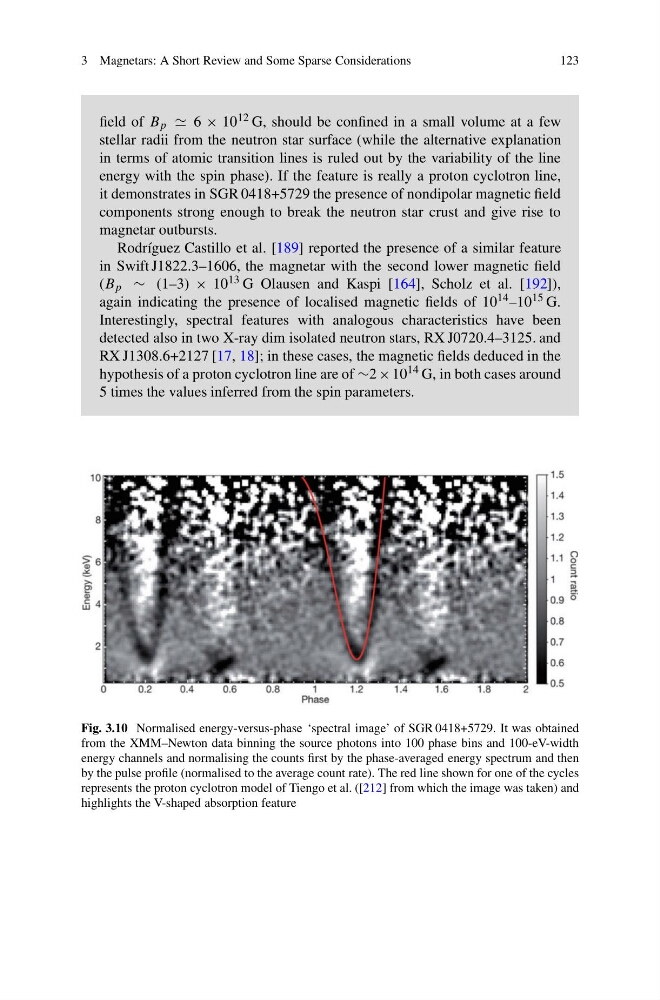
Fig. 3.10 Normalised energy-versus-phase ‘spectral image’ of SGR 0418+5729. It was obtained
from the XMM–Newton data binning the source photons into 100 phase bins and 100-eV-width
energy channels and normalising the counts first by the phase-averaged energy spectrum and then
by the pulse profile (normalised to the average count rate). The red line shown for one of the cycles
represents the proton cyclotron model of Tiengo et al. ([212] from which the image was taken) and
highlights the V-shaped absorption feature
123
field of B p 6 × 10 12 G, should be confined in a small volume at a few
stellar radii from the neutron star surface (while the alternative explanation
in terms of atomic transition lines is ruled out by the variability of the line
energy with the spin phase). If the feature is really a proton cyclotron line,
it demonstrates in SGR 0418+5729 the presence of nondipolar magnetic field
components strong enough to break the neutron star crust and give rise to
magnetar outbursts.
Rodríguez Castillo et al. [189] reported the presence of a similar feature
in Swift J1822.3–1606, the magnetar with the second lower magnetic field
(B p ∼ (1–3) × 10 13 G Olausen and Kaspi [164], Scholz et al. [192]),
again indicating the presence of localised magnetic fields of 10 14 –10 15 G.
Interestingly, spectral features with analogous characteristics have been
detected also in two X-ray dim isolated neutron stars, RX J0720.4–3125. and
RX J1308.6+2127 [17, 18]; in these cases, the magnetic fields deduced in the
hypothesis of a proton cyclotron line are of ∼2 × 10 14 G, in both cases around
5 times the values inferred from the spin parameters.
Fig. 3.10 Normalised energy-versus-phase ‘spectral image’ of SGR 0418+5729. It was obtained
from the XMM–Newton data binning the source photons into 100 phase bins and 100-eV-width
energy channels and normalising the counts first by the phase-averaged energy spectrum and then
by the pulse profile (normalised to the average count rate). The red line shown for one of the cycles
represents the proton cyclotron model of Tiengo et al. ([212] from which the image was taken) and
highlights the V-shaped absorption feature