

62
X. Feng et al.
+
H 2
N
O
t
Bu
Ph
Ph
B(C 6 F 4 H) 3
N
O
t Bu
Ph
Ph
B(C 6 F 4 H) 3
H H
N
O
t
Bu
Ph
Ph
B(C 6 F 4 H) 3
H
H
O
N
t
Bu
Ph
Ph
B(C 6 F 4 H) 3
H
O
F 3 C
H
Substrate
O
N
t Bu
Ph
Ph
B(C 6 F 4 H) 3
H
O
F 3 C
H
H
O
F 3 C
H
TS
INT
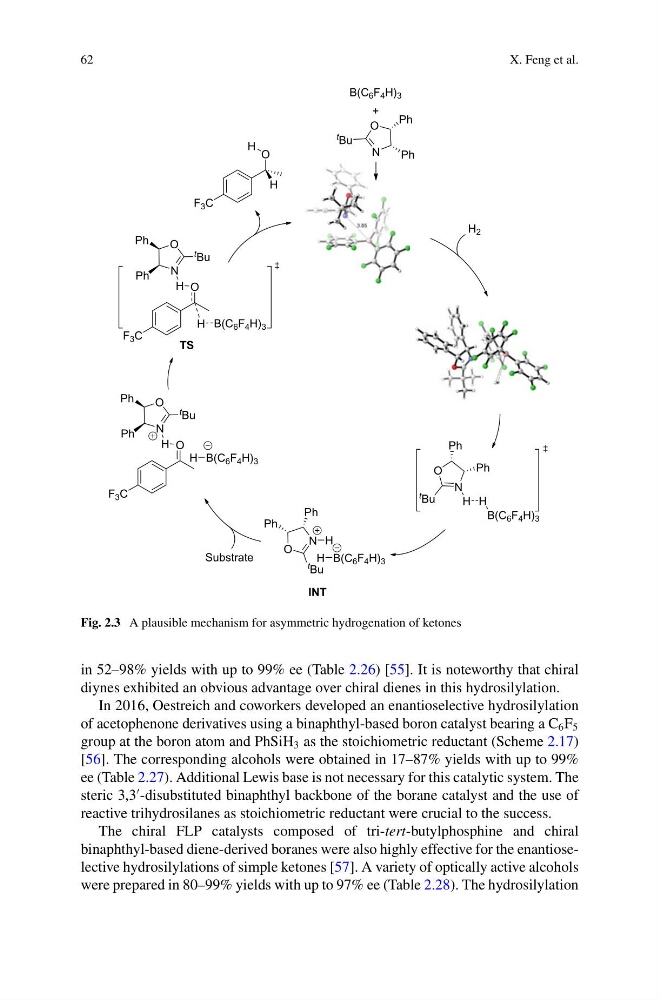
Fig. 2.3 A plausible mechanism for asymmetric hydrogenation of ketones
in 52–98% yields with up to 99% ee (Table 2.26) [55]. It is noteworthy that chiral
diynes exhibited an obvious advantage over chiral dienes in this hydrosilylation.
In 2016, Oestreich and coworkers developed an enantioselective hydrosilylation
of acetophenone derivatives using a binaphthyl-based boron catalyst bearing a C 6 F 5
group at the boron atom and PhSiH 3 as the stoichiometric reductant (Scheme 2.17)
[56]. The corresponding alcohols were obtained in 17–87% yields with up to 99%
ee (Table 2.27). Additional Lewis base is not necessary for this catalytic system. The
steric 3,3
-disubstituted binaphthyl backbone of the borane catalyst and the use of
reactive trihydrosilanes as stoichiometric reductant were crucial to the success.
The chiral FLP catalysts composed of tri-tert-butylphosphine and chiral
binaphthyl-based diene-derived boranes were also highly effective for the enantioselective hydrosilylations of simple ketones [57]. A variety of optically active alcohols
were prepared in 80–99% yields with up to 97% ee (Table 2.28). The hydrosilylation
X. Feng et al.
+
H 2
N
O
t
Bu
Ph
Ph
B(C 6 F 4 H) 3
N
O
t Bu
Ph
Ph
B(C 6 F 4 H) 3
H H
N
O
t
Bu
Ph
Ph
B(C 6 F 4 H) 3
H
H
O
N
t
Bu
Ph
Ph
B(C 6 F 4 H) 3
H
O
F 3 C
H
Substrate
O
N
t Bu
Ph
Ph
B(C 6 F 4 H) 3
H
O
F 3 C
H
H
O
F 3 C
H
TS
INT
Fig. 2.3 A plausible mechanism for asymmetric hydrogenation of ketones
in 52–98% yields with up to 99% ee (Table 2.26) [55]. It is noteworthy that chiral
diynes exhibited an obvious advantage over chiral dienes in this hydrosilylation.
In 2016, Oestreich and coworkers developed an enantioselective hydrosilylation
of acetophenone derivatives using a binaphthyl-based boron catalyst bearing a C 6 F 5
group at the boron atom and PhSiH 3 as the stoichiometric reductant (Scheme 2.17)
[56]. The corresponding alcohols were obtained in 17–87% yields with up to 99%
ee (Table 2.27). Additional Lewis base is not necessary for this catalytic system. The
steric 3,3
-disubstituted binaphthyl backbone of the borane catalyst and the use of
reactive trihydrosilanes as stoichiometric reductant were crucial to the success.
The chiral FLP catalysts composed of tri-tert-butylphosphine and chiral
binaphthyl-based diene-derived boranes were also highly effective for the enantioselective hydrosilylations of simple ketones [57]. A variety of optically active alcohols
were prepared in 80–99% yields with up to 97% ee (Table 2.28). The hydrosilylation