

2 Frustrated Lewis Pair Catalyzed Asymmetric Reactions
45
chiral diene 29 (5 mol %)
HB(C 6 F 5 ) 2 10 (10 mol %)
H 2 (20 bar)
∗ ∗
Ph
NHPh
PhHN
MeO
Ph
NPh
PhN
MeO
28j
>99% conv.
10% ee
Ph
Ph
27j
29
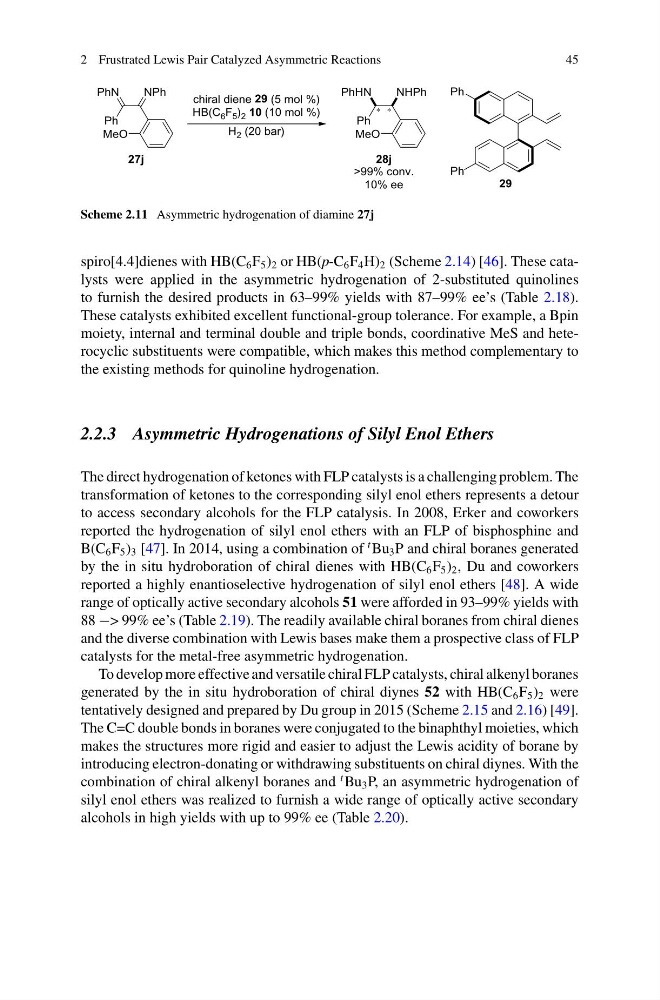
Scheme 2.11 Asymmetric hydrogenation of diamine 27j
spiro[4.4]dienes with HB(C 6 F 5 ) 2 or HB(p-C 6 F 4 H) 2 (Scheme 2.14) [46]. These catalysts were applied in the asymmetric hydrogenation of 2-substituted quinolines
to furnish the desired products in 63–99% yields with 87–99% ee’s (Table 2.18).
These catalysts exhibited excellent functional-group tolerance. For example, a Bpin
moiety, internal and terminal double and triple bonds, coordinative MeS and heterocyclic substituents were compatible, which makes this method complementary to
the existing methods for quinoline hydrogenation.
2.2.3 Asymmetric Hydrogenations of Silyl Enol Ethers
The direct hydrogenation of ketones with FLP catalysts is a challenging problem. The
transformation of ketones to the corresponding silyl enol ethers represents a detour
to access secondary alcohols for the FLP catalysis. In 2008, Erker and coworkers
reported the hydrogenation of silyl enol ethers with an FLP of bisphosphine and
B(C 6 F 5 ) 3 [47]. In 2014, using a combination of
t Bu 3 P and chiral boranes generated
by the in situ hydroboration of chiral dienes with HB(C 6 F 5 ) 2 , Du and coworkers
reported a highly enantioselective hydrogenation of silyl enol ethers [48]. A wide
range of optically active secondary alcohols 51 were afforded in 93–99% yields with
88 −> 99% ee’s (Table 2.19). The readily available chiral boranes from chiral dienes
and the diverse combination with Lewis bases make them a prospective class of FLP
catalysts for the metal-free asymmetric hydrogenation.
To develop more effective and versatile chiral FLP catalysts, chiral alkenyl boranes
generated by the in situ hydroboration of chiral diynes 52 with HB(C 6 F 5 ) 2 were
tentatively designed and prepared by Du group in 2015 (Scheme 2.15 and 2.16) [49].
The C=C double bonds in boranes were conjugated to the binaphthyl moieties, which
makes the structures more rigid and easier to adjust the Lewis acidity of borane by
introducing electron-donating or withdrawing substituents on chiral diynes. With the
combination of chiral alkenyl boranes and
t Bu 3 P, an asymmetric hydrogenation of
silyl enol ethers was realized to furnish a wide range of optically active secondary
alcohols in high yields with up to 99% ee (Table 2.20).
45
chiral diene 29 (5 mol %)
HB(C 6 F 5 ) 2 10 (10 mol %)
H 2 (20 bar)
∗ ∗
Ph
NHPh
PhHN
MeO
Ph
NPh
PhN
MeO
28j
>99% conv.
10% ee
Ph
Ph
27j
29
Scheme 2.11 Asymmetric hydrogenation of diamine 27j
spiro[4.4]dienes with HB(C 6 F 5 ) 2 or HB(p-C 6 F 4 H) 2 (Scheme 2.14) [46]. These catalysts were applied in the asymmetric hydrogenation of 2-substituted quinolines
to furnish the desired products in 63–99% yields with 87–99% ee’s (Table 2.18).
These catalysts exhibited excellent functional-group tolerance. For example, a Bpin
moiety, internal and terminal double and triple bonds, coordinative MeS and heterocyclic substituents were compatible, which makes this method complementary to
the existing methods for quinoline hydrogenation.
2.2.3 Asymmetric Hydrogenations of Silyl Enol Ethers
The direct hydrogenation of ketones with FLP catalysts is a challenging problem. The
transformation of ketones to the corresponding silyl enol ethers represents a detour
to access secondary alcohols for the FLP catalysis. In 2008, Erker and coworkers
reported the hydrogenation of silyl enol ethers with an FLP of bisphosphine and
B(C 6 F 5 ) 3 [47]. In 2014, using a combination of
t Bu 3 P and chiral boranes generated
by the in situ hydroboration of chiral dienes with HB(C 6 F 5 ) 2 , Du and coworkers
reported a highly enantioselective hydrogenation of silyl enol ethers [48]. A wide
range of optically active secondary alcohols 51 were afforded in 93–99% yields with
88 −> 99% ee’s (Table 2.19). The readily available chiral boranes from chiral dienes
and the diverse combination with Lewis bases make them a prospective class of FLP
catalysts for the metal-free asymmetric hydrogenation.
To develop more effective and versatile chiral FLP catalysts, chiral alkenyl boranes
generated by the in situ hydroboration of chiral diynes 52 with HB(C 6 F 5 ) 2 were
tentatively designed and prepared by Du group in 2015 (Scheme 2.15 and 2.16) [49].
The C=C double bonds in boranes were conjugated to the binaphthyl moieties, which
makes the structures more rigid and easier to adjust the Lewis acidity of borane by
introducing electron-donating or withdrawing substituents on chiral diynes. With the
combination of chiral alkenyl boranes and
t Bu 3 P, an asymmetric hydrogenation of
silyl enol ethers was realized to furnish a wide range of optically active secondary
alcohols in high yields with up to 99% ee (Table 2.20).