

2 Frustrated Lewis Pair Catalyzed Asymmetric Reactions
33
CO 2
i Pr
Br
CO 2
i Pr
Br
Pd(OAc)2
ArB(OH) 2
CO 2
i Pr
Ar
CO 2
i Pr
Ar
1. LiAlH 4
2. PCC
CHO
Ar
CHO
Ar
MePPh 3 I
KO t Bu
Ar
Ar
9a: Ar = Ph
9b: Ar = 4t BuC 6 H 4
9c: Ar = 4-CF 3 C 6 H 4
9d: Ar = 3-Me C6 H 4
9e: Ar = 3-MeOC 6 H 4
9f: Ar = 2,4,6-Me 3 C 6 H 2
6
7
8
9
9g: Ar = 2-MeO-4- i PrC 6 H 3
9h: Ar = 3,5- t Bu 2 C 6 H 3
9i: Ar = 3,5-(3,5- t Bu 2 C 6 H 3 ) 2 C 6 H 3
9j: Ar = 2-MeO-5- t BuC 6 H 3
9k: Ar = 2-EtO-5- t BuC 6 H 3
9l: Ar = 2- i PrO-5- t BuC 6 H 3
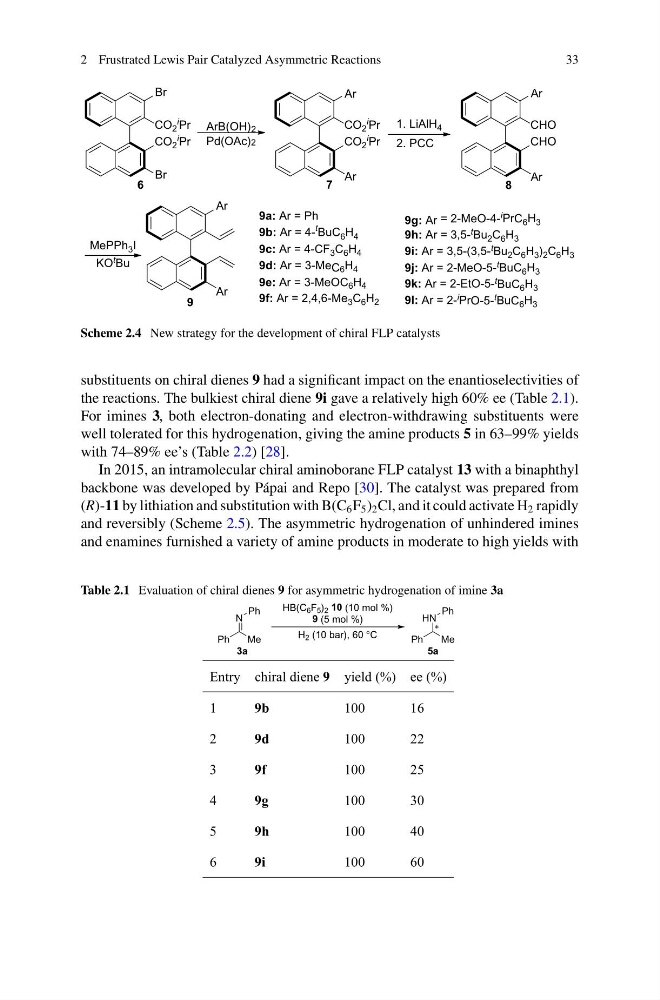
Scheme 2.4 New strategy for the development of chiral FLP catalysts
substituents on chiral dienes 9 had a significant impact on the enantioselectivities of
the reactions. The bulkiest chiral diene 9i gave a relatively high 60% ee (Table 2.1).
For imines 3, both electron-donating and electron-withdrawing substituents were
well tolerated for this hydrogenation, giving the amine products 5 in 63–99% yields
with 74–89% ee’s (Table 2.2) [28].
In 2015, an intramolecular chiral aminoborane FLP catalyst 13 with a binaphthyl
backbone was developed by Pápai and Repo [30]. The catalyst was prepared from
(R)-11 by lithiation and substitution with B(C 6 F 5 ) 2 Cl, and it could activate H 2 rapidly
and reversibly (Scheme 2.5). The asymmetric hydrogenation of unhindered imines
and enamines furnished a variety of amine products in moderate to high yields with
Table 2.1 Evaluation of chiral dienes 9 for asymmetric hydrogenation of imine 3a
Ph
Me
N
Ph
Ph
Me
HN
Ph
HB(C 6 F 5 ) 2 10 (10 mol %)
9 (5 mol %)
H 2 (10 bar), 60 C
3a
5a
Entry chiral diene 9 yield (%) ee (%)
1
9b
100
16
2
9d
100
22
3
9f
100
25
4
9g
100
30
5
9h
100
40
6
9i
100
60
33
CO 2
i Pr
Br
CO 2
i Pr
Br
Pd(OAc)2
ArB(OH) 2
CO 2
i Pr
Ar
CO 2
i Pr
Ar
1. LiAlH 4
2. PCC
CHO
Ar
CHO
Ar
MePPh 3 I
KO t Bu
Ar
Ar
9a: Ar = Ph
9b: Ar = 4t BuC 6 H 4
9c: Ar = 4-CF 3 C 6 H 4
9d: Ar = 3-Me C6 H 4
9e: Ar = 3-MeOC 6 H 4
9f: Ar = 2,4,6-Me 3 C 6 H 2
6
7
8
9
9g: Ar = 2-MeO-4- i PrC 6 H 3
9h: Ar = 3,5- t Bu 2 C 6 H 3
9i: Ar = 3,5-(3,5- t Bu 2 C 6 H 3 ) 2 C 6 H 3
9j: Ar = 2-MeO-5- t BuC 6 H 3
9k: Ar = 2-EtO-5- t BuC 6 H 3
9l: Ar = 2- i PrO-5- t BuC 6 H 3
Scheme 2.4 New strategy for the development of chiral FLP catalysts
substituents on chiral dienes 9 had a significant impact on the enantioselectivities of
the reactions. The bulkiest chiral diene 9i gave a relatively high 60% ee (Table 2.1).
For imines 3, both electron-donating and electron-withdrawing substituents were
well tolerated for this hydrogenation, giving the amine products 5 in 63–99% yields
with 74–89% ee’s (Table 2.2) [28].
In 2015, an intramolecular chiral aminoborane FLP catalyst 13 with a binaphthyl
backbone was developed by Pápai and Repo [30]. The catalyst was prepared from
(R)-11 by lithiation and substitution with B(C 6 F 5 ) 2 Cl, and it could activate H 2 rapidly
and reversibly (Scheme 2.5). The asymmetric hydrogenation of unhindered imines
and enamines furnished a variety of amine products in moderate to high yields with
Table 2.1 Evaluation of chiral dienes 9 for asymmetric hydrogenation of imine 3a
Ph
Me
N
Ph
Ph
Me
HN
Ph
HB(C 6 F 5 ) 2 10 (10 mol %)
9 (5 mol %)
H 2 (10 bar), 60 C
3a
5a
Entry chiral diene 9 yield (%) ee (%)
1
9b
100
16
2
9d
100
22
3
9f
100
25
4
9g
100
30
5
9h
100
40
6
9i
100
60