

8 Lewis Acid−Base Pairs for Polymerization Catalysis …
299
O
O
O
O
n
O
O
O
O
n
O
O
O
O
n
O
O
O
O
n
Erythro-diisotactic
Threo-diisotactic
Erythro-disyndiotactic
Threo-disyndiotactic
O
O
IN
anti-aromatic
LB:
OSiMe 3
OMe
LA
LB: NHO-1
LA
O
O
OMe
OSiMe 3
n
O
NHO
OLA
n
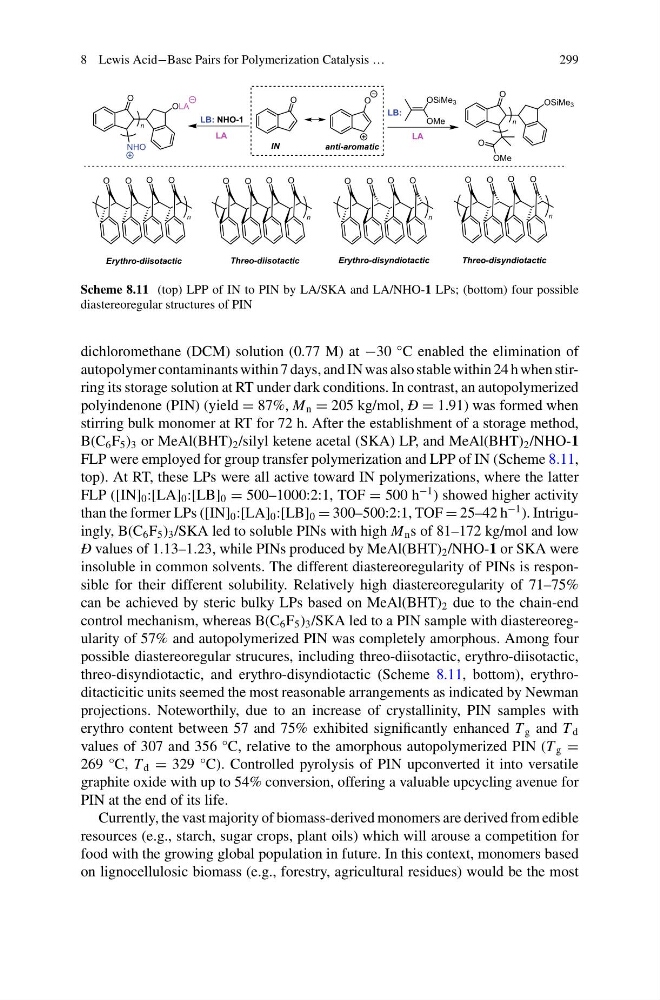
Scheme 8.11 (top) LPP of IN to PIN by LA/SKA and LA/NHO-1 LPs; (bottom) four possible
diastereoregular structures of PIN
dichloromethane (DCM) solution (0.77 M) at −30 °C enabled the elimination of
autopolymer contaminants within 7 days, and IN was also stable within 24 h when stirring its storage solution at RT under dark conditions. In contrast, an autopolymerized
polyindenone (PIN) (yield = 87%, M n = 205 kg/mol, Ð = 1.91) was formed when
stirring bulk monomer at RT for 72 h. After the establishment of a storage method,
B(C 6 F 5 ) 3 or MeAl(BHT) 2 /silyl ketene acetal (SKA) LP, and MeAl(BHT) 2 /NHO-1
FLP were employed for group transfer polymerization and LPP of IN (Scheme 8.11,
top). At RT, these LPs were all active toward IN polymerizations, where the latter
FLP ([IN] 0 :[LA] 0 :[LB] 0 = 500–1000:2:1, TOF = 500 h
−1 ) showed higher activity
than the former LPs ([IN] 0 :[LA] 0 :[LB] 0 = 300–500:2:1, TOF = 25–42 h
−1 ). Intriguingly, B(C 6 F 5 ) 3 /SKA led to soluble PINs with high M n s of 81–172 kg/mol and low
Ð values of 1.13–1.23, while PINs produced by MeAl(BHT) 2 /NHO-1 or SKA were
insoluble in common solvents. The different diastereoregularity of PINs is responsible for their different solubility. Relatively high diastereoregularity of 71–75%
can be achieved by steric bulky LPs based on MeAl(BHT) 2 due to the chain-end
control mechanism, whereas B(C 6 F 5 ) 3 /SKA led to a PIN sample with diastereoregularity of 57% and autopolymerized PIN was completely amorphous. Among four
possible diastereoregular strucures, including threo-diisotactic, erythro-diisotactic,
threo-disyndiotactic, and erythro-disyndiotactic (Scheme 8.11, bottom), erythroditacticitic units seemed the most reasonable arrangements as indicated by Newman
projections. Noteworthily, due to an increase of crystallinity, PIN samples with
erythro content between 57 and 75% exhibited significantly enhanced T g and T d
values of 307 and 356 °C, relative to the amorphous autopolymerized PIN (T g =
269 °C, T d = 329 °C). Controlled pyrolysis of PIN upconverted it into versatile
graphite oxide with up to 54% conversion, offering a valuable upcycling avenue for
PIN at the end of its life.
Currently, the vast majority of biomass-derived monomers are derived from edible
resources (e.g., starch, sugar crops, plant oils) which will arouse a competition for
food with the growing global population in future. In this context, monomers based
on lignocellulosic biomass (e.g., forestry, agricultural residues) would be the most
299
O
O
O
O
n
O
O
O
O
n
O
O
O
O
n
O
O
O
O
n
Erythro-diisotactic
Threo-diisotactic
Erythro-disyndiotactic
Threo-disyndiotactic
O
O
IN
anti-aromatic
LB:
OSiMe 3
OMe
LA
LB: NHO-1
LA
O
O
OMe
OSiMe 3
n
O
NHO
OLA
n
Scheme 8.11 (top) LPP of IN to PIN by LA/SKA and LA/NHO-1 LPs; (bottom) four possible
diastereoregular structures of PIN
dichloromethane (DCM) solution (0.77 M) at −30 °C enabled the elimination of
autopolymer contaminants within 7 days, and IN was also stable within 24 h when stirring its storage solution at RT under dark conditions. In contrast, an autopolymerized
polyindenone (PIN) (yield = 87%, M n = 205 kg/mol, Ð = 1.91) was formed when
stirring bulk monomer at RT for 72 h. After the establishment of a storage method,
B(C 6 F 5 ) 3 or MeAl(BHT) 2 /silyl ketene acetal (SKA) LP, and MeAl(BHT) 2 /NHO-1
FLP were employed for group transfer polymerization and LPP of IN (Scheme 8.11,
top). At RT, these LPs were all active toward IN polymerizations, where the latter
FLP ([IN] 0 :[LA] 0 :[LB] 0 = 500–1000:2:1, TOF = 500 h
−1 ) showed higher activity
than the former LPs ([IN] 0 :[LA] 0 :[LB] 0 = 300–500:2:1, TOF = 25–42 h
−1 ). Intriguingly, B(C 6 F 5 ) 3 /SKA led to soluble PINs with high M n s of 81–172 kg/mol and low
Ð values of 1.13–1.23, while PINs produced by MeAl(BHT) 2 /NHO-1 or SKA were
insoluble in common solvents. The different diastereoregularity of PINs is responsible for their different solubility. Relatively high diastereoregularity of 71–75%
can be achieved by steric bulky LPs based on MeAl(BHT) 2 due to the chain-end
control mechanism, whereas B(C 6 F 5 ) 3 /SKA led to a PIN sample with diastereoregularity of 57% and autopolymerized PIN was completely amorphous. Among four
possible diastereoregular strucures, including threo-diisotactic, erythro-diisotactic,
threo-disyndiotactic, and erythro-disyndiotactic (Scheme 8.11, bottom), erythroditacticitic units seemed the most reasonable arrangements as indicated by Newman
projections. Noteworthily, due to an increase of crystallinity, PIN samples with
erythro content between 57 and 75% exhibited significantly enhanced T g and T d
values of 307 and 356 °C, relative to the amorphous autopolymerized PIN (T g =
269 °C, T d = 329 °C). Controlled pyrolysis of PIN upconverted it into versatile
graphite oxide with up to 54% conversion, offering a valuable upcycling avenue for
PIN at the end of its life.
Currently, the vast majority of biomass-derived monomers are derived from edible
resources (e.g., starch, sugar crops, plant oils) which will arouse a competition for
food with the growing global population in future. In this context, monomers based
on lignocellulosic biomass (e.g., forestry, agricultural residues) would be the most