

7 Heterogeneous Catalysis by Frustrated Lewis Pairs
243
a)
b)
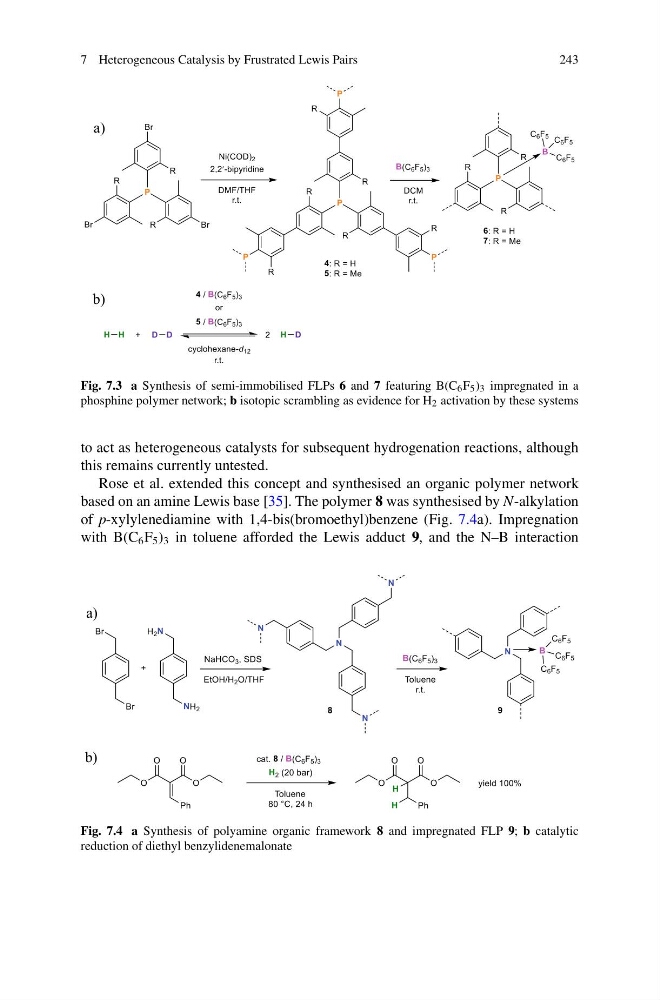
Fig. 7.3 a Synthesis of semi-immobilised FLPs 6 and 7 featuring B(C 6 F 5 ) 3 impregnated in a
phosphine polymer network; b isotopic scrambling as evidence for H 2 activation by these systems
to act as heterogeneous catalysts for subsequent hydrogenation reactions, although
this remains currently untested.
Rose et al. extended this concept and synthesised an organic polymer network
based on an amine Lewis base [35]. The polymer 8 was synthesised by N-alkylation
of p-xylylenediamine with 1,4-bis(bromoethyl)benzene (Fig. 7.4a). Impregnation
with B(C 6 F 5 ) 3 in toluene afforded the Lewis adduct 9, and the N–B interaction
a)
b)
Fig. 7.4 a Synthesis of polyamine organic framework 8 and impregnated FLP 9; b catalytic
reduction of diethyl benzylidenemalonate
243
a)
b)
Fig. 7.3 a Synthesis of semi-immobilised FLPs 6 and 7 featuring B(C 6 F 5 ) 3 impregnated in a
phosphine polymer network; b isotopic scrambling as evidence for H 2 activation by these systems
to act as heterogeneous catalysts for subsequent hydrogenation reactions, although
this remains currently untested.
Rose et al. extended this concept and synthesised an organic polymer network
based on an amine Lewis base [35]. The polymer 8 was synthesised by N-alkylation
of p-xylylenediamine with 1,4-bis(bromoethyl)benzene (Fig. 7.4a). Impregnation
with B(C 6 F 5 ) 3 in toluene afforded the Lewis adduct 9, and the N–B interaction
a)
b)
Fig. 7.4 a Synthesis of polyamine organic framework 8 and impregnated FLP 9; b catalytic
reduction of diethyl benzylidenemalonate