

224
T. A. Gazis et al.
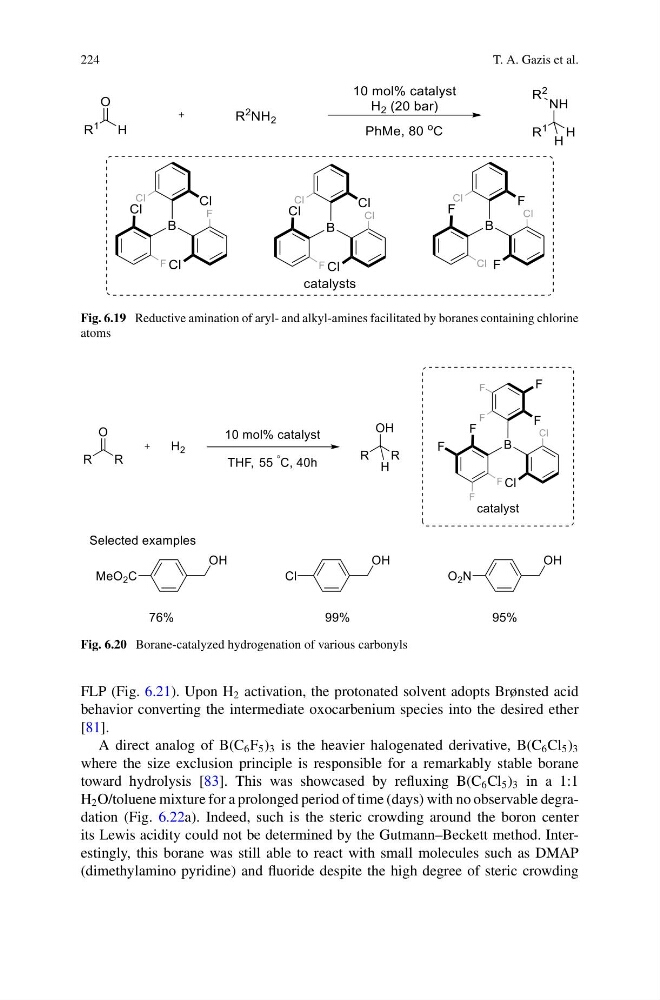
Fig. 6.19 Reductive amination of aryl- and alkyl-amines facilitated by boranes containing chlorine
atoms
Fig. 6.20 Borane-catalyzed hydrogenation of various carbonyls
FLP (Fig. 6.21). Upon H 2 activation, the protonated solvent adopts Brønsted acid
behavior converting the intermediate oxocarbenium species into the desired ether
[81].
A direct analog of B(C 6 F 5 ) 3 is the heavier halogenated derivative, B(C 6 Cl 5 ) 3
where the size exclusion principle is responsible for a remarkably stable borane
toward hydrolysis [83]. This was showcased by refluxing B(C 6 Cl 5 ) 3 in a 1:1
H 2 O/toluene mixture for a prolonged period of time (days) with no observable degradation (Fig. 6.22a). Indeed, such is the steric crowding around the boron center
its Lewis acidity could not be determined by the Gutmann–Beckett method. Interestingly, this borane was still able to react with small molecules such as DMAP
(dimethylamino pyridine) and fluoride despite the high degree of steric crowding
T. A. Gazis et al.
Fig. 6.19 Reductive amination of aryl- and alkyl-amines facilitated by boranes containing chlorine
atoms
Fig. 6.20 Borane-catalyzed hydrogenation of various carbonyls
FLP (Fig. 6.21). Upon H 2 activation, the protonated solvent adopts Brønsted acid
behavior converting the intermediate oxocarbenium species into the desired ether
[81].
A direct analog of B(C 6 F 5 ) 3 is the heavier halogenated derivative, B(C 6 Cl 5 ) 3
where the size exclusion principle is responsible for a remarkably stable borane
toward hydrolysis [83]. This was showcased by refluxing B(C 6 Cl 5 ) 3 in a 1:1
H 2 O/toluene mixture for a prolonged period of time (days) with no observable degradation (Fig. 6.22a). Indeed, such is the steric crowding around the boron center
its Lewis acidity could not be determined by the Gutmann–Beckett method. Interestingly, this borane was still able to react with small molecules such as DMAP
(dimethylamino pyridine) and fluoride despite the high degree of steric crowding