

154
Y. Soltani and F.-G. Fontaine
NR 2
BF 3
AIBN (3.3 mol%)
80 °C, 24 h
CyOH
NR 2
BF 3
n
g R w
-1
Me,
Et,
Pip,
g M w [g mol
-1 ]
26,000
72,300
77,200
g M n [g mol
-1 ]
16,500
29,000
24,700
g Ð w
-1
1.6,
2.5,
3.1,
g yield [%]
-1
w
73,
72,
83,
T g [°C] w
-1
142,
183,
195,
25 R
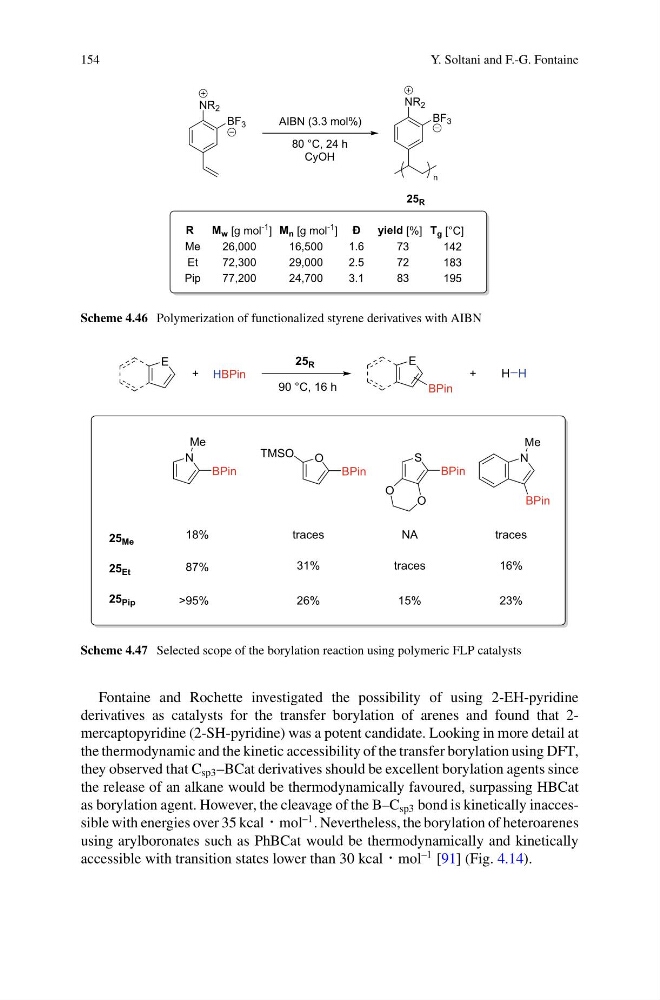
Scheme 4.46 Polymerization of functionalized styrene derivatives with AIBN
E
25 R
90 °C, 16 h
E
BPin
N
Me
BPin
O
BPin
TMSO
S
BPin
O
O
N
Me
BPin
25 Me
25 Et
25 Pip
18%
87%
>95%
traces
31%
26%
NA
traces
15%
traces
16%
23%
+
+
HBPin
H H
Scheme 4.47 Selected scope of the borylation reaction using polymeric FLP catalysts
Fontaine and Rochette investigated the possibility of using 2-EH-pyridine
derivatives as catalysts for the transfer borylation of arenes and found that 2mercaptopyridine (2-SH-pyridine) was a potent candidate. Looking in more detail at
the thermodynamic and the kinetic accessibility of the transfer borylation using DFT,
they observed that C sp3 –BCat derivatives should be excellent borylation agents since
the release of an alkane would be thermodynamically favoured, surpassing HBCat
as borylation agent. However, the cleavage of the B–C sp3 bond is kinetically inaccessible with energies over 35 kcal‧mol
–1 . Nevertheless, the borylation of heteroarenes
using arylboronates such as PhBCat would be thermodynamically and kinetically
accessible with transition states lower than 30 kcal‧mol
–1 [91] (Fig. 4.14).
Y. Soltani and F.-G. Fontaine
NR 2
BF 3
AIBN (3.3 mol%)
80 °C, 24 h
CyOH
NR 2
BF 3
n
g R w
-1
Me,
Et,
Pip,
g M w [g mol
-1 ]
26,000
72,300
77,200
g M n [g mol
-1 ]
16,500
29,000
24,700
g Ð w
-1
1.6,
2.5,
3.1,
g yield [%]
-1
w
73,
72,
83,
T g [°C] w
-1
142,
183,
195,
25 R
Scheme 4.46 Polymerization of functionalized styrene derivatives with AIBN
E
25 R
90 °C, 16 h
E
BPin
N
Me
BPin
O
BPin
TMSO
S
BPin
O
O
N
Me
BPin
25 Me
25 Et
25 Pip
18%
87%
>95%
traces
31%
26%
NA
traces
15%
traces
16%
23%
+
+
HBPin
H H
Scheme 4.47 Selected scope of the borylation reaction using polymeric FLP catalysts
Fontaine and Rochette investigated the possibility of using 2-EH-pyridine
derivatives as catalysts for the transfer borylation of arenes and found that 2mercaptopyridine (2-SH-pyridine) was a potent candidate. Looking in more detail at
the thermodynamic and the kinetic accessibility of the transfer borylation using DFT,
they observed that C sp3 –BCat derivatives should be excellent borylation agents since
the release of an alkane would be thermodynamically favoured, surpassing HBCat
as borylation agent. However, the cleavage of the B–C sp3 bond is kinetically inaccessible with energies over 35 kcal‧mol
–1 . Nevertheless, the borylation of heteroarenes
using arylboronates such as PhBCat would be thermodynamically and kinetically
accessible with transition states lower than 30 kcal‧mol
–1 [91] (Fig. 4.14).