

140
Y. Soltani and F.-G. Fontaine
NMe 2
B(C 6 F 5 ) 2
nBu
H
rt, 1 h
or
80 °C, 5 min
C 6 D 6 or CD 2 Cl 2
NHMe 2
B(C 6 F 5 ) 2
nBu
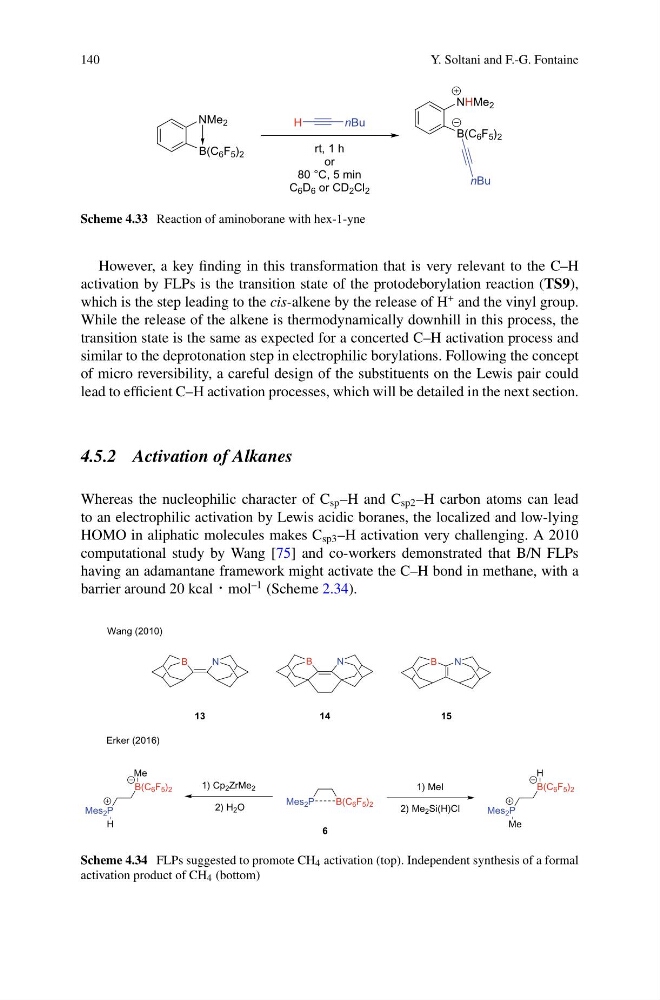
Scheme 4.33 Reaction of aminoborane with hex-1-yne
However, a key finding in this transformation that is very relevant to the C–H
activation by FLPs is the transition state of the protodeborylation reaction (TS9),
which is the step leading to the cis-alkene by the release of H
+ and the vinyl group.
While the release of the alkene is thermodynamically downhill in this process, the
transition state is the same as expected for a concerted C–H activation process and
similar to the deprotonation step in electrophilic borylations. Following the concept
of micro reversibility, a careful design of the substituents on the Lewis pair could
lead to efficient C–H activation processes, which will be detailed in the next section.
4.5.2 Activation of Alkanes
Whereas the nucleophilic character of C sp –H and C sp2 –H carbon atoms can lead
to an electrophilic activation by Lewis acidic boranes, the localized and low-lying
HOMO in aliphatic molecules makes C sp3 –H activation very challenging. A 2010
computational study by Wang [75] and co-workers demonstrated that B/N FLPs
having an adamantane framework might activate the C–H bond in methane, with a
barrier around 20 kcal‧mol
–1 (Scheme 2.34).
Wang (2010)
N
B
N
B
N
B
13
14
15
Erker (2016)
Mes 2 P
B(C 6 F 5 ) 2
B(C 6 F 5 ) 2
Mes 2 P
Me
H
B(C 6 F 5 ) 2
Mes 2 P
H
Me
1) MeI
2) Me 2 Si(H)Cl
1) Cp 2 ZrMe 2
2) H 2 O
6
Scheme 4.34 FLPs suggested to promote CH 4 activation (top). Independent synthesis of a formal
activation product of CH 4 (bottom)
Y. Soltani and F.-G. Fontaine
NMe 2
B(C 6 F 5 ) 2
nBu
H
rt, 1 h
or
80 °C, 5 min
C 6 D 6 or CD 2 Cl 2
NHMe 2
B(C 6 F 5 ) 2
nBu
Scheme 4.33 Reaction of aminoborane with hex-1-yne
However, a key finding in this transformation that is very relevant to the C–H
activation by FLPs is the transition state of the protodeborylation reaction (TS9),
which is the step leading to the cis-alkene by the release of H
+ and the vinyl group.
While the release of the alkene is thermodynamically downhill in this process, the
transition state is the same as expected for a concerted C–H activation process and
similar to the deprotonation step in electrophilic borylations. Following the concept
of micro reversibility, a careful design of the substituents on the Lewis pair could
lead to efficient C–H activation processes, which will be detailed in the next section.
4.5.2 Activation of Alkanes
Whereas the nucleophilic character of C sp –H and C sp2 –H carbon atoms can lead
to an electrophilic activation by Lewis acidic boranes, the localized and low-lying
HOMO in aliphatic molecules makes C sp3 –H activation very challenging. A 2010
computational study by Wang [75] and co-workers demonstrated that B/N FLPs
having an adamantane framework might activate the C–H bond in methane, with a
barrier around 20 kcal‧mol
–1 (Scheme 2.34).
Wang (2010)
N
B
N
B
N
B
13
14
15
Erker (2016)
Mes 2 P
B(C 6 F 5 ) 2
B(C 6 F 5 ) 2
Mes 2 P
Me
H
B(C 6 F 5 ) 2
Mes 2 P
H
Me
1) MeI
2) Me 2 Si(H)Cl
1) Cp 2 ZrMe 2
2) H 2 O
6
Scheme 4.34 FLPs suggested to promote CH 4 activation (top). Independent synthesis of a formal
activation product of CH 4 (bottom)