

42
we could exploit the telescope jointly. It was under the wing of such collaborations that our own research groups grew.
This nascent research team soon had at its disposal, apart from the Bordeaux
Telescope, a semi-automatic double telephotometer (dubbed the ‘coffee pot’).
It was specially designed to perform the spectral photometry of airglow and
was equipped with interference filters centred on the principal passbands
emitted by the upper atmosphere. We went on to design new, even more
automated instruments. I discuss these in more detail in Chaps. 17 and 18.
The IAC’s Instrumentation Division grew from these early efforts to develop
the skills needed to tackle the design and construction of highly advanced
instruments for terrestrial and space astronomy, and later on to face the daunting challenge presented by the Gran Telescopio Canarias (Chap. 21).
But to return to our first investigations. Far from cities, even at sites with
low light pollution on moonless nights, the sky is never completely dark. The
landscape is always bathed in a tenuous glow that does not produce shadow:
it is light from the night sky itself, comprising a mixture of glows of different
origins. When a telescope observes from the terrestrial surface it captures a
mixture of these different glows: light from the upper regions of the
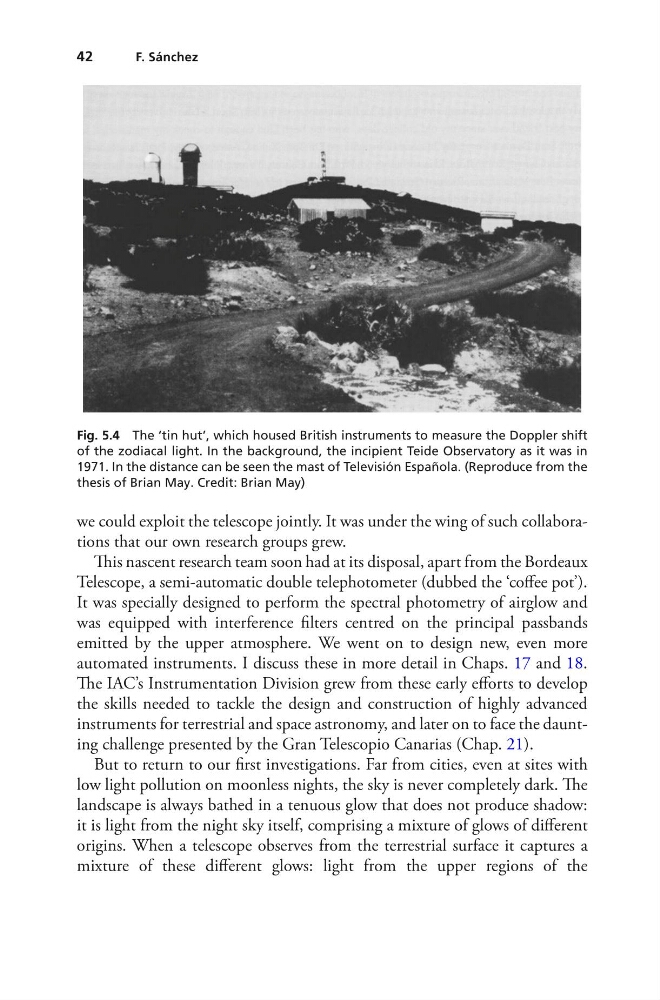
Fig. 5.4 The ‘tin hut’, which housed British instruments to measure the Doppler shift
of the zodiacal light. In the background, the incipient Teide Observatory as it was in
1971. In the distance can be seen the mast of Televisión Española. (Reproduce from the
thesis of Brian May. Credit: Brian May)
F. Sánchez
we could exploit the telescope jointly. It was under the wing of such collaborations that our own research groups grew.
This nascent research team soon had at its disposal, apart from the Bordeaux
Telescope, a semi-automatic double telephotometer (dubbed the ‘coffee pot’).
It was specially designed to perform the spectral photometry of airglow and
was equipped with interference filters centred on the principal passbands
emitted by the upper atmosphere. We went on to design new, even more
automated instruments. I discuss these in more detail in Chaps. 17 and 18.
The IAC’s Instrumentation Division grew from these early efforts to develop
the skills needed to tackle the design and construction of highly advanced
instruments for terrestrial and space astronomy, and later on to face the daunting challenge presented by the Gran Telescopio Canarias (Chap. 21).
But to return to our first investigations. Far from cities, even at sites with
low light pollution on moonless nights, the sky is never completely dark. The
landscape is always bathed in a tenuous glow that does not produce shadow:
it is light from the night sky itself, comprising a mixture of glows of different
origins. When a telescope observes from the terrestrial surface it captures a
mixture of these different glows: light from the upper regions of the
Fig. 5.4 The ‘tin hut’, which housed British instruments to measure the Doppler shift
of the zodiacal light. In the background, the incipient Teide Observatory as it was in
1971. In the distance can be seen the mast of Televisión Española. (Reproduce from the
thesis of Brian May. Credit: Brian May)
F. Sánchez