

64
C. Juhong et al.
0 . 0
0 . 2
0 . 4
0 . 6
0 . 8
1 . 0
1 . 2
-6
-5
-4
-3
-2
-1
0
E / V vs. RHE
0.1mol L
-1 HClO 4
0.1mol L
-1 H 2 SO 4
0.5mol L
-1 H 2 SO 4
0.1mol L
-1 HNO 3
0.1mol L
-1 HCl
i / mA cm
-2
a
1
1 0
1 0 0
0.65
0.70
0.75
0.80
0.85
0.90
0.95
E / V
vs. RHE
b
j k / mA cm
-2
0.1 mol L
-1 HClO 4
0.1 mol L
-1 H 2 SO 4
0.5 mol L
-1 H 2 SO 4
0.1 mol L
-1 HNO 3
0.1 mol L
-1 HCl
0.1M
0.1M
0.5M
0.1M
0.1M
0
20
40
60
80
100
HCl
HNO 3
H 2 SO 4
0
59
42
57
i
m / mA mg
-1
Pt
@ 0.9 V
Concentration / mol L
-1
95
HClO 4
c
0.1M
0.1M
0.5M
0.1M
0.1M
0
20
40
60
80
100
HCl
HNO 3
H 2 SO 4
0
63
44
60
Nomalised mass activity
Concentration / mol L
-1
100
HClO 4
d
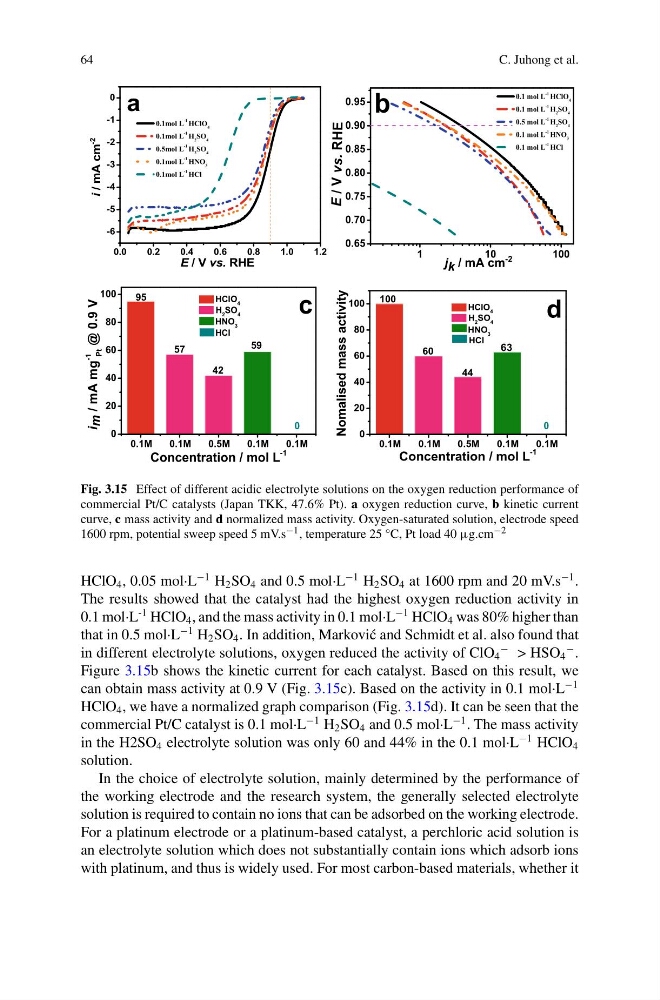
Fig. 3.15 Effect of different acidic electrolyte solutions on the oxygen reduction performance of
commercial Pt/C catalysts (Japan TKK, 47.6% Pt). a oxygen reduction curve, b kinetic current
curve, c mass activity and d normalized mass activity. Oxygen-saturated solution, electrode speed
1600 rpm, potential sweep speed 5 mV.s −1 , temperature 25 °C, Pt load 40 μg.cm −2
HClO 4 , 0.05 mol·L
−1 H 2 SO 4 and 0.5 mol·L
−1 H 2 SO 4 at 1600 rpm and 20 mV.s
−1 .
The results showed that the catalyst had the highest oxygen reduction activity in
0.1 mol·L
-1 HClO 4 , and the mass activity in 0.1 mol·L
−1 HClO 4 was 80% higher than
that in 0.5 mol·L
−1 H 2 SO 4 . In addition, Markovi´ c and Schmidt et al. also found that
in different electrolyte solutions, oxygen reduced the activity of ClO 4
− > HSO 4
− .
Figure 3.15b shows the kinetic current for each catalyst. Based on this result, we
can obtain mass activity at 0.9 V (Fig. 3.15c). Based on the activity in 0.1 mol·L
−1
HClO 4 , we have a normalized graph comparison (Fig. 3.15d). It can be seen that the
commercial Pt/C catalyst is 0.1 mol·L
−1 H 2 SO 4 and 0.5 mol·L
−1 . The mass activity
in the H2SO 4 electrolyte solution was only 60 and 44% in the 0.1 mol·L
−1 HClO 4
solution.
In the choice of electrolyte solution, mainly determined by the performance of
the working electrode and the research system, the generally selected electrolyte
solution is required to contain no ions that can be adsorbed on the working electrode.
For a platinum electrode or a platinum-based catalyst, a perchloric acid solution is
an electrolyte solution which does not substantially contain ions which adsorb ions
with platinum, and thus is widely used. For most carbon-based materials, whether it
C. Juhong et al.
0 . 0
0 . 2
0 . 4
0 . 6
0 . 8
1 . 0
1 . 2
-6
-5
-4
-3
-2
-1
0
E / V vs. RHE
0.1mol L
-1 HClO 4
0.1mol L
-1 H 2 SO 4
0.5mol L
-1 H 2 SO 4
0.1mol L
-1 HNO 3
0.1mol L
-1 HCl
i / mA cm
-2
a
1
1 0
1 0 0
0.65
0.70
0.75
0.80
0.85
0.90
0.95
E / V
vs. RHE
b
j k / mA cm
-2
0.1 mol L
-1 HClO 4
0.1 mol L
-1 H 2 SO 4
0.5 mol L
-1 H 2 SO 4
0.1 mol L
-1 HNO 3
0.1 mol L
-1 HCl
0.1M
0.1M
0.5M
0.1M
0.1M
0
20
40
60
80
100
HCl
HNO 3
H 2 SO 4
0
59
42
57
i
m / mA mg
-1
Pt
@ 0.9 V
Concentration / mol L
-1
95
HClO 4
c
0.1M
0.1M
0.5M
0.1M
0.1M
0
20
40
60
80
100
HCl
HNO 3
H 2 SO 4
0
63
44
60
Nomalised mass activity
Concentration / mol L
-1
100
HClO 4
d
Fig. 3.15 Effect of different acidic electrolyte solutions on the oxygen reduction performance of
commercial Pt/C catalysts (Japan TKK, 47.6% Pt). a oxygen reduction curve, b kinetic current
curve, c mass activity and d normalized mass activity. Oxygen-saturated solution, electrode speed
1600 rpm, potential sweep speed 5 mV.s −1 , temperature 25 °C, Pt load 40 μg.cm −2
HClO 4 , 0.05 mol·L
−1 H 2 SO 4 and 0.5 mol·L
−1 H 2 SO 4 at 1600 rpm and 20 mV.s
−1 .
The results showed that the catalyst had the highest oxygen reduction activity in
0.1 mol·L
-1 HClO 4 , and the mass activity in 0.1 mol·L
−1 HClO 4 was 80% higher than
that in 0.5 mol·L
−1 H 2 SO 4 . In addition, Markovi´ c and Schmidt et al. also found that
in different electrolyte solutions, oxygen reduced the activity of ClO 4
− > HSO 4
− .
Figure 3.15b shows the kinetic current for each catalyst. Based on this result, we
can obtain mass activity at 0.9 V (Fig. 3.15c). Based on the activity in 0.1 mol·L
−1
HClO 4 , we have a normalized graph comparison (Fig. 3.15d). It can be seen that the
commercial Pt/C catalyst is 0.1 mol·L
−1 H 2 SO 4 and 0.5 mol·L
−1 . The mass activity
in the H2SO 4 electrolyte solution was only 60 and 44% in the 0.1 mol·L
−1 HClO 4
solution.
In the choice of electrolyte solution, mainly determined by the performance of
the working electrode and the research system, the generally selected electrolyte
solution is required to contain no ions that can be adsorbed on the working electrode.
For a platinum electrode or a platinum-based catalyst, a perchloric acid solution is
an electrolyte solution which does not substantially contain ions which adsorb ions
with platinum, and thus is widely used. For most carbon-based materials, whether it