

3 The Measurements of the Oxygen Reduction Reaction
47
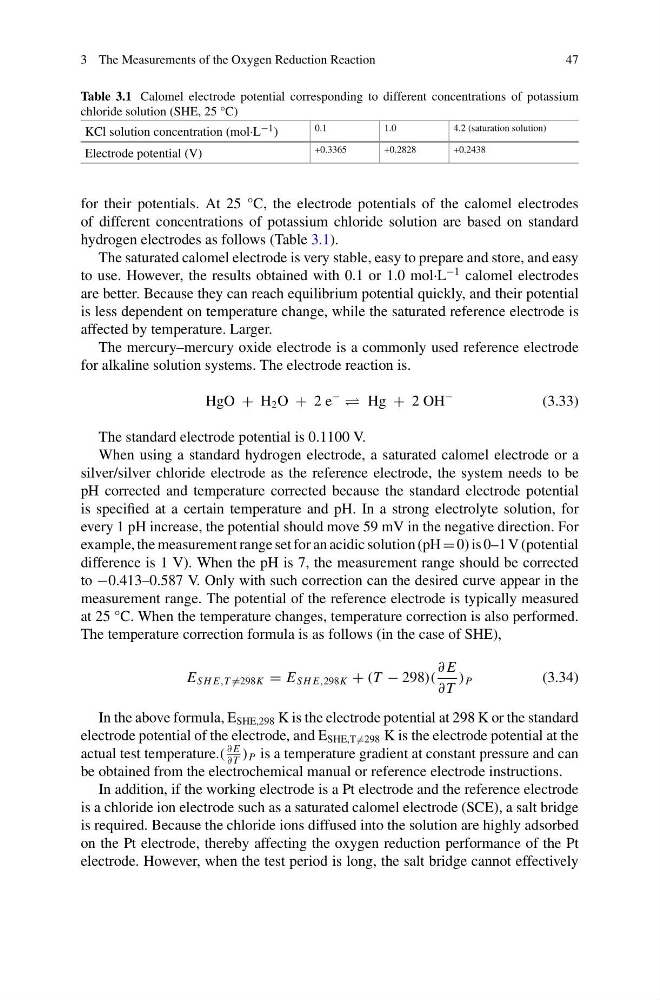
Table 3.1 Calomel electrode potential corresponding to different concentrations of potassium
chloride solution (SHE, 25 °C)
KCl solution concentration (mol·L −1 )
0.1
1.0
4.2 (saturation solution)
Electrode potential (V)
+0.3365
+0.2828
+0.2438
for their potentials. At 25 °C, the electrode potentials of the calomel electrodes
of different concentrations of potassium chloride solution are based on standard
hydrogen electrodes as follows (Table 3.1).
The saturated calomel electrode is very stable, easy to prepare and store, and easy
to use. However, the results obtained with 0.1 or 1.0 mol·L
−1 calomel electrodes
are better. Because they can reach equilibrium potential quickly, and their potential
is less dependent on temperature change, while the saturated reference electrode is
affected by temperature. Larger.
The mercury–mercury oxide electrode is a commonly used reference electrode
for alkaline solution systems. The electrode reaction is.
HgO + H 2 O + 2 e
−
Hg + 2 OH
−
(3.33)
The standard electrode potential is 0.1100 V.
When using a standard hydrogen electrode, a saturated calomel electrode or a
silver/silver chloride electrode as the reference electrode, the system needs to be
pH corrected and temperature corrected because the standard electrode potential
is specified at a certain temperature and pH. In a strong electrolyte solution, for
every 1 pH increase, the potential should move 59 mV in the negative direction. For
example, the measurement range set for an acidic solution (pH = 0) is 0–1 V (potential
difference is 1 V). When the pH is 7, the measurement range should be corrected
to −0.413–0.587 V. Only with such correction can the desired curve appear in the
measurement range. The potential of the reference electrode is typically measured
at 25 °C. When the temperature changes, temperature correction is also performed.
The temperature correction formula is as follows (in the case of SHE),
E S H E,T =298K = E S H E,298K + (T − 298)(
∂ E
∂ T
) P
(3.34)
In the above formula, E SHE,298 K is the electrode potential at 298 K or the standard
electrode potential of the electrode, and E SHE,T =298 K is the electrode potential at the
actual test temperature.(
∂ E
∂ T
) P is a temperature gradient at constant pressure and can
be obtained from the electrochemical manual or reference electrode instructions.
In addition, if the working electrode is a Pt electrode and the reference electrode
is a chloride ion electrode such as a saturated calomel electrode (SCE), a salt bridge
is required. Because the chloride ions diffused into the solution are highly adsorbed
on the Pt electrode, thereby affecting the oxygen reduction performance of the Pt
electrode. However, when the test period is long, the salt bridge cannot effectively
47
Table 3.1 Calomel electrode potential corresponding to different concentrations of potassium
chloride solution (SHE, 25 °C)
KCl solution concentration (mol·L −1 )
0.1
1.0
4.2 (saturation solution)
Electrode potential (V)
+0.3365
+0.2828
+0.2438
for their potentials. At 25 °C, the electrode potentials of the calomel electrodes
of different concentrations of potassium chloride solution are based on standard
hydrogen electrodes as follows (Table 3.1).
The saturated calomel electrode is very stable, easy to prepare and store, and easy
to use. However, the results obtained with 0.1 or 1.0 mol·L
−1 calomel electrodes
are better. Because they can reach equilibrium potential quickly, and their potential
is less dependent on temperature change, while the saturated reference electrode is
affected by temperature. Larger.
The mercury–mercury oxide electrode is a commonly used reference electrode
for alkaline solution systems. The electrode reaction is.
HgO + H 2 O + 2 e
−
Hg + 2 OH
−
(3.33)
The standard electrode potential is 0.1100 V.
When using a standard hydrogen electrode, a saturated calomel electrode or a
silver/silver chloride electrode as the reference electrode, the system needs to be
pH corrected and temperature corrected because the standard electrode potential
is specified at a certain temperature and pH. In a strong electrolyte solution, for
every 1 pH increase, the potential should move 59 mV in the negative direction. For
example, the measurement range set for an acidic solution (pH = 0) is 0–1 V (potential
difference is 1 V). When the pH is 7, the measurement range should be corrected
to −0.413–0.587 V. Only with such correction can the desired curve appear in the
measurement range. The potential of the reference electrode is typically measured
at 25 °C. When the temperature changes, temperature correction is also performed.
The temperature correction formula is as follows (in the case of SHE),
E S H E,T =298K = E S H E,298K + (T − 298)(
∂ E
∂ T
) P
(3.34)
In the above formula, E SHE,298 K is the electrode potential at 298 K or the standard
electrode potential of the electrode, and E SHE,T =298 K is the electrode potential at the
actual test temperature.(
∂ E
∂ T
) P is a temperature gradient at constant pressure and can
be obtained from the electrochemical manual or reference electrode instructions.
In addition, if the working electrode is a Pt electrode and the reference electrode
is a chloride ion electrode such as a saturated calomel electrode (SCE), a salt bridge
is required. Because the chloride ions diffused into the solution are highly adsorbed
on the Pt electrode, thereby affecting the oxygen reduction performance of the Pt
electrode. However, when the test period is long, the salt bridge cannot effectively