

2 Mechanism of Oxygen Reduction Reaction
15
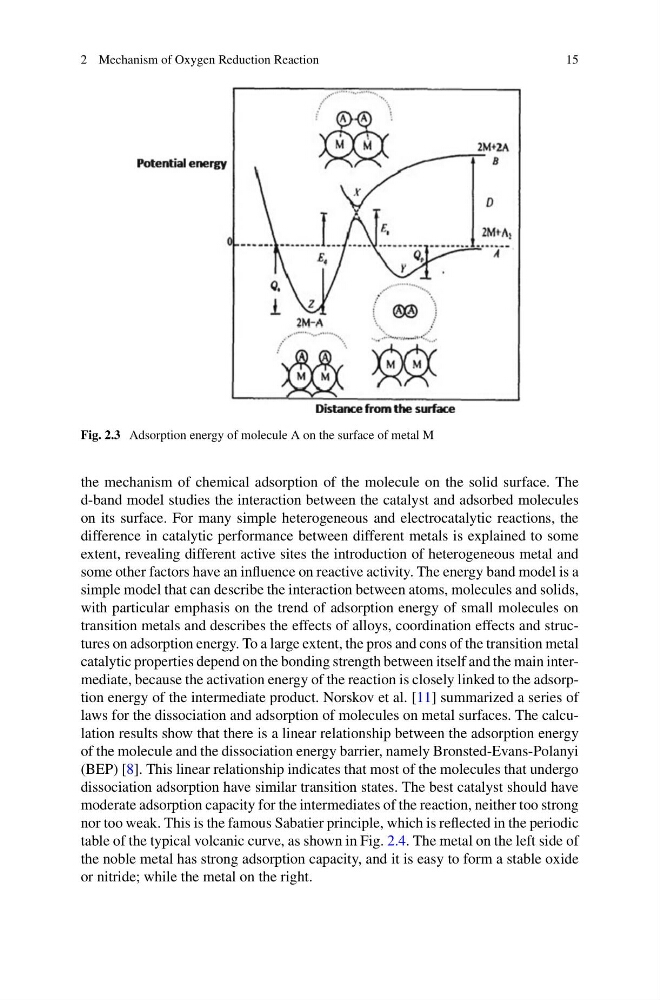
Fig. 2.3 Adsorption energy of molecule A on the surface of metal M
the mechanism of chemical adsorption of the molecule on the solid surface. The
d-band model studies the interaction between the catalyst and adsorbed molecules
on its surface. For many simple heterogeneous and electrocatalytic reactions, the
difference in catalytic performance between different metals is explained to some
extent, revealing different active sites the introduction of heterogeneous metal and
some other factors have an influence on reactive activity. The energy band model is a
simple model that can describe the interaction between atoms, molecules and solids,
with particular emphasis on the trend of adsorption energy of small molecules on
transition metals and describes the effects of alloys, coordination effects and structures on adsorption energy. To a large extent, the pros and cons of the transition metal
catalytic properties depend on the bonding strength between itself and the main intermediate, because the activation energy of the reaction is closely linked to the adsorption energy of the intermediate product. Norskov et al. [11] summarized a series of
laws for the dissociation and adsorption of molecules on metal surfaces. The calculation results show that there is a linear relationship between the adsorption energy
of the molecule and the dissociation energy barrier, namely Bronsted-Evans-Polanyi
(BEP) [8]. This linear relationship indicates that most of the molecules that undergo
dissociation adsorption have similar transition states. The best catalyst should have
moderate adsorption capacity for the intermediates of the reaction, neither too strong
nor too weak. This is the famous Sabatier principle, which is reflected in the periodic
table of the typical volcanic curve, as shown in Fig. 2.4. The metal on the left side of
the noble metal has strong adsorption capacity, and it is easy to form a stable oxide
or nitride; while the metal on the right.
15
Fig. 2.3 Adsorption energy of molecule A on the surface of metal M
the mechanism of chemical adsorption of the molecule on the solid surface. The
d-band model studies the interaction between the catalyst and adsorbed molecules
on its surface. For many simple heterogeneous and electrocatalytic reactions, the
difference in catalytic performance between different metals is explained to some
extent, revealing different active sites the introduction of heterogeneous metal and
some other factors have an influence on reactive activity. The energy band model is a
simple model that can describe the interaction between atoms, molecules and solids,
with particular emphasis on the trend of adsorption energy of small molecules on
transition metals and describes the effects of alloys, coordination effects and structures on adsorption energy. To a large extent, the pros and cons of the transition metal
catalytic properties depend on the bonding strength between itself and the main intermediate, because the activation energy of the reaction is closely linked to the adsorption energy of the intermediate product. Norskov et al. [11] summarized a series of
laws for the dissociation and adsorption of molecules on metal surfaces. The calculation results show that there is a linear relationship between the adsorption energy
of the molecule and the dissociation energy barrier, namely Bronsted-Evans-Polanyi
(BEP) [8]. This linear relationship indicates that most of the molecules that undergo
dissociation adsorption have similar transition states. The best catalyst should have
moderate adsorption capacity for the intermediates of the reaction, neither too strong
nor too weak. This is the famous Sabatier principle, which is reflected in the periodic
table of the typical volcanic curve, as shown in Fig. 2.4. The metal on the left side of
the noble metal has strong adsorption capacity, and it is easy to form a stable oxide
or nitride; while the metal on the right.