

4 Catalyst Materials for Oxygen Reduction Reaction
143
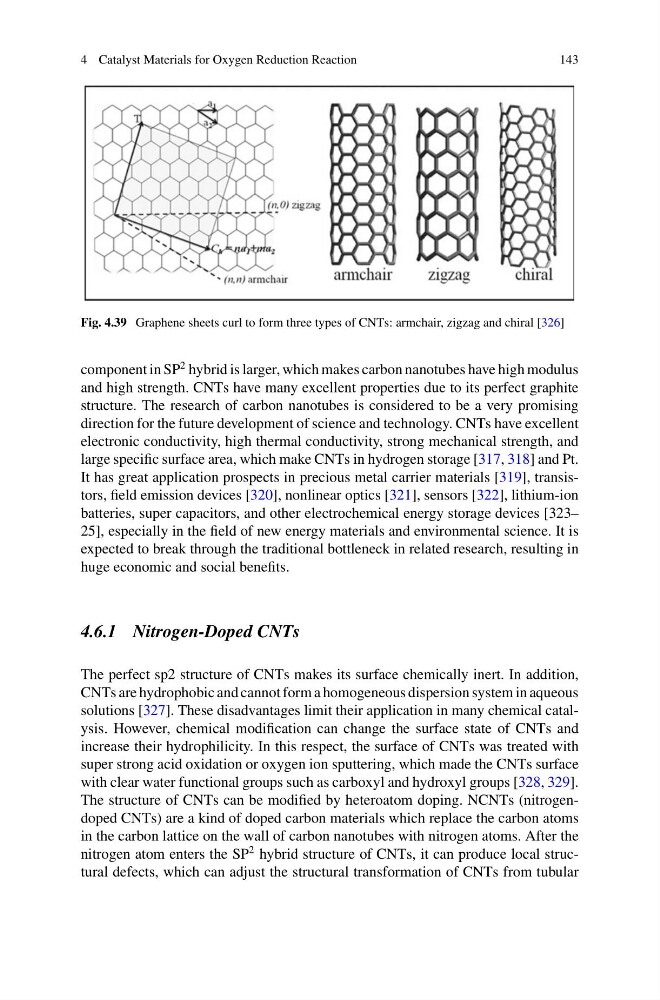
Fig. 4.39 Graphene sheets curl to form three types of CNTs: armchair, zigzag and chiral [326]
component in SP
2 hybrid is larger, which makes carbon nanotubes have high modulus
and high strength. CNTs have many excellent properties due to its perfect graphite
structure. The research of carbon nanotubes is considered to be a very promising
direction for the future development of science and technology. CNTs have excellent
electronic conductivity, high thermal conductivity, strong mechanical strength, and
large specific surface area, which make CNTs in hydrogen storage [317, 318] and Pt.
It has great application prospects in precious metal carrier materials [319], transistors, field emission devices [320], nonlinear optics [321], sensors [322], lithium-ion
batteries, super capacitors, and other electrochemical energy storage devices [323–
25], especially in the field of new energy materials and environmental science. It is
expected to break through the traditional bottleneck in related research, resulting in
huge economic and social benefits.
4.6.1 Nitrogen-Doped CNTs
The perfect sp2 structure of CNTs makes its surface chemically inert. In addition,
CNTs are hydrophobic and cannot form a homogeneous dispersion system in aqueous
solutions [327]. These disadvantages limit their application in many chemical catalysis. However, chemical modification can change the surface state of CNTs and
increase their hydrophilicity. In this respect, the surface of CNTs was treated with
super strong acid oxidation or oxygen ion sputtering, which made the CNTs surface
with clear water functional groups such as carboxyl and hydroxyl groups [328, 329].
The structure of CNTs can be modified by heteroatom doping. NCNTs (nitrogendoped CNTs) are a kind of doped carbon materials which replace the carbon atoms
in the carbon lattice on the wall of carbon nanotubes with nitrogen atoms. After the
nitrogen atom enters the SP
2 hybrid structure of CNTs, it can produce local structural defects, which can adjust the structural transformation of CNTs from tubular
143
Fig. 4.39 Graphene sheets curl to form three types of CNTs: armchair, zigzag and chiral [326]
component in SP
2 hybrid is larger, which makes carbon nanotubes have high modulus
and high strength. CNTs have many excellent properties due to its perfect graphite
structure. The research of carbon nanotubes is considered to be a very promising
direction for the future development of science and technology. CNTs have excellent
electronic conductivity, high thermal conductivity, strong mechanical strength, and
large specific surface area, which make CNTs in hydrogen storage [317, 318] and Pt.
It has great application prospects in precious metal carrier materials [319], transistors, field emission devices [320], nonlinear optics [321], sensors [322], lithium-ion
batteries, super capacitors, and other electrochemical energy storage devices [323–
25], especially in the field of new energy materials and environmental science. It is
expected to break through the traditional bottleneck in related research, resulting in
huge economic and social benefits.
4.6.1 Nitrogen-Doped CNTs
The perfect sp2 structure of CNTs makes its surface chemically inert. In addition,
CNTs are hydrophobic and cannot form a homogeneous dispersion system in aqueous
solutions [327]. These disadvantages limit their application in many chemical catalysis. However, chemical modification can change the surface state of CNTs and
increase their hydrophilicity. In this respect, the surface of CNTs was treated with
super strong acid oxidation or oxygen ion sputtering, which made the CNTs surface
with clear water functional groups such as carboxyl and hydroxyl groups [328, 329].
The structure of CNTs can be modified by heteroatom doping. NCNTs (nitrogendoped CNTs) are a kind of doped carbon materials which replace the carbon atoms
in the carbon lattice on the wall of carbon nanotubes with nitrogen atoms. After the
nitrogen atom enters the SP
2 hybrid structure of CNTs, it can produce local structural defects, which can adjust the structural transformation of CNTs from tubular