

4 Catalyst Materials for Oxygen Reduction Reaction
95
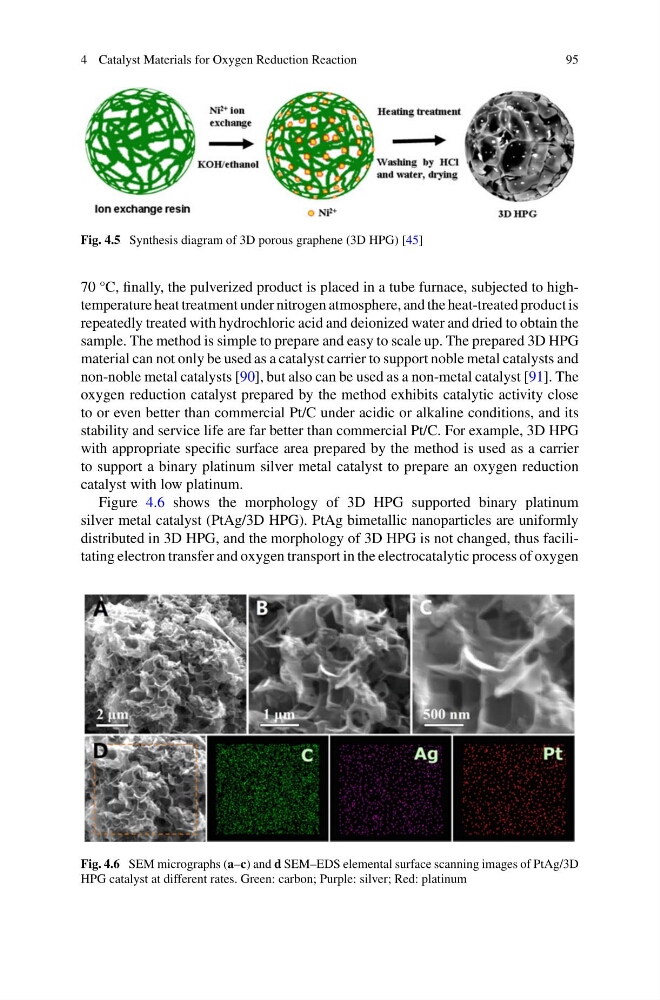
Fig. 4.5 Synthesis diagram of 3D porous graphene (3D HPG) [45]
70 °C, finally, the pulverized product is placed in a tube furnace, subjected to hightemperature heat treatment under nitrogen atmosphere, and the heat-treated product is
repeatedly treated with hydrochloric acid and deionized water and dried to obtain the
sample. The method is simple to prepare and easy to scale up. The prepared 3D HPG
material can not only be used as a catalyst carrier to support noble metal catalysts and
non-noble metal catalysts [90], but also can be used as a non-metal catalyst [91]. The
oxygen reduction catalyst prepared by the method exhibits catalytic activity close
to or even better than commercial Pt/C under acidic or alkaline conditions, and its
stability and service life are far better than commercial Pt/C. For example, 3D HPG
with appropriate specific surface area prepared by the method is used as a carrier
to support a binary platinum silver metal catalyst to prepare an oxygen reduction
catalyst with low platinum.
Figure 4.6 shows the morphology of 3D HPG supported binary platinum
silver metal catalyst (PtAg/3D HPG). PtAg bimetallic nanoparticles are uniformly
distributed in 3D HPG, and the morphology of 3D HPG is not changed, thus facilitating electron transfer and oxygen transport in the electrocatalytic process of oxygen
Fig. 4.6 SEM micrographs (a–c) and d SEM–EDS elemental surface scanning images of PtAg/3D
HPG catalyst at different rates. Green: carbon; Purple: silver; Red: platinum
95
Fig. 4.5 Synthesis diagram of 3D porous graphene (3D HPG) [45]
70 °C, finally, the pulverized product is placed in a tube furnace, subjected to hightemperature heat treatment under nitrogen atmosphere, and the heat-treated product is
repeatedly treated with hydrochloric acid and deionized water and dried to obtain the
sample. The method is simple to prepare and easy to scale up. The prepared 3D HPG
material can not only be used as a catalyst carrier to support noble metal catalysts and
non-noble metal catalysts [90], but also can be used as a non-metal catalyst [91]. The
oxygen reduction catalyst prepared by the method exhibits catalytic activity close
to or even better than commercial Pt/C under acidic or alkaline conditions, and its
stability and service life are far better than commercial Pt/C. For example, 3D HPG
with appropriate specific surface area prepared by the method is used as a carrier
to support a binary platinum silver metal catalyst to prepare an oxygen reduction
catalyst with low platinum.
Figure 4.6 shows the morphology of 3D HPG supported binary platinum
silver metal catalyst (PtAg/3D HPG). PtAg bimetallic nanoparticles are uniformly
distributed in 3D HPG, and the morphology of 3D HPG is not changed, thus facilitating electron transfer and oxygen transport in the electrocatalytic process of oxygen
Fig. 4.6 SEM micrographs (a–c) and d SEM–EDS elemental surface scanning images of PtAg/3D
HPG catalyst at different rates. Green: carbon; Purple: silver; Red: platinum