

342
P.-E. Lippens
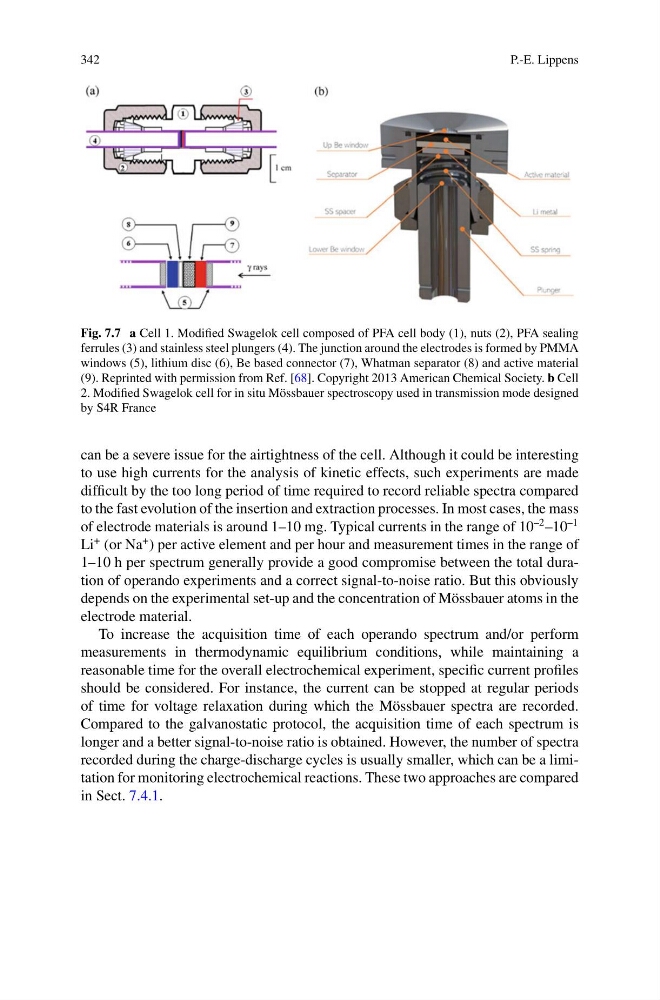
Fig. 7.7 a Cell 1. Modified Swagelok cell composed of PFA cell body (1), nuts (2), PFA sealing
ferrules (3) and stainless steel plungers (4). The junction around the electrodes is formed by PMMA
windows (5), lithium disc (6), Be based connector (7), Whatman separator (8) and active material
(9). Reprinted with permission from Ref. [68]. Copyright 2013 American Chemical Society. b Cell
2. Modified Swagelok cell for in situ Mössbauer spectroscopy used in transmission mode designed
by S4R France
can be a severe issue for the airtightness of the cell. Although it could be interesting
to use high currents for the analysis of kinetic effects, such experiments are made
difficult by the too long period of time required to record reliable spectra compared
to the fast evolution of the insertion and extraction processes. In most cases, the mass
of electrode materials is around 1–10 mg. Typical currents in the range of 10
–2 –10
–1
Li
+ (or Na
+ ) per active element and per hour and measurement times in the range of
1–10 h per spectrum generally provide a good compromise between the total duration of operando experiments and a correct signal-to-noise ratio. But this obviously
depends on the experimental set-up and the concentration of Mössbauer atoms in the
electrode material.
To increase the acquisition time of each operando spectrum and/or perform
measurements in thermodynamic equilibrium conditions, while maintaining a
reasonable time for the overall electrochemical experiment, specific current profiles
should be considered. For instance, the current can be stopped at regular periods
of time for voltage relaxation during which the Mössbauer spectra are recorded.
Compared to the galvanostatic protocol, the acquisition time of each spectrum is
longer and a better signal-to-noise ratio is obtained. However, the number of spectra
recorded during the charge-discharge cycles is usually smaller, which can be a limitation for monitoring electrochemical reactions. These two approaches are compared
in Sect. 7.4.1.
P.-E. Lippens
Fig. 7.7 a Cell 1. Modified Swagelok cell composed of PFA cell body (1), nuts (2), PFA sealing
ferrules (3) and stainless steel plungers (4). The junction around the electrodes is formed by PMMA
windows (5), lithium disc (6), Be based connector (7), Whatman separator (8) and active material
(9). Reprinted with permission from Ref. [68]. Copyright 2013 American Chemical Society. b Cell
2. Modified Swagelok cell for in situ Mössbauer spectroscopy used in transmission mode designed
by S4R France
can be a severe issue for the airtightness of the cell. Although it could be interesting
to use high currents for the analysis of kinetic effects, such experiments are made
difficult by the too long period of time required to record reliable spectra compared
to the fast evolution of the insertion and extraction processes. In most cases, the mass
of electrode materials is around 1–10 mg. Typical currents in the range of 10
–2 –10
–1
Li
+ (or Na
+ ) per active element and per hour and measurement times in the range of
1–10 h per spectrum generally provide a good compromise between the total duration of operando experiments and a correct signal-to-noise ratio. But this obviously
depends on the experimental set-up and the concentration of Mössbauer atoms in the
electrode material.
To increase the acquisition time of each operando spectrum and/or perform
measurements in thermodynamic equilibrium conditions, while maintaining a
reasonable time for the overall electrochemical experiment, specific current profiles
should be considered. For instance, the current can be stopped at regular periods
of time for voltage relaxation during which the Mössbauer spectra are recorded.
Compared to the galvanostatic protocol, the acquisition time of each spectrum is
longer and a better signal-to-noise ratio is obtained. However, the number of spectra
recorded during the charge-discharge cycles is usually smaller, which can be a limitation for monitoring electrochemical reactions. These two approaches are compared
in Sect. 7.4.1.